The Complete Toy Train Guide: Choosing the Right Set for Your Child
Toy trains have delighted children for generations, and today's options are more diverse than ever. From simple wooden push-along trains for toddlers to elaborate electric model railway systems for older kids, the right toy train can spark imagination, build fine motor skills, and provide hours of engaging play. This guide walks you through every consideration — age suitability, power type, track compatibility, and key features — so you can make a confident, informed choice.
Why Toy Trains Remain a Timeless Choice
Toy trains occupy a unique space in the world of children's play. They combine hands-on construction with storytelling and motion, encouraging kids to build layouts, create narratives, and problem-solve as they figure out how tracks connect and how trains navigate curves and junctions. For parents researching before a purchase, understanding these developmental benefits helps justify the investment: a quality train set is not just entertainment but a tool for cognitive and motor development. Whether you are shopping for a first birthday or a school-age hobbyist, the toy train category offers something for every stage.
Toy Train Types Explained
Before comparing specific sets, it helps to understand the main categories. Each type serves a different age group and play style.
Wooden Train Sets
Wooden trains are the classic starter option. They feature chunky, durable pieces with magnetic or peg connectors, making them easy for small hands to assemble. These sets are typically aimed at toddlers and preschoolers and are known for their durability and safety. Wooden tracks are compatible across many brands, giving families flexibility to expand over time. For a deeper look at construction toys that pair well with trains, explore our tile magnets guide.
Battery-Powered Train Sets
Battery-operated trains add motion without the need for complex wiring. They are a natural next step for kids who have outgrown push-along play but are not yet ready for electric model railways. These sets often include sound effects and lights and are designed for independent play. Many entry-level and mid-range battery trains are compatible with popular plastic track systems.
Electric Model Railway Sets
Electric train sets represent the top-tier of the hobby. They offer realistic detailing, variable speed control, and expandable layouts. These are best suited to older children and teens who can handle delicate components and follow setup instructions. Serious hobbyists often build permanent layouts, while families may opt for a starter electric set that can grow over time.
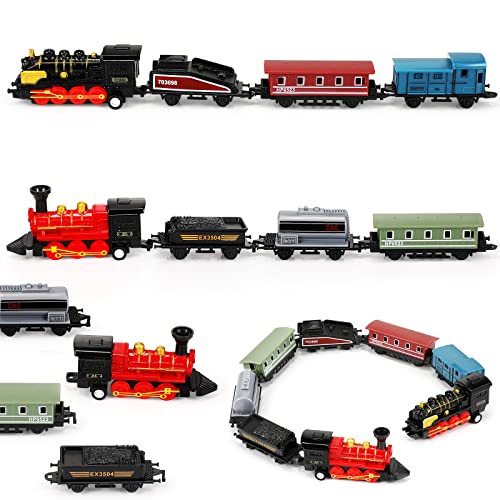
Die-Cast and Collectible Trains
For children who prefer hands-on play without tracks, die-cast train toys offer durability and realistic styling. These are great for imaginative play and can complement a larger train collection. If your child enjoys collecting, you may also enjoy our toy collectibles section.
Choosing the Right Toy Train by Age
Age is the single most important factor when selecting a toy train. The right set matches a child's motor skills, attention span, and safety needs.
Toddlers (Ages 1–3)
At this stage, prioritize large, chunky pieces with no small parts. Wooden trains with magnetic couplings are ideal because they are easy to grasp and connect. Look for rounded edges and non-toxic finishes. Simple push-along trains and basic circular track layouts keep frustration low and engagement high. For related gift ideas, see our guide to top toys for 2-year-olds.
Preschoolers (Ages 3–5)
Preschoolers can handle more complex track configurations, including bridges and switches. Battery-powered trains with sounds and lights are a big hit at this age. This is also a great time to introduce themed sets — farm, city, or fantasy — that encourage storytelling. Our top toys for 4-year-olds list includes several train-related picks.
School-Age Kids (Ages 6–8)
Children in this range are ready for more elaborate layouts and may enjoy electric trains with speed controls. They can follow multi-step instructions and take pride in building a permanent or semi-permanent layout. Consider sets that include expansion packs and accessory buildings. For broader gift inspiration, browse top gifts for 6-year-olds.
Older Kids and Teens (Ages 9+)
Older children and teens gravitate toward realistic model railways with detailed rolling stock and digital control options. These sets are a long-term investment in a rewarding hobby. Parents shopping for this age group may also want to explore toys for 9-12 year olds.
Key Features to Compare
When evaluating toy trains within a given tier, focus on these practical considerations:
- Track compatibility: Stick with established systems if you plan to expand. Wooden tracks are broadly cross-compatible; plastic and electric systems vary by brand.
- Power source: Push-along, battery, or electric. Battery sets offer a good balance for younger kids; electric sets suit dedicated hobbyists.
- Durability: Look for reinforced connectors, solid build quality, and materials suited to the intended age group.
- Expandability: Check whether expansion packs, switches, and accessory buildings are available.
- Safety certifications: Always verify age labeling and safety standards on the packaging.
For a broader overview of construction and building toys that complement train play, see our toy guides hub.
Setting Up Your First Train Layout
Start simple. A basic oval or figure-eight layout lets children experience the joy of a moving train without overwhelming complexity. As confidence grows, add sidings, bridges, and scenery. A dedicated play table or a low, flat surface works well for wooden and battery sets. For electric layouts, plan for a stable base and accessible power connections.
Storage matters too. A toy rotation system keeps train sets fresh and prevents clutter from taking over. Dedicated bins or shelves for track pieces make setup and cleanup much easier.
Safety and Maintenance Tips
Always supervise young children during play, especially with battery-operated sets that contain small components. Check battery compartments regularly for corrosion, and keep electric transformers out of reach of small hands. Wipe wooden tracks with a damp cloth and inspect connectors for wear. For more on toy care, see our toy reviews section for brand-specific guidance.
Frequently Asked Questions
What age is appropriate for a first toy train?
Wooden push-along trains are suitable from around 12–18 months with supervision. Battery-powered sets typically start at age 3, and electric model railways are best for ages 8 and up.
Are wooden and plastic tracks compatible?
Generally no. Wooden tracks follow a widely shared standard across several brands, while plastic track systems are usually brand-specific. Always check compatibility before mixing systems.
How many pieces do I need for a good layout?
A starter set with a basic loop is enough to begin. Expansion packs let you grow the layout gradually as your child's interest develops.
Can toy trains help with child development?
Yes. Building layouts supports spatial reasoning and fine motor skills, while imaginative play with train sets encourages storytelling and language development.
How do I store a large train collection?
Use labeled bins sorted by track type and rolling stock, and consider a shallow drawer system for easy access. Our guide to toy shelves offers more storage solutions.
Final Buying Checklist
Before you commit, run through this quick checklist:
- Does the set match your child's age and skill level?
- Is the track system expandable and compatible with future purchases?
- Are the materials durable and safety-certified?
- Is the power type appropriate for your child's independence level?
- Do you have a storage and setup plan?
With these questions answered, you are ready to choose a toy train that will provide years of engaged, imaginative play. For more curated gift ideas across all ages, explore our toy gift guides.