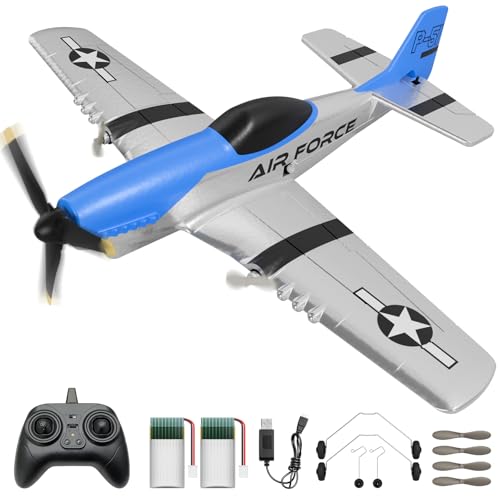
RC Planes for Beginners: Ready to Fly with Confidence
Your complete guide to choosing, understanding, and flying ready-to-fly radio controlled airplanes — from first flight to smooth landings.
Start Your Flight GuideWhy Ready-to-Fly RC Planes Are Perfect for New Pilots
Getting into radio controlled aviation has never been more accessible. If you have ever watched a model airplane glide across a park or field and thought about trying it yourself, a ready-to-fly (RTF) RC plane is the most direct path from curiosity to your first flight. Unlike kit builds or almost-ready-to-fly models, an RTF package arrives with the airframe assembled, the transmitter bound, the battery included, and the electronics installed. You charge, you check, you fly.
This guide is written for the newcomer who has already decided that RC flight is worth exploring and now needs clarity on what to buy, what to expect, and how to avoid the most common first-flight mistakes. We cover airframe types, flight stability features, transmitter basics, and the practical steps that separate a smooth maiden flight from a frustrating one. You will find no guesswork here — just the information you need to make an informed decision and get airborne safely.
For those who want to broaden their understanding of the hobby, our overview of radio controlled aircraft provides useful context on the different categories available. And if you prefer to see a wider selection of beginner-friendly models, the ready-to-fly RC planes collection is a great place to start comparing options.
What Does "Ready-to-Fly" Actually Mean?
The term "ready-to-fly" is sometimes used loosely, but in the RC hobby it has a specific meaning. A true RTF package includes everything required for a first flight except the AA batteries for the transmitter and, in some cases, a charger that works with your local power outlet. That means:
- Pre-assembled airframe — wings, fuselage, and tail are already put together.
- Installed motor, ESC, and servos — the propulsion and control electronics are factory-fitted.
- Bound transmitter — the included radio is paired to the receiver in the plane.
- Flight battery and charger — usually a lithium polymer pack with a basic balance charger.
This is different from ARF (almost-ready-to-fly) models, which require you to install your own motor, servos, and radio gear, and from kit builds, which require full assembly and covering. For a beginner, RTF removes the technical barriers that can turn excitement into frustration. It also means the manufacturer has matched the components for you, so you are less likely to run into compatibility issues with your first model.
If you are still weighing the RTF route against building your own, our collection of RC planes ready to fly for sale highlights models that arrive complete and flight-ready, which is exactly what a new pilot needs.
Types of Beginner RC Planes
Not every beginner plane is the same. The airframe design has a major impact on how forgiving the aircraft feels in the air. Understanding the three main categories will help you choose a model that matches your learning style and flying environment.
1. High-Wing Trainers
High-wing trainers place the wing on top of the fuselage, which gives the aircraft natural self-righting tendencies and stable, predictable handling. These are the classic recommendation for first-time pilots. They fly slowly, tolerate mistakes, and give you time to react. A well-designed high-wing trainer is the safest choice if you have never flown an RC plane before.
2. Gliders and Motor Gliders
Gliders have long wings and light wing loading, which makes them efficient and gentle in the air. A motor glider adds a small electric motor for climbing, so you can practice soaring without depending on a launch method. These are excellent for calm days and for learning to read air currents. They can be very stable, but they also respond to wind more than heavier trainers, so flying in gusty conditions is best avoided early on.
3. Delta-Wing and Pusher Jets
These models look exciting and often feature brushless motors and higher performance. They are not ideal first planes because they tend to fly faster and have less natural stability. However, some beginner-oriented delta models include electronic stabilization and low-throttle flight modes that make them manageable. If you are drawn to this style, look for one explicitly marketed as a beginner or trainer version with flight assistance built in.
For a broader look at the airframe options on the market, our guide to RC airplanes covers the differences between trainer-style and sport-style designs in more detail.
Flight Stabilization Technology: Your Silent Co-Pilot
Modern beginner planes increasingly include electronic flight stabilization, and this is one of the biggest reasons RTF models are now so accessible. The system uses gyroscopes and accelerometers to sense the plane's orientation and automatically correct for unwanted roll, pitch, or yaw. In practice, this means the plane resists wind gusts and returns to level flight when you release the sticks.
Most stabilized systems offer multiple modes:
- Beginner / auto-level mode — the plane self-levels when you let go of the controls. Best for your first several flights.
- Intermediate / assisted mode — provides gentle corrections but allows more pilot input.
- Expert / manual mode — disables stabilization for full control once you have developed your skills.
For a first-time pilot, choosing a model with at least an auto-level beginner mode is strongly recommended. It dramatically reduces the learning curve and gives you the confidence to practice without fear of losing the aircraft on the first flight. Many of the models in our RC planes for beginners ready to fly selection include this technology as standard.
Beginner RC Plane Comparison by Tier
The table below compares typical beginner aircraft categories using market-tier descriptors rather than specific figures. Use it to understand what each tier offers relative to the others and to match a model to your experience level and flying goals.
| Tier | Typical Features | Best For | Flight Character |
|---|---|---|---|
| Entry-Level | Brushed motor, basic stabilization, foam airframe, 3-channel control | Absolute first flights, indoor or calm outdoor flying | Slow, gentle, highly forgiving |
| Mid-Range | Brushless motor, multi-mode stabilization, 4-channel control, larger wingspan | Learning to fly with wind tolerance and more authority | Stable but responsive, good wind handling |
| Premium | Advanced stabilization with GPS return-to-home, brushless power, durable composite or reinforced foam | Pilots who want long-term growth and safety features | Capable, smooth, and confidence-inspiring |
If you are unsure where to start, the entry-level tier is the safest bet for a true first airplane. The mid-range tier is a reasonable choice if you have some prior experience with drones or RC cars and want a model that will not be outgrown quickly. The premium tier is a long-term investment in a plane that can accompany you well beyond the beginner stage.
Transmitter Basics for New Pilots
The transmitter in an RTF package is usually a simplified radio designed for that specific model, but it still helps to understand the controls before your first flight. The two main gimbal sticks control throttle, elevator, rudder, and ailerons — depending on the mode. Most beginner planes use Mode 2, where the left stick handles throttle and rudder, and the right stick handles elevator and ailerons.
Take time on the ground to learn which stick does what. Practice the movements with the plane powered off or with the propeller removed. This dry-run practice builds muscle memory and reduces the chance of a control input error on takeoff. If you are curious about how radios and receivers pair up, our page on RC transmitter and receiver explains the binding process and channel basics in a way that applies to aircraft as well.
Also, check the transmitter's range and battery status before every flight. Most modern RTF radios have a range check mode and a low-battery warning. Never fly until the transmitter warns you that it is running low — losing signal mid-flight is one of the most common causes of a crash for new pilots.
Your First Flight: A Step-by-Step Checklist
Preparation is the difference between a successful maiden flight and a repair session. Follow this checklist before you launch:
- Choose the right day. Calm winds under 10 mph (16 km/h) are ideal. Avoid gusty or turbulent conditions.
- Pick a large open space. A park, sports field, or dedicated RC flying site with no trees, people, or power lines.
- Check the center of gravity. Balance the plane on the recommended point before every flight. A nose-heavy plane is easier to fly than a tail-heavy one.
- Perform a range check. With the plane on the ground, walk away while moving the controls to confirm the signal holds.
- Test all control surfaces. Confirm that the elevator, rudder, and ailerons move in the correct direction before launch.
- Start in beginner mode. If your plane has a stabilization system, begin in the auto-level mode.
- Launch gently. For hand-launch models, a firm, level toss at full throttle is usually best. For takeoff from the ground, apply gradual throttle and let the plane lift off naturally.
- Keep the plane upwind. Fly into the wind at first, and keep the aircraft at a comfortable altitude — high enough to recover from a mistake but not so high that orientation becomes difficult.
When it comes time to land, reduce throttle gradually and let the plane descend on a shallow glide path. Do not dive or try to force it down. The stall speed of a well-designed trainer is low, and a gentle approach usually results in a smooth touchdown. If you feel overwhelmed, activate auto-level mode and let the plane stabilize before you attempt the landing.
Common Beginner Mistakes and How to Avoid Them
Almost every new pilot makes a few of these mistakes, and knowing about them in advance is the easiest way to avoid them:
- Flying in too much wind. Even a moderate breeze can push a light trainer out of range. Respect the wind limit for your model.
- Skipping the pre-flight check. A loose propeller, a reversed control surface, or a low battery can ruin your flight. Take the two minutes to check.
- Overcontrolling. New pilots tend to move the sticks too far. Use small, smooth inputs and let the stabilization system do its job.
- Flying too far away. Keep the plane within comfortable visual range. Orientation loss is a leading cause of crashes.
- Ignoring the center of gravity. A tail-heavy plane can be uncontrollable. Verify the CG point before every flight.
- Forgetting to range-check. A signal loss mid-flight is almost always fatal for the aircraft.
If you want a wider perspective on the different types of aircraft and their handling characteristics, the ready to fly RC planes for beginners guide covers additional models and their specific flight traits.
Where to Fly Your Beginner RC Plane
The flying site matters as much as the aircraft. Beginner planes generally need a clear, open area with short grass for landing and no obstacles in the immediate vicinity. Local schools, public parks (where permitted), and dedicated model aircraft fields are all good options. Before you fly, check local regulations — in many areas, RC aircraft are subject to altitude limits, registration requirements, or designated flying zones.
For a safe and enjoyable first season, stick to sites you know well and fly in calm conditions. As your skills grow, you can explore more demanding locations. If you eventually want to fly from water, our page on RC planes that can land on water introduces float-equipped models, though those are usually a step beyond the beginner stage.
Frequently Asked Questions
What is the easiest RC plane for a complete beginner?
The easiest RC planes are high-wing trainers with electronic stabilization and a beginner flight mode. These designs fly slowly, self-level when you release the controls, and tolerate minor mistakes. Look for an RTF package that includes the transmitter, battery, and charger so you can fly the same day you open the box.
Do I need a license to fly a beginner RC plane?
Regulations vary by country and region. In many places, recreational RC aircraft under a certain weight do not require a license, but registration may be required. Always check your local aviation authority's rules before flying. Toy-grade models often have different rules than larger hobby-grade aircraft.
How long does it take to learn to fly an RC plane?
With a stabilized trainer and regular practice, most beginners can perform basic circuits and landings within a few flying sessions. Developing real proficiency takes longer — typically a full season of consistent practice. Starting with an entry-level or mid-range trainer and progressing at your own pace is the most reliable route.
Can I fly a ready-to-fly RC plane indoors?
Some very small, lightweight RTF models are designed for indoor use in large halls or gymnasiums. Most beginner planes, however, are intended for outdoor flight and require more space. Always follow the manufacturer's recommendations for indoor versus outdoor use.
What should I do if I lose control of the plane?
If your plane has an auto-level or return-to-home feature, activate it immediately and let the system stabilize the aircraft. If not, reduce throttle and make gentle inputs to level the wings. Avoid panicked stick movements, which tend to make the situation worse. Practicing recovery on a simulator before your first flight is highly recommended.
Are more expensive beginner planes easier to fly?
Not necessarily. The tier of the aircraft matters less than the design philosophy. A well-designed entry-level trainer with stabilization can be easier to fly than a premium sport model. Choose based on the airframe type and stabilization features, not on market tier alone. That said, premium-tier trainers often include advanced safety features like GPS return-to-home, which can add confidence for new pilots.
Take the Controls with Confidence
Ready-to-fly RC planes have made the joy of flight more accessible than ever. With the right trainer, a stabilization system, and a calm day, your first flight can be a genuine pleasure rather than a stressful experiment. The key is to start with a forgiving airframe, respect the wind, and follow the pre-flight checklist every time you fly.
If you are ready to explore specific models, browse our curated collection of RC planes ready to fly for sale and compare the features that matter most for your first aircraft. For a broader view of the hobby and the various aircraft categories available, the radio control models section provides useful background. And if your interest grows toward other types of RC vehicles, our guides on RC helicopters and radio controlled cars offer a natural next step.
The sky is open. With the right preparation, your first flight is closer than you think.