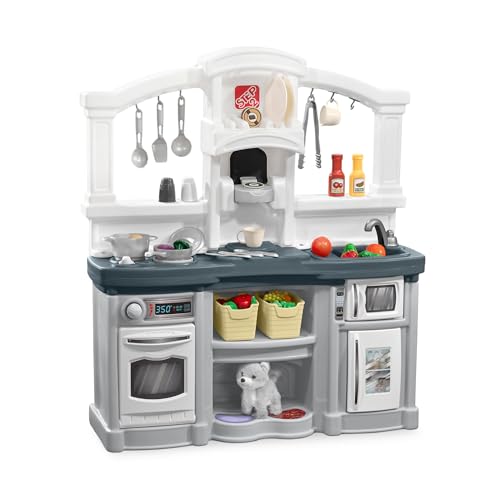
Play Kitchen Sets: The Complete Guide to Choosing a Toy Kitchen
Everything you need to know before buying a play kitchen for your child — from materials and safety to features, play value, and which set fits your space.
Read the Buying GuideWhy a play kitchen is more than a toy: A play kitchen is one of the most enduring pretend-play investments you can make for a young child. It invites role-play, storytelling, cooperation, and the kind of open-ended play that grows with your child. This guide walks you through the decision step by step so you can choose a set that fits your child's age, your available space, and the way your family plays.
Play Kitchen Buying Guide: What Really Matters
Parents researching play kitchen sets usually arrive with a shortlist in mind but a long list of questions: Is wooden better than plastic? How tall should the counter be? Do lights and sounds add value or just noise? Does a running-water sink matter? The sections below answer these questions in order of real-world importance so you can compare sets with confidence rather than guesswork.
1. Match the Set to Your Child's Age
Age is the single most important filter. A toddler approaching their second birthday needs a low, stable set with rounded edges and simple, large accessories. An older child of eight to ten, by contrast, engages with more realistic features — working knobs, a sink, storage, and a wider accessory set that supports more elaborate pretend scenarios. If you are shopping for the youngest age group, our guide to play kitchens for 2-year-olds explains which design choices reduce frustration and support safe, independent play. For older children, see play kitchens for 8 to 10-year-olds, which covers larger sets, realistic accessories, and designs that hold attention longer.
2. Wooden vs. Plastic: A Material Comparison
Material choice affects durability, aesthetics, weight, and play feel. Wooden sets typically offer a solid build, a warm natural look, and a long service life, making them a strong long-term investment for families who plan to pass the kitchen down to siblings. Plastic sets are lighter, often include electronic features, and are generally easier to wipe clean after messy play.
| Material | Best For | Key Strengths | Considerations |
|---|---|---|---|
| Wooden | Families seeking a durable, long-term set with a classic look | Solid build, natural aesthetic, repairable, holds resale appeal | Heavier to move; fewer built-in electronic features |
| Plastic | Families who want lights, sounds, and easy-clean surfaces | Lightweight, wipe-clean, feature-rich for its class | May show wear over time; electronic parts need battery care |
| Hybrid (wood frame + plastic parts) | Buyers who want a balanced tier with both looks and features | Attractive frame with practical, child-friendly components | Check that plastic parts are securely attached |
3. Features That Add Play Value
Not every feature adds real play value — some add realism, and realism is what keeps children coming back. Use the grid below to decide which features matter most for your child's play style.
Lights & Sounds
Encourages cause-and-effect discovery and adds realism to pretend cooking. Look for adjustable volume and a secure battery compartment. A good example of a feature-rich option is a play kitchen set with lights and sounds.
Working Sink
A sink with a pump or running-water feature extends play into washing and cleaning routines. See options for a play sink with running water if water play is a priority.
Storage & Organization
Cabinets, shelves, and hooks teach children to tidy up and keep accessories together. Storage is one of the most underrated features for long-term play.
Realistic Accessories
Pots, pans, utensils, and play food sets deepen the pretend experience. If you are starting from scratch, consider adding a play food set for 2-year-olds to round out the kitchen.
Counter Height
The counter should sit around your child's waist or slightly below so they can reach comfortably while standing. Adjustable or taller designs are better for older children and siblings sharing a set.
Compact vs. Full-Size
Corner and compact sets suit small playrooms, while full-size kitchens with multiple surfaces support group play. Measure your space before choosing.
4. Safety Checklist Before You Buy
- Rounded edges and smooth surfaces — especially important for children under three.
- Non-toxic, child-safe finishes — verify the manufacturer's material and coating statements.
- Stable base and anti-tip design — the kitchen should not wobble when a child leans on it.
- Secure small parts — knobs, handles, and accessories should be firmly attached.
- Battery compartments with a screw closure — essential for any set with lights or sounds.
- Age label compliance — always follow the manufacturer's recommended age range.
- Assembly quality — check that all fasteners are included and can be tightened securely.
5. Developmental Benefits of Pretend Cooking
Play kitchens are a classic example of open-ended pretend play, and that play does real developmental work. Children practice language and storytelling as they narrate cooking, negotiate roles as chef or customer, and describe ingredients. Fine motor skills develop through turning knobs, opening doors, and handling utensils. Social skills grow when children cook together, take turns, and serve pretend meals to family members. The set also introduces sequencing — wash, chop, cook, serve — which supports early organizational thinking. In short, a play kitchen is a play-value investment, not just a piece of furniture.
6. Space Planning and Placement
Before choosing a set, measure the floor area you can dedicate to play. A corner kitchen can tuck neatly into a playroom corner, while a full-size kitchen with a side counter needs a longer wall. Leave clearance for cabinet doors to open, keep the set away from radiators and stairs, and plan a nearby spot for accessory storage. If your play area is tight, a compact or modular design keeps the kitchen usable without crowding the room. Families planning a broader playroom upgrade often pair a kitchen with other pretend-play items; our play houses guide is a useful companion for planning a complete pretend-play zone.
7. Accessories That Extend Play
A play kitchen grows with its accessory collection. Basic sets usually include a pot, pan, and a few utensils. Adding play food, a cash register, or a doctor kit broadens the scenarios children can invent. For a rounded pretend-play setup, consider a play cash register with money to create a market-and-kitchen storyline, or a play doctor kit with working stethoscope for a home-and-family theme. These additions are inexpensive ways to multiply play value without replacing the kitchen itself.
How to Compare Play Kitchen Sets by Tier
Rather than comparing sets by price, compare them by position in the market. The table below uses a consistent tier system so you can match expectations to category.
| Tier | Typical Traits | Best For |
|---|---|---|
| Entry-level | Compact footprint, simpler assembly, fewer accessories, basic knobs | First play kitchen for a toddler or a secondary set for grandparents' homes |
| Mid-range | Sturdier construction, more storage, a broader accessory set, some electronic features | Families who want a balanced tier that supports daily play |
| Premium | Solid wood or hybrid build, realistic details, lights and sounds, generous storage | Long-term use with siblings and a dedicated playroom |
| High-end tier | Flagship-style design, large footprint, extensive accessories, refined finishes | Families treating the kitchen as a centerpiece of the playroom |
A mid-range model usually offers smoother mechanisms and sturdier doors than an entry-level set, while a premium tier adds realistic details and a more refined finish. The right tier depends on how often the kitchen will be used, how many children will share it, and how long you expect it to stay in service.
Frequently Asked Questions
What age are play kitchen sets suitable for?
Most play kitchen sets are designed for children aged 2 to 8 years. Toddler-friendly models for 2-year-olds tend to be lower in height with rounded edges and simpler mechanisms, while larger sets for older children include more realistic features, greater height, and additional accessories.
Are wooden or plastic play kitchens better?
Wooden play kitchens offer durability, a natural aesthetic, and solid build quality, making them a strong long-term investment. Plastic models are lighter, often feature lights and sounds, and are easier to wipe clean. The best choice depends on your space, play style, and how much realism your child enjoys.
What safety features should I look for in a play kitchen?
Look for rounded edges, non-toxic finishes, stable bases that resist tipping, secure small parts, and age-appropriate safety labels. If the set includes lights or sounds, ensure the battery compartment is secured with a screw. Always follow the manufacturer's age recommendation and assembly instructions.
Do play kitchen sets help child development?
Yes. Play kitchens support imaginative and pretend play, language development through role-play conversations, fine motor skills via turning knobs and handling accessories, and social skills when children cook and serve together. They also introduce early sequencing and organization concepts.
How much space does a play kitchen need?
Compact corner models can fit into small playrooms, while full-sized corner kitchens with multiple work surfaces need a dedicated wall area. Measure your available floor space, account for door swing and accessory storage, and consider a foldable or modular design if space is limited.
Final Thoughts: Choosing With Confidence
The best play kitchen set is the one that fits your child's age, your available space, and the way your family plays. Prioritize a stable, well-built frame, age-appropriate height, and features your child will actually use. Whether you choose a compact toddler set or a flagship wooden kitchen, the goal is the same: a durable, inviting space where pretend cooking turns into hours of language-rich, social, and creative play.
If you are still narrowing down your options, our recommended picks below are a practical starting point for comparing designs, features, and tiers side by side.