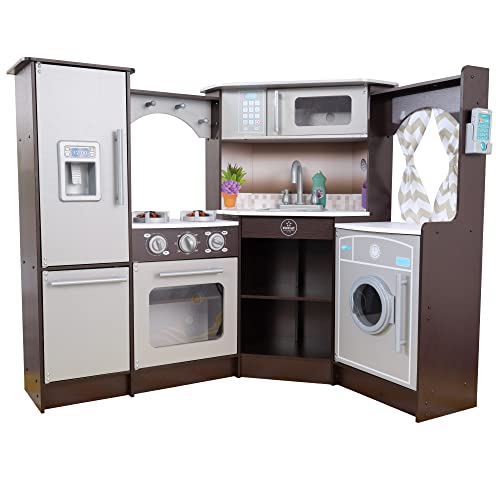
Play Kitchens for 8 to 10 Year Olds: The Complete Buying Guide
Choosing the right play kitchen for a growing child is about more than pretend cooking. At ages 8 to 10, kids want realistic features, durable build quality, and room for creative storytelling. This guide breaks down everything you need to know before you decide.
Why this guide matters: By age 8 to 10, children have outgrown simple toddler kitchens. They now look for realistic details, interactive elements, and enough counter space to host their own pretend restaurant or bakery. A well-chosen play kitchen supports imaginative play, social skills, and even early math through measuring and sequencing. Below we cover the key features, materials, safety points, and play ideas that help you pick the right model with confidence.
Why Play Kitchens Still Matter at Ages 8 to 10
Many parents assume play kitchens are only for preschoolers. In reality, kids in the 8 to 10 range use them differently. They shift from simple pretend cooking to complex role-play scenarios such as running a cafe, hosting a cooking show, or writing menus for family members. This stage is about narrative play, cooperation, and fine-motor precision. A play kitchen designed for older kids often includes realistic knobs, functional doors, extra storage, and more elaborate accessories that match this developmental leap.
If you are also refreshing an outdoor play space for this age group, our outdoor toys for 8-10 year olds guide pairs well with an indoor kitchen setup for balanced play.
Key Features to Look For
Realistic Interactive Elements
Look for knobs that click, doors that open smoothly, and compartments that mimic real appliances. A model with lights and sounds keeps older kids engaged longer than a static unit.
Durable Construction
At this age, play is energetic. Choose reinforced joints, solid panels, and non-toxic finishes that resist daily use. Mid-range and premium tiers typically offer sturdier materials than entry-level sets.
Ample Counter Space
Older kids need room to spread out play food, utensils, and imaginary recipe cards. A wider countertop supports group play and reduces frustration during elaborate setups.
Storage and Organization
Shelves, hooks, and bins help kids keep accessories tidy. Built-in storage also encourages responsibility and makes cleanup part of the play routine.
Age-Appropriate Accessories
Smaller, more detailed accessories such as realistic pots, play food sets, and pretend utensils match the dexterity of 8 to 10 year olds and expand storytelling possibilities.
Safety and Stability
Check for rounded edges, non-toxic paint, and a stable base. Wall-anchoring options are a plus for households with younger siblings or energetic play.
Understanding Quality Tiers
Play kitchens for this age group fall into three broad tiers. Use this framework to match your expectations with the right product category.
| Tier | Best For | Typical Characteristics |
|---|---|---|
| Entry-level | Families testing the waters or limited space | Compact footprint, lighter panels, simpler accessories. Good starting point but may show wear sooner under heavy use. |
| Mid-range | Most families with 8 to 10 year olds | Sturdier construction, interactive features like lights and sounds, more storage, and better accessory quality. A balanced choice for daily play. |
| Premium | Long-term use and design-conscious homes | Hardwood or high-grade engineered wood, realistic detailing, premium hardware, and generous accessory sets. Built to last through multiple children. |
Within the mid-range, a play kitchen set with lights and sounds often delivers the best engagement-to-durability balance for older kids. If you prefer a more focused setup, a play sink with running water adds a realistic touch that 8 to 10 year olds find genuinely exciting.
Materials and Build Quality
The material of a play kitchen directly affects its lifespan and safety. Wooden models are popular for their warmth and durability, while high-grade engineered wood offers stability at a more accessible tier. Plastic sets are lighter and easier to clean, but entry-level plastic can feel flimsy under enthusiastic play. For 8 to 10 year olds, prioritize solid joints, smooth hinges, and finishes that resist chipping. If sustainability matters to your family, look for responsibly sourced wood and water-based paints.
Safety Checklist
- Rounded edges and smooth surfaces: Prevent scrapes during active play.
- Non-toxic finishes: Confirm the paint and stains are child-safe and low-emission.
- Stable base: A wide footprint reduces tipping risk when kids lean on the counter.
- Wall anchor compatibility: Recommended for homes with younger siblings or high-energy play.
- Small parts review: Check accessory sizes if younger children share the play space.
Creative Play Ideas for 8 to 10 Year Olds
A play kitchen becomes a launchpad for richer play when paired with themed activities. Try these ideas to extend engagement:
- Restaurant role-play: Kids write menus, take orders, and practice polite customer service.
- Cooking show: Encourage narration and sequencing as they "demonstrate" recipes step by step.
- Math in the kitchen: Use measuring cups and play food to practice fractions and counting.
- Cultural cooking: Introduce dishes from different countries and discuss ingredients and traditions.
- Pair with outdoor play: Combine indoor kitchen play with outdoor activities for 8-10 year olds to balance screen-free time.
Play Kitchen vs. Other Pretend Play Sets
Play kitchens are not the only option for this age group. Some families also consider a play cash register with money for shop role-play, or a play doctor kit with working stethoscope for medical-themed storytelling. Each supports different skills. A play kitchen excels at sequencing, cooperation, and domestic role-play, while a cash register builds early numeracy and transactional thinking. Many families rotate these sets to keep pretend play fresh.
If space allows, a dedicated pretend play corner with a kitchen, a small shop counter, and storage bins creates a rich environment that grows with the child. For outdoor extensions, consider browsing outdoor play toys for 8 year olds to complement indoor imaginative play.
Final Buying Tips
- Measure your space: Confirm the footprint and height against your room layout and child's reach.
- Check accessory compatibility: Ensure the set includes or supports standard play food and utensil sizes.
- Read recent owner feedback: Look for comments on assembly, stability, and long-term durability.
- Plan for assembly time: Mid-range and premium sets often take 45 to 90 minutes to assemble.
- Consider future siblings: A durable mid-range or premium set can serve multiple children over the years.
Frequently Asked Questions
Are play kitchens suitable for 8 to 10 year olds?
Yes. Older kids use play kitchens for complex role-play, storytelling, and social games. Choose a model with realistic features, sturdy construction, and enough counter space to support group play.
What is the best material for a play kitchen at this age?
Wood and high-grade engineered wood offer the best durability and stability. Plastic sets can work well if they use reinforced panels and quality hinges. Prioritize smooth finishes and non-toxic materials regardless of type.
How much space do I need?
Most mid-range play kitchens occupy roughly the footprint of a small desk. Allow extra clearance for doors to open and for kids to stand comfortably at the counter. Corner placements work well in many rooms.
Can a play kitchen support learning?
Absolutely. Play kitchens naturally reinforce sequencing, measurement, vocabulary, and cooperation. Pair with play food sets and recipe cards to extend math and literacy practice.
Ready to Choose the Right Play Kitchen?
Browse our curated selection of play kitchens suited for 8 to 10 year olds. Compare features, check availability, and find the model that fits your space and your child's play style.
Explore Play Kitchen Options