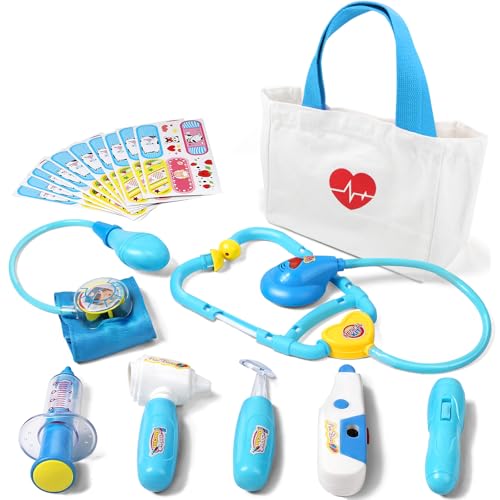
Play Doctor Kit With Working Stethoscope: The Complete Guide
Everything you need to know about choosing a pretend medical kit that actually lets your child hear a heartbeat. Features, safety, age suitability, and expert buying advice.
Explore Top Picks📋 What You'll Learn in This Guide
🧑⚕️ The Short Answer: A play doctor kit with a working stethoscope transforms pretend medical play from a purely imaginative exercise into a sensory-rich experience. When a child can actually hear their own heartbeat through the earpieces, the concept of "being a doctor" becomes tangible, memorable, and far more engaging.
This guide walks you through everything that matters when selecting one of these kits — from how the working stethoscope mechanism functions to the specific safety standards you should verify before handing it to your child.
Why a Working Stethoscope Changes Everything
Most toy medical kits include a plastic stethoscope that is purely decorative — a curved piece of molded plastic with no acoustic function whatsoever. Children quickly discover that these props do nothing, and the pretend play loses a layer of authenticity. A working stethoscope solves this by incorporating a genuine acoustic pathway: a chest piece with a diaphragm, sealed tubing, and earpieces that transmit real sound.
The difference in play value is substantial. When a child places the chest piece on a parent's chest and hears a heartbeat, several things happen simultaneously:
- Cause and effect is reinforced — the child learns that a specific action (placing the chest piece correctly) produces a specific result (hearing a sound).
- The play becomes collaborative — the child needs a "patient" to listen to, which naturally invites parents, siblings, or friends into the activity.
- Biology becomes tangible — abstract concepts like "heartbeat" and "breathing" become concrete sensory experiences.
- Sustained engagement increases — the working mechanism gives children a reason to return to the kit repeatedly, rather than treating it as a one-time novelty.
This is why pediatric play specialists and early childhood educators consistently recommend medical play kits that include at least one genuinely functional instrument. The working stethoscope is the single most impactful upgrade you can look for when comparing options in the play doctor kit with working stethoscope category.
Key Features to Evaluate Before You Choose
Not all working stethoscopes in play kits are created equal. The acoustic quality, build durability, and overall kit composition vary significantly across the market. Here is what to examine closely.
🔊 Acoustic Clarity
The best working stethoscopes in play kits produce a clear, audible heartbeat when placed correctly. Look for descriptions that mention "functional acoustic stethoscope" or "real sound transmission" rather than vague terms like "realistic."
🧱 Build Quality
Check whether the chest piece is metal or sturdy plastic, whether the tubing is thick and flexible (not brittle), and whether the earpieces are securely attached. Flimsy tubing is the most common failure point.
📦 Kit Composition
A well-rounded kit includes a stethoscope, a play syringe, a thermometer, a reflex hammer, bandages, and a carrying case. The variety supports extended pretend play scenarios and keeps children engaged longer.
🛡️ Safety Certification
Verify that the kit carries ASTM F963 (US) or EN71 (Europe) certification. These standards cover mechanical hazards, flammability, and heavy metal content — all critical for items children put near their faces.
🎒 Storage & Portability
A carrying case or storage bag keeps all the pieces together and makes the kit easy to bring to a friend's house. Kits without storage tend to lose components quickly, reducing long-term play value.
🎨 Design & Appeal
Bright, friendly colors and chunky, easy-to-grip instruments are more appealing to younger children. Older kids may prefer a more realistic look that mimics actual medical equipment.
When comparing kits, pay particular attention to the stethoscope itself. A kit with a high-quality working stethoscope but fewer accessories is often a better choice than a large kit with a non-functional or poorly made stethoscope. The working instrument is the anchor of the entire play experience.
Age Suitability & Safety Considerations
Play doctor kits with working stethoscopes are generally recommended for children aged 3 years and older. The working mechanism requires a degree of fine motor control — placing the earpieces correctly and positioning the chest piece — that most children develop around age 3 to 4.
Age 3–4: Entry-Level Exploration
At this stage, children are just beginning to understand the concept of a doctor's visit. They benefit from kits with larger, simpler pieces and a stethoscope with an easy-to-position chest piece. The working stethoscope should have a clear, loud acoustic output so the child can hear the heartbeat without perfect placement technique. Supervision is essential because young children may chew on the tubing or earpieces.
Age 5–7: Developing Role Play
This is the sweet spot for working stethoscope kits. Children at this age can follow multi-step play sequences ("first I check your heart, then I check your breathing"), and they understand the purpose of each instrument. They can reliably use the working stethoscope and will often spend extended periods examining family members and stuffed animals. For related outdoor active play, you might also explore outdoor toys for 5-year-olds to balance screen-free and medical play.
Age 8+: Advanced Medical Play
Older children may enjoy kits that include more sophisticated accessories like a working blood pressure cuff, an otoscope, or anatomy charts. The working stethoscope remains valuable because it supports more detailed diagnostic pretend play. At this age, children can also start learning basic anatomy concepts alongside the play. For broader active play ideas at this age, see outdoor toys for 8-10 year-olds.
Safety Checklist
- Choking hazards: Inspect all small parts. The earpieces and any detachable chest piece components must be secure and too large to swallow.
- Strangulation risk: The stethoscope tubing should be no longer than approximately 30 inches and should not form a loop that could tighten around a child's neck.
- Material safety: Confirm the kit is labeled non-toxic and free from BPA, phthalates, and lead. Children frequently put play medical instruments near their mouths and faces.
- Sharp edges: Run your fingers over every surface. Metal chest pieces and plastic instruments should have smooth, rounded edges with no burrs.
- Earpiece fit: The earpieces should be sized for a child's ear canal — not adult-sized — and should not insert deeply.
Ready to explore the best options? Browse our curated selection of play doctor kits with functional stethoscopes and compare features side by side.
View Top Picks →Quality Tiers: How Kits Compare
Play doctor kits with working stethoscopes fall into three broad tiers. Understanding these tiers helps you set expectations and match the kit to your child's age and intended use.
| Tier | Stethoscope Quality | Kit Composition | Best For |
|---|---|---|---|
| Entry-Level | Basic acoustic stethoscope that produces audible sound; plastic chest piece; thinner tubing. | 6–10 pieces; simple instruments; may lack a carrying case. | First doctor kit; younger children (3–4) testing interest; casual pretend play. |
| Mid-Range | Clearer acoustic output; metal or reinforced plastic chest piece; thicker, more durable tubing. | 12–20 pieces; includes syringe, thermometer, reflex hammer, bandages, and a storage case. | Regular use; children aged 4–7 with strong interest in medical play; shared play with siblings. |
| Premium | High-fidelity working stethoscope with metal chest piece and sealed acoustic tubing; clear heartbeat transmission. | 20+ pieces; realistic instruments; anatomy charts; sturdy carrying case; sometimes includes a working blood pressure cuff. | Serious pretend play; older children (6+) with sustained interest; classrooms and play therapy settings. |
The mid-range tier typically offers the best balance of acoustic quality, kit variety, and durability for most families. Entry-level kits are appropriate for testing whether a child will engage with medical play, while premium kits are a long-term investment best suited to children who have demonstrated sustained interest.
The Developmental Benefits of Medical Pretend Play
Pretend play is one of the most well-researched activities in early childhood development, and medical play kits with working instruments offer specific advantages that general toys cannot replicate.
Language & Communication
Doctor play naturally generates rich vocabulary — "stethoscope," "heartbeat," "breathing," "patient," "checkup," "prescription." Children practice asking questions ("Where does it hurt?"), giving instructions ("Take a deep breath"), and narrating sequences ("First I listen to your heart, then I check your ears"). This back-and-forth dialogue strengthens conversational skills and narrative thinking.
Empathy & Emotional Regulation
Medical play gives children a safe framework for exploring caregiving and concern. When a child "treats" a stuffed animal or a parent, they are practicing empathy in a low-stakes environment. For children who have experienced medical visits themselves, this type of play can also serve as a processing mechanism — allowing them to reframe the experience from a position of control.
Fine Motor Skills
Placing earpieces correctly, positioning the chest piece, squeezing a play syringe, and applying pretend bandages all require precise hand movements. These actions build the small muscle control and hand-eye coordination that support later skills like writing and drawing.
Cognitive Sequencing & Problem-Solving
A doctor visit follows a logical sequence: history-taking, examination, diagnosis, treatment. Children who engage in repeated medical play internalize this structure and learn to apply sequential thinking to other domains. The working stethoscope adds a feedback loop — the child must adjust the chest piece until the heartbeat is audible, which is a genuine problem-solving task.
For children who enjoy active play alongside their medical pretend play, combining a doctor kit with outdoor toys for 3-6 year-olds creates a well-rounded play diet that supports both physical and cognitive development. Families with limited indoor space often balance medical play with outdoor play equipment for small backyards, giving children options for both quiet and active engagement.
How to Choose the Right Kit for Your Child
With the background covered, here is a step-by-step approach to selecting a play doctor kit with a working stethoscope.
- Start with the stethoscope. Read product descriptions carefully and look for explicit confirmation that the stethoscope is functional. Customer reviews are often the best source of truth — search for mentions of "can hear heartbeat" or "actually works."
- Match the kit size to your child's interest level. A child who has never shown interest in medical play may be overwhelmed by a 25-piece premium kit. A mid-range kit with 12–15 pieces is a safer starting point.
- Verify safety certifications. Check the product listing or packaging for ASTM F963 or EN71 compliance. If the information is not visible, contact the seller before purchasing.
- Check the age recommendation against your child's development. A 3-year-old who still mouths objects should not receive a kit with small detachable parts, even if the kit is labeled for age 3+. Use your judgment about your specific child.
- Consider storage and portability. A kit with a sturdy carrying case is far more likely to stay organized and complete over time. This matters especially if the kit will travel between rooms or to friends' houses.
- Read reviews with a critical eye. Prioritize reviews that mention durability over time, acoustic quality, and how well the kit held up to repeated play. Ignore reviews that only comment on packaging or delivery speed.
If your child is transitioning from a doctor kit to broader imaginative play, you may also find value in exploring related pretend play categories such as play kitchen sets with lights and sounds or play cash registers, both of which support similar role-play and language development.
Frequently Asked Questions
Most kits are designed for children aged 3 and up. The working mechanism requires enough dexterity to place the earpieces and position the chest piece, which most children master around age 3 to 4. For toddlers under 3, look for simpler medical play sets with chunkier pieces and no small detachable parts.
It uses the same basic acoustic principle as a real stethoscope. A chest piece with a diaphragm picks up sound vibrations, which travel through sealed tubing to the earpieces. Children can genuinely hear their own heartbeat or a parent's heartbeat, making the play experience far more immersive than a non-functional toy version.
Yes, when purchased from reputable brands and used as intended. Check that the tubing is not long enough to pose a strangulation risk, verify that earpieces are securely attached and child-sized, and confirm the kit meets ASTM F963 (US) or EN71 (Europe) safety standards. Always supervise young children during play.
Prioritize a genuinely functional stethoscope with clear sound output, durable construction, age-appropriate accessories, safe materials free from sharp edges or small detachable parts, and a storage case to keep the kit organized. A mid-range kit with 12–15 pieces and a quality stethoscope is often the best balance for most families.
Absolutely. Medical pretend play supports language and communication skills, empathy and emotional regulation, fine motor skills through handling instruments, and cognitive development through sequencing and problem-solving. The working stethoscope adds a sensory element that makes the experience more concrete and helps children understand cause and effect.
Final Verdict
🔬 The Bottom Line
A play doctor kit with a working stethoscope is one of the most worthwhile pretend play investments you can make for a child aged 3 and up. The functional stethoscope transforms the kit from a collection of props into a genuine learning tool — one that supports sensory exploration, language development, empathy, and cognitive sequencing.
When comparing options, focus on the stethoscope's acoustic quality and build durability first, then evaluate the kit's accessory variety and storage solution. Mid-range kits with a well-made working stethoscope consistently deliver the best long-term play value for most families.
Whichever kit you choose, the most important factor is participation. A working stethoscope is designed to be used with a patient — and that patient will almost certainly be you. Set aside time to be examined, to "ooh" and "aah" at the heartbeat sounds, and to follow your child's medical instructions. That shared experience is where the real developmental value lives.
Recommended Play Doctor Kits With Working Stethoscopes
⚠️ AFFILIATE DISCLOSURE: This website contains affiliate links. As an Amazon Associate, we earn from qualifying purchases. If you make a purchase through these links, we may receive a small commission at no additional cost to you. Read our full affiliate policy.

IVENRXIU Kids Doctor Play Set with Stethoscope,Doctor Kit for Kids Ages 3-5 | Doctor Set with 0ral Mirror,Storage Bag,Smooth Edges,Pretend Play Toys for Boys and Girls,Halloween Christmas Birthday Gifts
Check price on Amazon
Phobby Doctor Kit Toy for Kids 3 4 5 6 Years Old, Blue | Toddler Pretend Medical Kit with Real Stethoscope, Storage Bag, Light & Sound Effect, Girls Boys Birthday Gift, 8 Pcs
Check price on Amazon
EFO SHM Doctor Kit for Kids Ages 3+, 35 Pcs Pretend Play Toys | Doctor Play with Medical Storage Bag & Real Stethoscope, Fun Role Playing Game for Boys Girls Birthday Gifts
Check price on Amazon
Phobby Doctor Kit Toy for Kids 3 4 5 6 Years Old, Pink | Toddler Pretend Medical Kit with Real Stethoscope, Storage Bag, Light & Sound Effect, Girls Boys Birthday Gift, 8 Pcs
Check price on Amazon
Phobby Kids Stethoscope Toy for 3 4 5 Years Old, 2 Pack
Check price on Amazon
Phobby Doctor Kit Toy for Kids 3-8 Years Old, Green | Toddler Pretend Medical Kit, Real Stethoscope & Costume, Light & Sound Effect, Girls Boys Educational Birthday Gift, 27pcs
Check price on Amazon
Kidzlane Doctor Kit for Kids - Kids Doctor Playset with Electronic Stethoscope - Kid Doctor Play Set - Pretend Play Doctor Set for Toddlers - Children's Realistic Dr. Kit with Sounds
Check price on Amazon