Outdoor Toys for Small Backyards: Big Fun in Tight Spaces
A compact yard doesn't mean compromised play. Discover space-smart outdoor toys that deliver active, creative, and developmental fun without overwhelming your garden.
Explore Space-Smart Picks🏡 Why Small Backyards Deserve Smart Toys: Limited square footage forces smarter choices. The best outdoor toys for small backyards combine compact footprints with maximum play value — foldable designs, vertical play, multi-use pieces, and lightweight portability. This guide helps you identify which categories fit tight spaces, which safety factors matter most, and how to build a rotation system that keeps play fresh without clutter.
What Makes an Outdoor Toy Right for a Small Backyard?
Small-yard play is a design challenge, not a limitation. Before browsing categories, evaluate each potential purchase against four practical filters:
- Footprint efficiency: Does the toy use vertical space, fold flat, or nest? A collapsible play tunnel or a compact water table beats a full-size climbing frame in a narrow garden.
- Portability: Lightweight pieces can move from lawn to patio to storage in minutes. Look for wheels, handles, or inflatable designs.
- Multi-age usability: Toys that adjust across ages — like a height-adjustable basketball hoop or a convertible ride-on — reduce the number of items competing for space.
- Durability against weather: A small yard often means toys stay outside. Prioritize weather-resistant coatings, rust-proof finishes, and UV-stable plastics.
These filters apply across every category below. For broader age-specific picks, see our guide to outdoor play toys for 4-year-olds and outdoor toys for 3 to 5-year-olds.
Compact Active Toys: Movement Without the Footprint
Active play is essential for gross motor development, but swing sets and large climbing frames are out of reach for most small yards. The solution is scaled-down active equipment that still challenges balance, coordination, and strength.
Best compact active categories
- Foldable trampolines: A 4- to 6-foot round trampoline with a foldable frame fits a patio corner and delivers high-energy bouncing. Look for models with a safety enclosure that collapses with the frame.
- Compact swing sets: A-frame swing sets with a 6- to 8-foot span work in narrow gardens. Some models convert from swing to glider, doubling play value without adding footprint.
- Balance boards and stepping stones: These store flat against a wall and can be arranged in endless configurations. They build core strength and coordination in a 4-by-4-foot area.
- Pop-up play tunnels and tents: Instant setup, instant collapse. Ideal for obstacle courses that pack away into a closet.
For age-specific active picks, our outdoor play ideas for 2-year-olds covers toddler-safe movement toys, while fun outdoor games for 8-year-olds focuses on older-kid challenges.
Safety considerations for compact active toys
- Check the safety enclosure height relative to the jumping surface — a short enclosure on a small trampoline still needs to prevent falls.
- Anchor lightweight swing sets with ground stakes or sandbags, especially in windy areas.
- Leave at least 3 feet of clearance around any swinging or bouncing equipment, even in tight spaces.
Water Play in Small Spaces: Big Splash, Small Puddle
Water play is a summer staple, but inflatable pools and large water slides demand more lawn than most small yards offer. The compact alternatives are surprisingly rich in play value.
- Water tables: A tiered water table with a splash basin, spinning gears, and a drain plug occupies about 2 square feet and keeps toddlers engaged for extended sessions. Look for models with a lid that doubles as a storage cover.
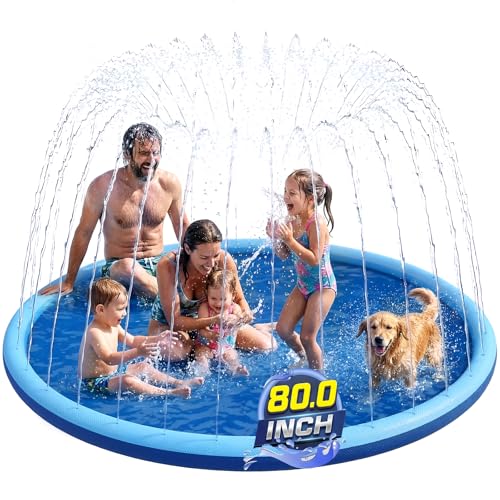
- Splash pads: A connected splash pad with adjustable spray height works on any flat surface, including a patio. It folds for storage and uses a standard garden hose connection.
- Compact water slides: A short slide with a splash pool at the base — typically 6 to 8 feet long — fits along a fence line and provides the slide-and-splash experience without the footprint of a full-size slide.
- Water blasters and sponge toys: Zero permanent footprint, maximum engagement. These are ideal for games to play in the rain outside and for hot-day cooling.
For older kids, our outdoor water toys for 10-year-olds and outdoor water toys for 7-year-olds guides cover more advanced water play options that still respect space limits.
Creative and Pretend Play: Compact Worlds, Big Imaginations
Pretend play doesn't need a dedicated playhouse. Small-yard creative toys thrive on portability and multi-use design.
- Pop-up playhouses: A fabric playhouse with a foldable frame sets up in seconds and collapses into a carrying bag. It works as a fort, a shop, a castle, or a quiet reading nook.
- Compact sandboxes: A covered sandbox with a 3-by-3-foot footprint and a lid that converts to a bench seat offers sensory play without a permanent sandpit. Look for models with a liner to prevent weed growth.
- Portable mud kitchens: A lightweight mud kitchen with a foldable stand and removable basin lets kids engage in sensory-rich pretend cooking, then packs away when the session ends.
- Chalk and drawing surfaces: A vertical chalkboard or a roll-up drawing mat uses wall space rather than floor space — a smart vertical-play strategy for narrow gardens.
For younger children, pretend play toys for 6-year-olds and make-believe toys for 3-year-olds offer more imaginative-play inspiration.
Space-Saving Strategies: Make Every Square Foot Count
The right toy selection is half the battle. The other half is how you organize and rotate what you own. These strategies keep a small yard functional and inviting:
- Vertical storage: Wall-mounted hooks for scooters, a ceiling-mounted bike hoist, or a tall narrow shelving unit for bins. Vertical storage frees floor space for actual play.
- The rotation system: Keep only 2 to 3 large outdoor toys accessible at a time. Store the rest and rotate every few weeks. This reduces visual clutter and makes each toy feel novel. Our toy maintenance guide covers cleaning and storage best practices that extend the life of outdoor toys.
- Multi-use furniture: A storage bench that doubles as a seating area, or a sandbox with a lid that becomes a play table. Every piece should earn its footprint.
- Fold-flat everything: Prioritize toys that collapse, nest, or deflate. A fold-flat water table and a collapsible tunnel take up almost no space when not in use.
Quality Tiers for Compact Outdoor Toys
Compact outdoor toys span a wide range of build quality. The table below maps common tiers to their typical characteristics and best-use scenarios. No specific figures are provided — use this as a relative comparison framework.
| Tier | Typical Characteristics | Best For |
|---|---|---|
| Essential tier | Basic plastic construction, simple mechanisms, limited adjustability | Occasional use, tightest spaces, temporary setups |
| Balanced tier | Reinforced joints, weather-resistant coating, some multi-use features | Regular outdoor play, families wanting durability without overbuilding |
| Top-tier | Heavy-duty frame, rust-proof finish, adjustable sizing, premium materials | Daily use, multi-child families, long-term backyard investment |
For most small-yard families, the balanced tier offers the best combination of durability, space efficiency, and multi-age usability. Top-tier makes sense when the toy will be used daily and passed down between siblings.
Age-by-Age Quick Picks
Different ages need different things from outdoor play. Here's a quick reference for matching compact toys to developmental stages:
- Toddlers (1–3): Water tables, small sandboxes, pop-up tunnels, and balance stepping stones. Focus on sensory exploration and gross motor basics. See outdoor play toys for 2-year-olds.
- Preschoolers (3–5): Compact swing sets, foldable trampolines, portable mud kitchens, and splash pads. Focus on active play and pretend scenarios. See fun outdoor toys for 3-year-olds and top outdoor toys for 4-year-olds.
- School age (6–10): Balance boards, water blasters, compact sports nets, and obstacle-course kits. Focus on skill-building and cooperative games. See fun outdoor toys for 6-year-olds and good outdoor toys for 6-year-olds.
Frequently Asked Questions
How much space do I need for a compact swing set?
A compact A-frame swing set typically needs a 6-by-8-foot area with 3 feet of clearance on all sides. Some models with folding frames can reduce the footprint to 5-by-6 feet when not in use.
Are water tables safe for toddlers in a small yard?
Yes, with supervision. Choose a water table with a stable base and a drain plug to empty it after use. Never leave standing water unattended, and always follow the age recommendation on the packaging.
Can I use a full-size trampoline in a small backyard?
A full-size trampoline (10 feet or larger) usually overwhelms a small yard. A foldable 4- to 6-foot model with a safety enclosure provides the bouncing experience without dominating the space.
How do I keep outdoor toys from taking over my small yard?
Use a rotation system: keep 2–3 large toys accessible and store the rest. Prioritize fold-flat and nesting designs. Vertical storage (wall hooks, ceiling hoists) frees floor space for actual play.
What's the most versatile outdoor toy for a small backyard?
A foldable water table or a compact sandbox with a lid that doubles as a bench. Both serve multiple ages, store compactly, and encourage sensory and pretend play.
Ready to Transform Your Small Backyard?
Browse our curated selection of space-smart outdoor toys below. Each pick is chosen for compact footprint, durable construction, and high play value.
See Recommended Picks🔗 Keep Exploring: For more outdoor play inspiration, see fun outdoor toys for 5-year-olds, top outdoor toys for 5-year-olds, and outdoor play sets for 8-year-olds. Planning a rainy day? Check our games to play in the rain outside guide.