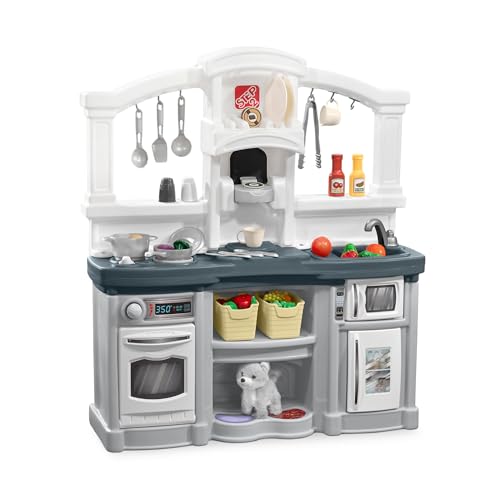
Play Kitchen Set with Lights and Sounds: A Complete Buyer's Guide
Interactive pretend cooking brings sensory excitement and imaginative role-play together. Learn how lights, sounds, and thoughtful design turn a toy kitchen into a lasting centerpiece of hands-on learning and shared family play.
Explore Interactive Play Kitchens🧑🍳 Why an interactive play kitchen? A play kitchen with lights and sounds elevates traditional pretend cooking by adding realistic feedback — sizzling burners, glowing oven lights, and bubbling pot sounds. For children, these cues turn abstract imagination into a tangible experience, strengthening cause-and-effect understanding, language development, and social play. This guide walks you through the features that matter, the safety standards to verify, and how to match a kitchen to your child's age and your available play space.
What Makes an Interactive Play Kitchen Stand Out
Traditional play kitchens rely on imagination alone. A model with lights and sounds bridges the gap between pretend and real, giving children immediate feedback as they turn knobs, open doors, and place pots on burners. The result is deeper engagement, longer play sessions, and richer storytelling. When a child hears a frying pan sizzle after pressing a button, they begin to understand sequencing — an early cognitive skill linked to cooking routines.
Interactive elements also support multi-sensory learning. Visual cues such as an oven light turning on reinforce the idea that heat comes from inside. Sound effects help children associate actions with language, from "boiling water" to "ding, dinner's ready." These small reinforcements make play kitchen sets more than furniture — they become dynamic play partners.
Key Features to Look For
💡 Realistic Lighting
Look for LED oven lights, stovetop glow rings, and illuminated range hoods. Low-heat LED bulbs are safe, energy-efficient, and long-lasting. A light that activates when the oven door opens adds a satisfying reveal moment.
🔊 Sound Modules
Sizzling, boiling, and timer sounds should be clear but not overwhelming. Volume control is a valuable feature for shared spaces. Auto-off timers conserve battery life and prevent accidental continuous play.
🎛️ Interactive Knobs & Buttons
Chunky knobs that click, turn, and trigger sound effects encourage fine motor practice. Buttons should be large enough for small hands and recessed to avoid accidental activation.
🧱 Solid Construction
Reinforced joints, rounded edges, and non-toxic finishes are essential. Wooden models offer heirloom durability, while high-grade plastic models are lightweight and easy to clean. Both can be excellent choices depending on your space and preferences.
📦 Storage & Accessories
Shelves, hooks, and utensil racks keep play organized. Many sets include pots, pans, and play food. Consider whether accessories are included or sold separately so you can plan a complete play experience.
🔋 Power & Battery Access
A secured battery compartment with a screw is a safety must. Some high-end tier models offer USB-rechargeable sound units, reducing the need for frequent battery changes.
Play Kitchen Tiers: Finding the Right Fit
Interactive play kitchens vary widely in scope and build. Rather than focusing on numbers, consider how each tier aligns with your child's age, your play space, and how long you expect the kitchen to remain in use. The table below summarizes the three common market tiers using neutral quality descriptors.
| Tier | Best For | Typical Features |
|---|---|---|
| Essential tier | Toddlers aged 2–3 in compact spaces | Basic light and sound module, 2–3 interactive knobs, compact footprint, simple assembly. |
| Balanced tier | Preschoolers aged 3–5 in dedicated play corners | Multiple sound effects, oven light, broader counter, storage shelves, included accessories. |
| Top-tier | Families with school-age children up to 6 and shared playrooms | Rich interactive panel, premium materials, island or corner design, extensive accessory sets, USB-rechargeable sound unit. |
For families with younger toddlers, a compact play kitchen for 2-year-olds often provides the right balance of interactivity and safety. For older children who enjoy longer pretend-play sessions, a full-featured play kitchen with expanded storage supports more elaborate cooking scenarios.
Developmental Benefits of Lights-and-Sounds Play Kitchens
- Cognitive growth: Cause-and-effect understanding deepens as children connect button presses with sounds and light responses.
- Language development: Narrating cooking actions — "the soup is boiling!" — expands vocabulary and storytelling ability.
- Fine motor skills: Turning knobs, opening doors, and handling play utensils strengthen hand-eye coordination.
- Social play: Sharing a kitchen with siblings and friends encourages turn-taking, negotiation, and cooperative role-play.
- Emotional regulation: Repetitive, predictable sounds and light patterns offer a calming sensory experience for many children.
Safety Checklist Before You Choose
- Confirm the product carries recognized safety certifications and an age-appropriate label.
- Verify non-toxic, lead-free finishes on painted surfaces and plastic parts.
- Check that the battery compartment is secured with a screw and cannot be opened by a child.
- Inspect for rounded edges, reinforced joints, and no small detachable parts for children under 3.
- Ensure sound levels are comfortable and that volume controls — if present — work reliably.
- Anchor taller units to a wall if the manufacturer provides anti-tip hardware.
For related pretend-play safety considerations, browse broader play kitchen sets and compare features across tiers.
Space Planning and Setup Tips
Interactive kitchens need a little breathing room. Leave clearance for oven doors, side panels, and pull-out drawers. Corner models maximize wall space and are a strong choice for apartments. If your playroom also hosts play food sets for 2-year-olds, designate a shelf or bin within reach so children can restock ingredients independently. Keep the battery compartment accessible to adults but not to children, and consider placing the kitchen away from direct sunlight to protect painted finishes.
For families planning a full pretend-play corner, pairing a kitchen with a play sink with running water or a play cash register with money expands the scenario into a complete café or market. These additions encourage sequencing and social negotiation, turning a single toy into a small world of play.
Practical Buying Advice
Before committing, decide whether lights and sounds are a must-have or a bonus. Some families prefer a quieter kitchen for shared living spaces, while others value the sensory richness that interactive models provide. Check whether accessories are included or sold separately, and read assembly notes — some models arrive mostly pre-built while others require an hour or more of setup.
If your child is close to a birthday, consider how the kitchen will grow with them. A balanced tier model often carries a child from age 3 through age 6 with little loss of interest. Families who expect long-term use may lean toward a top-tier model with premium materials and a more comprehensive accessory set. For related gift ideas across age groups, explore play kitchen options and play kitchen sets to compare configurations.
Frequently Asked Questions
What age is a play kitchen set with lights and sounds best for?
Most interactive play kitchens are designed for children aged 2 to 6 years. For toddlers around 2 to 3 years, choose a compact model with rounded edges and simple controls. For preschoolers aged 3 to 5, a mid-range or high-end tier kitchen with more interactive features works well. School-age children up to 6 years still enjoy pretend cooking with friends and siblings.
Are lights and sounds safe for young children?
Yes, when the toy carries recognized safety certifications and follows age labeling. Lights are typically low-voltage LED bulbs, and sound modules are enclosed to prevent access. Always check for non-toxic finishes, smooth edges, and a battery compartment secured with a screw. Supervise children under 3 during play.
Do interactive play kitchens require batteries?
Most models with lights and sounds run on standard AA or AAA batteries. Some premium tier kitchens include a rechargeable module or a USB-powered sound unit. Battery life varies with play frequency, so consider a model with an auto-off feature to extend usage.
What materials should I look for in a play kitchen?
Wooden play kitchens offer a solid build and a warm, furniture-like look. Engineered wood with non-toxic paint is a balanced tier choice. High-grade plastic models are lightweight, easy to clean, and often include more molded interactive elements such as knobs, burners, and sound buttons. Whichever material you choose, verify non-toxic finishes and reinforced joints.
How much space does a play kitchen need?
Compact corner models fit in small playrooms and measure roughly the footprint of a nightstand. Mid-range tier kitchens often include a wider counter and overhead shelves. Corner designs maximize wall space, while full flagship tier kitchens with islands and stools require a dedicated play area. Measure your space and leave clearance for doors and drawers.