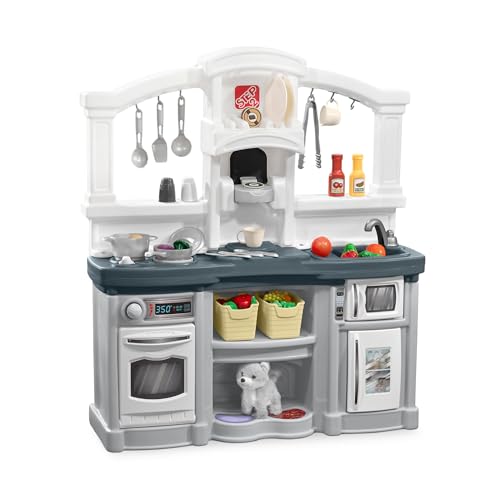
Play Kitchen: The Complete Guide to Choosing the Right Toy Kitchen
Everything you need to know before buying a play kitchen for your child — from materials and safety features to interactive functions and long-term play value. Compare the features that matter and pick the perfect pretend-play setup for your family.
Explore Recommended Play KitchensWhy a play kitchen deserves a place in your home: A play kitchen is one of the most enduring pretend-play toys a child can own. It invites open-ended role-play, builds language and social skills, and grows with your child from toddler years into early school age. This guide explains the different types of play kitchen sets, what to look for in build quality and safety, and how to match a model to your child's age and your available space.
What Makes a Great Play Kitchen?
A play kitchen — also called a toy kitchen or pretend-play kitchen — is a child-sized replica of a real kitchen, typically featuring a stove, sink, oven, and storage compartments. The best models go beyond appearance: they offer functional knobs, interactive lights and sounds, and enough counter space for multiple children to play together. The strongest play kitchens share a few core qualities:
- Sturdy, tip-resistant construction: A wide base and solid build prevent tipping during enthusiastic play, especially important for toddlers who lean on counters.
- Age-appropriate interactive features: Simple turn-and-click knobs suit toddlers, while lights, sounds, and running-water sinks engage older children.
- Safe materials and finishes: Non-toxic paints and finishes, rounded edges, and securely attached small parts are essential safety markers.
- Ample storage: Shelves, hooks, and cubbies keep play food and accessories organized and encourage tidy habits.
- Scalable play value: A well-designed set supports pretend play from age two through early school age, making it a long-term investment.
Developmental Benefits of Pretend-Play Kitchens
Imaginative Play
Children invent recipes, run pretend restaurants, and act out family routines, which strengthens creativity and narrative thinking.
Language & Social Skills
Collaborative cooking scenarios encourage conversation, turn-taking, and cooperative play with siblings and friends.
Fine Motor Development
Turning knobs, opening doors, and handling play food build hand strength and dexterity in an engaging context.
Early Math Concepts
Counting ingredients, sorting play food, and measuring with toy cups introduce foundational math ideas naturally.
Independence & Confidence
Mastering kitchen tasks in pretend play gives children a sense of competence and self-reliance.
Screen-Free Engagement
A play kitchen offers hours of tactile, screen-free activity that supports healthy attention and sensory development.
Types of Play Kitchens Compared
Play kitchens come in several formats, each suited to different spaces, ages, and play styles. Use the comparison below to identify which category aligns with your family's needs.
| Type | Best For | Tier | Key Traits |
|---|---|---|---|
| Compact Corner Kitchen | Small rooms, apartments | Essential tier | Space-saving footprint, simple stove and sink, ideal for toddlers |
| Full-Sized Play Kitchen Set | Siblings, dedicated playrooms | Mid-range | Multiple stations, oven, storage, accommodates two or more children |
| Play Kitchen with Lights & Sounds | Interactive play, ages 3+ | Mid-tier to high-end tier | Electronic stovetop, sizzling sounds, oven lights for immersive play |
| Wooden Play Kitchen | Long-term use, classic design | Premium | Solid wood build, timeless aesthetic, heirloom-quality durability |
| Play Kitchen with Running Water | Realistic sink play | High-end tier | Working faucet and pump, adds sensory realism to pretend play |
| Island & Deluxe Modular Kitchens | Large playrooms, group play | Top-tier | Expansive counter space, refrigerator, pantry, and multiple accessories |
Wooden vs. Plastic Play Kitchens: Which Should You Choose?
Material choice affects durability, aesthetic, interactive features, and maintenance. Here is how the two main categories compare:
| Aspect | Wooden Play Kitchen | Plastic Play Kitchen |
|---|---|---|
| Durability | Solid build with reinforced joints; withstands years of active play | Lightweight and impact-resistant, though hinges may loosen over time |
| Aesthetic | Warm, neutral tones that blend into living spaces | Bright colors and playful themes that appeal to young children |
| Interactive Features | Usually mechanical knobs and doors; fewer electronic elements | Often includes lights, sounds, and running-water sinks |
| Maintenance | Wipe-clean surfaces; avoid prolonged moisture exposure | Easy to wipe down and rinse; highly resistant to spills |
| Best For | Families seeking a long-term investment and classic design | Families prioritizing interactive features and portability |
Play Kitchen Safety Checklist
Safety should guide every purchase decision. Before finalizing a play kitchen, verify the following:
- Rounded edges and smooth surfaces: Prevent bumps and scratches during energetic play.
- Non-toxic, child-safe finishes: Confirm paints and stains meet recognized toy safety standards.
- Stable, tip-resistant base: A wide footprint keeps the unit upright when children lean or climb.
- Securely attached parts: Knobs, handles, and accessories should be firmly fixed to avoid choking hazards.
- Age-appropriate labeling: Always follow the manufacturer's age recommendation and supervision guidance.
- Ventilation for electronic models: Battery compartments should be screw-secured and inaccessible to children.
How to Choose the Right Play Kitchen for Your Child
Match your choice to your child's age, your available space, and the play style you want to encourage:
- For toddlers (around age 2): Prioritize sturdiness, rounded edges, and simple mechanisms. A compact model keeps the play area manageable and safe.
- For preschoolers (ages 3–5): Interactive features like lights, sounds, and play food accessories sustain engagement and support imaginative scenarios.
- For school-age children (ages 6–8): Larger sets with running water, multiple stations, and realistic accessories extend play value and support more complex role-play.
- For small spaces: Choose a corner or compact design, and consider wall-mounted storage for accessories to keep the floor clear.
- For siblings and group play: Select a full-sized or island model with ample counter space so multiple children can play together comfortably.
If you are exploring options for younger children, our guide to play kitchens for 2 year olds covers toddler-specific safety and design considerations. For older children, see play kitchens for 8 to 10 year olds for more elaborate setups. You can also compare a broader selection of play kitchen sets and explore models with lights and sounds or a play sink with running water.
Related Play Kitchen & Pretend Play Guides
Frequently Asked Questions About Play Kitchens
What age is a play kitchen suitable for?
Most play kitchens are designed for children aged 2 to 8. Toddlers around 2 years old benefit from sturdy, simple designs with rounded edges, while older children enjoy more elaborate sets with lights, sounds, and running water features.
What are the benefits of a play kitchen?
A play kitchen supports imaginative play, social skills, language development, fine motor skills, and early math concepts. It also encourages role-play and cooperative play with siblings and friends.
Should I choose a wooden or plastic play kitchen?
Wooden play kitchens offer a timeless look, solid build, and long-term durability, making them a worthwhile investment for families who want an heirloom-quality piece. Plastic play kitchens are lightweight, easier to clean, and often include more interactive features.
What safety features should I look for in a play kitchen?
Look for rounded edges, non-toxic finishes, stable bases that resist tipping, securely attached knobs and handles, and age-appropriate small parts. Always follow the manufacturer's age recommendations and supervision guidelines.
How much space does a play kitchen need?
Compact corner models work well in small rooms, while full-sized play kitchens with islands and multiple stations require a dedicated play area. Measure your space and consider storage for accessories before choosing a model.