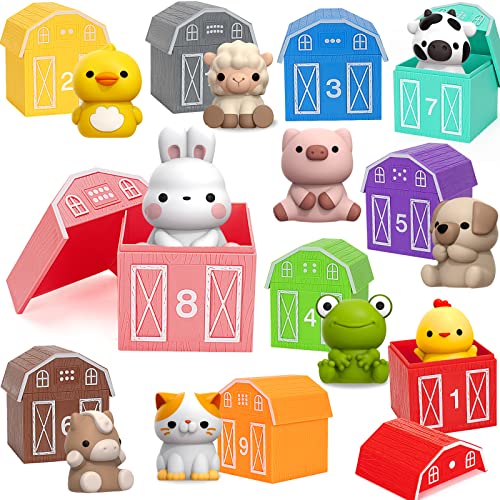
Fine Motor Skills Toys for 12-18 Months
Expert guide to the best toys that build dexterity, hand-eye coordination, and problem-solving skills for your growing toddler.
Explore Top Picks ↓🧸 Why Fine Motor Skills Matter: Between 12 and 18 months, your toddler is developing the small muscles in their hands and fingers—essential for later skills like writing, self-feeding, and dressing. The right toys can turn playtime into powerful learning experiences. In this guide, we’ll explore top-rated toys that promote pincer grasps, hand-eye coordination, and cause-and-effect understanding.
What to Look for in Fine Motor Toys for 12-18 Months
At this age, toddlers are fascinated by objects they can manipulate. Look for toys that encourage picking up, stacking, twisting, and squeezing. Safe, durable materials and bright colors are a plus. Educational toys for infants often transition well into this stage, but now your child can handle more complex actions like rotating knobs or fitting shapes into a sorter.
Many parents also consider developmental toys for 6-month-olds as a starting point, but for 12-18 months, you'll want toys that offer more challenge. Sensory toys can also be beneficial, as they provide tactile feedback that supports neural development.
Key Features of Effective Fine Motor Toys
✋ Pincer Grasp Practice
Toys with small pegs, coins, or pieces that require thumb-forefinger grip build the foundation for writing and self-feeding.
🔄 Twisting & Turning
Knobs, dials, and spin wheels help develop wrist rotation and bilateral hand coordination—skills needed for using utensils.
🧩 Cause & Effect
Toys that pop, squeak, or move when pressed or pushed teach logical thinking and keep your toddler engaged.
📦 Stacking & Nesting
Stacking rings, cups, and blocks encourage spatial awareness, problem-solving, and hand-eye coordination.
Top Fine Motor Toys for 12-18 Months
Based on expert reviews and parent feedback, these toys are proven to engage toddlers while building essential skills. Many of these are also great as gifts for one-year-olds that aren't toys, but we've focused on the best developmental options here.
For more ideas, you can also explore toys that help develop fine motor skills across different age groups. And if you're looking for something more active, gross motor skills toys for 2-year-olds are a great next step.
Why These Toys Work
At 12-18 months, toddlers are in a sensitive period for developing fine motor control. The toys recommended here target specific actions: grasping, transferring, stacking, and manipulating. For example, a shape sorter requires your child to grasp a block, rotate it, and fit it into the correct hole—this complex sequence builds neural pathways that support future learning.
Many of these toys also incorporate sensory elements like textures and sounds, which are crucial for cognitive development. Educational toys for 6 months to 1 year can be a good bridge, but now your toddler is ready for more challenging activities.
As your child masters these skills, you can introduce more complex toys like electronic learning toys for 2-year-olds or wooden dolls that fit inside one another to further refine their dexterity.
Remember, every child develops at their own pace. The goal is to provide fun, pressure-free opportunities for practice. Celebrate small achievements, and don't forget to play together—your involvement boosts confidence and strengthens your bond.