Educational Toys for 6 Months to 1 Year
Discover the best developmentally appropriate toys for your baby's first year. From sensory exploration to motor skill development, find the perfect educational toys that make learning through play a joyful experience.
SHOP RECOMMENDED TOYSWhy Educational Toys Matter for Babies 6–12 Months
The period between 6 months and 1 year is one of the most remarkable developmental phases in your baby's life. During these months, infants transform from passive observers into active explorers who are discovering the world through every sense.
Educational toys for babies in this age range are specifically designed to support critical developmental milestones including:
- Sensory development – Exploring different textures, sounds, colors, and visual patterns
- Fine motor skills – Developing the small muscles in hands and fingers through grasping, reaching, and manipulating objects
- Gross motor skills – Building strength for sitting, crawling, standing, and beginning to walk
- Cognitive development – Understanding cause and effect, object permanence, and early problem-solving
- Language development – Responding to sounds, babbling, and beginning to understand simple words and gestures
- Social-emotional development – Building bonds through interactive play and experiencing joy in discovery
💡 Quick Tip: The best educational toys for 6–12 month olds are those that encourage exploration and discovery through multiple senses. Look for toys that offer different textures, sounds, colors, and movement possibilities. For more guidance, explore our complete educational toys guide or discover specialized toys for developmental support.
Developmental Milestones at 6–12 Months
Understanding what your baby is working on at each stage helps you choose the right educational toys that match their current abilities and gently challenge them to grow. Here's what typically happens during this exciting period:
6–8 Months
- Begins sitting without support
- Transfers objects from one hand to the other
- Reaches for and grasps toys
- Responds to own name
- Babbles and makes varied sounds
- Explores objects by mouthing
8–10 Months
- Crawls or moves in other ways
- Pulls to stand with support
- Begins to use pincer grasp (thumb and finger)
- Understands simple words like "no" or "bye-bye"
- Plays peek-a-boo and other social games
- Shows interest in cause-and-effect toys
10–12 Months
- Stands independently or walks with support
- Uses pincer grasp confidently
- Points to objects and people
- Says first recognizable words
- Mimics sounds and actions
- Shows clear preferences for certain toys
Each baby develops at their own pace, and these milestones serve as general guides. If you have concerns about your baby's development, always consult your pediatrician.
Top Types of Educational Toys for 6 Months to 1 Year
The best educational toys for this age range combine engagement with developmental benefits. Here are the most effective categories of toys that support your baby's growth during this crucial period.
🧸 Sensory Toys
- Texture toys: Fabric books, crinkle toys, and soft blocks with varied surfaces
- Musical toys: Simple instruments like shakers, drums, and musical activity tables
- Visual stimulation: High-contrast patterns, rotating mobiles, and colorful rattles
- Teething toys: Safe silicone or wooden teethers with different textures
🧩 Motor Skill Toys
- Grasping toys: Ring stackers, easy-grip blocks, and ball drop toys
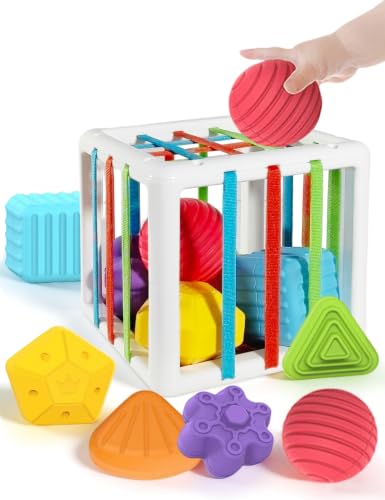
- Shape sorters: Beginner shape sorters with large, chunky pieces
- Push and pull toys: Activity walkers and push carts for early walking
- Peg puzzles: Wooden puzzles with large knobs for easy grasping
🔍 Cognitive Toys
- Cause-and-effect: Pop-up toys, button-press toys, and rolling balls
- Object permanence: Peek-a-boo boxes and hide-and-seek toys
- Simple puzzles: Colorful matching games and shape-fitting toys
- Nesting toys: Stacking cups and nesting blocks
📚 Language & Social Toys
- Baby books: Board books with bright colors and simple pictures
- Sound books: Books with animal sounds or first words
- Mimicry toys: Simple dolls and stuffed animals
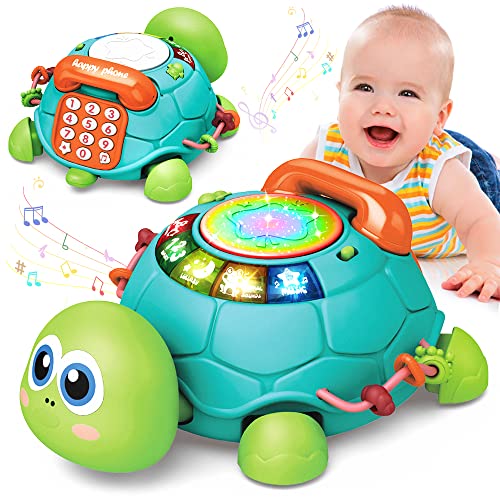
- Interactive toys: Toys that sing, talk, or respond to touch
✨ Expert Note: For babies in this age range, simple is often better. Toys that offer multiple ways to play—like a sensory ball that rolls, rattles, and has different textures—provide more learning opportunities than single-purpose toys. Learn more about sensory toys for babies and good developmental toys for 6-month-old babies.
Benefits of Age-Appropriate Educational Toys
Choosing the right educational toys for your 6–12 month old provides benefits that extend far beyond entertainment. Here's how these toys support your baby's development:
Cognitive Growth: Toys that encourage problem-solving and exploration help build neural connections and develop thinking skills.
Fine Motor Development: Grasping, manipulating, and exploring toys strengthens the small muscles essential for future skills like writing and self-feeding.
Gross Motor Skills: Toys that encourage reaching, crawling, and standing promote physical development and spatial awareness.
Language Foundation: Exposure to sounds, words, and interactive communication through toys builds the foundation for language development.
Sensory Integration: Exposure to varied textures, sounds, colors, and movements helps babies learn to process sensory information effectively.
Confidence Building: Successfully manipulating toys and exploring new environments builds self-confidence and encourages further exploration.
Safety Considerations for Baby Toys (6–12 Months)
Safety is paramount when choosing educational toys for infants. Babies in this age group explore primarily through their mouths, so all toys must meet stringent safety standards.
Safety Checklist
- Choking hazard prevention: All toy parts should be larger than your baby's mouth. Avoid toys with small parts, detachable eyes, buttons, or other pieces that could come loose.
- Non-toxic materials: Choose toys made from BPA-free plastic, lead-free paint, or sustainably sourced wood with natural, non-toxic finishes. Learn more about non-toxic toys.
- No sharp edges: Check that all edges are smooth and rounded to prevent cuts or scrapes.
- Sturdy construction: Ensure toys are well-made and won't break easily, creating sharp edges or small pieces.
- Battery safety: Battery compartments should be secured with screws to prevent access to small batteries.
- Age-appropriate labeling: Always check the manufacturer's age recommendations and safety warnings. Understand age safety labels.
- Regular inspection: Check toys regularly for signs of wear, loose parts, or damage, and discard any that become unsafe.
- Supervision: Always supervise your baby during play, even with age-appropriate toys.
⚠️ Important: For comprehensive safety information, review our complete toy safety guide and learn about choking hazard prevention. Always follow age recommendations and supervise playtime.
How to Choose Educational Toys for Your Baby
With so many options available, selecting the right educational toys can feel overwhelming. Use this simple guide to make confident choices for your 6–12 month old.
Consider Your Baby's Development
Look at what your baby is currently interested in or working on. A baby who is just learning to sit might enjoy toys that can be placed in front of them, while a baby who is starting to crawl might prefer toys that move or can be chased.
Look for Open-Ended Play
The best toys for this age offer multiple ways to play. A set of wooden blocks can be stacked, knocked down, explored for texture, and chewed on. This versatility extends the life of the toy and provides more learning opportunities.
Prioritize Quality Over Quantity
A few high-quality, developmentally appropriate toys are better than a large collection of less suitable ones. Focus on toys that truly support your baby's current developmental stage.
Observe Your Baby's Interests
Pay attention to what captures your baby's attention. Some babies are more visually oriented, while others are more tactile or auditory learners. Choose toys that align with your baby's natural preferences.
Encourage Social Interaction
Look for toys that you can play with together. Interactive play is crucial for social-emotional development and strengthens your bond with your baby.
For more guidance on selecting the perfect educational toys, explore our educational toys collection and toys by age guide.
Tips for Making the Most of Educational Toys
Once you've chosen the right toys, how you use them matters just as much. Here are tips to maximize the developmental benefits of your baby's educational toys.
Rotate Toys Regularly
Instead of having all toys available at once, rotate them every few days. This keeps playtime fresh and exciting, reduces overstimulation, and encourages deeper engagement with each toy.
Play Together
Your involvement makes a significant difference. Narrate what you're doing, describe what your baby is doing, and respond to their sounds and gestures. This builds language skills and strengthens your bond.
Follow Your Baby's Lead
Let your baby show you what interests them. If they're fascinated by shaking a rattle, let them explore that. Don't force toys or activities that aren't capturing their attention.
Create a Safe Play Space
Designate a safe, comfortable area where your baby can freely explore their toys without constant redirection. A play mat on a soft surface with accessible toys creates an ideal learning environment.
Embrace Repetition
Babies learn through repetition. Don't worry if your baby wants to play the same game or explore the same toy repeatedly—this is how they learn and master new skills.
🌟 Remember: The best toy in the world is your loving attention. Your baby learns most effectively through interactive play with you. For more play ideas, explore our creative play ideas and sensory bin activities for babies.
Frequently Asked Questions About Educational Toys for 6–12 Month Olds
What are the best toys for a 6-month-old baby?
At 6 months, babies benefit from toys that encourage reaching, grasping, and sensory exploration. Excellent choices include soft blocks, crinkle toys, textured balls, simple rattles, and activity gyms with hanging toys that can be batted and grabbed.
Are electronic toys good for babies?
Simple electronic toys that respond to touch or movement can be beneficial for teaching cause and effect. However, the best toys for this age encourage open-ended play and don't rely heavily on electronic features. A balance of electronic and non-electronic toys is ideal.
How many toys does a 6-month-old need?
Quality matters more than quantity. A small selection of 5–8 well-chosen toys that target different developmental areas is ideal. You can rotate these toys to maintain novelty and engagement.
When should I introduce shape sorters to my baby?
Simple shape sorters with large, chunky pieces can be introduced around 8–10 months. Initially, babies enjoy handling the pieces and trying to place them, even if they don't yet understand how to match shapes.
What's the difference between educational toys and regular toys?
Educational toys are specifically designed to promote learning and development. They typically target specific skills like fine motor development, cognitive skills, or sensory exploration. Regular toys may be purely for entertainment without these developmental benefits.
For more answers, visit our toy reviews and buying guides.
Ready to Support Your Baby's Development?
Choosing the right educational toys for your 6–12 month old is one of the most meaningful investments you can make in their development. The toys you select during this critical period will support your baby's sensory exploration, motor skill development, cognitive growth, and language foundation.
Remember that every baby develops at their own pace, and the most important element of play is your engagement. Whether you're exploring textures together, clapping to music, or reading a colorful book, your baby learns best through interaction with you.
Browse our recommended educational toys above to find the perfect additions to your baby's toy collection. Each toy has been carefully selected to support developmental milestones while ensuring safety and engagement.