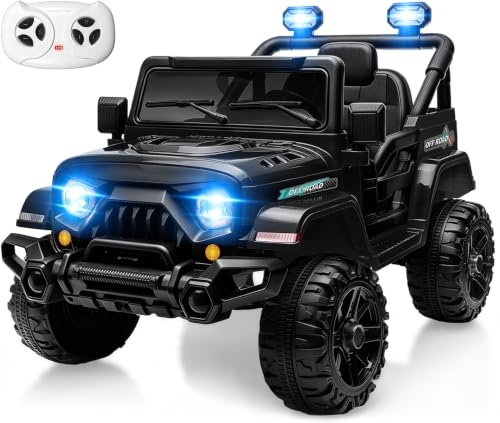
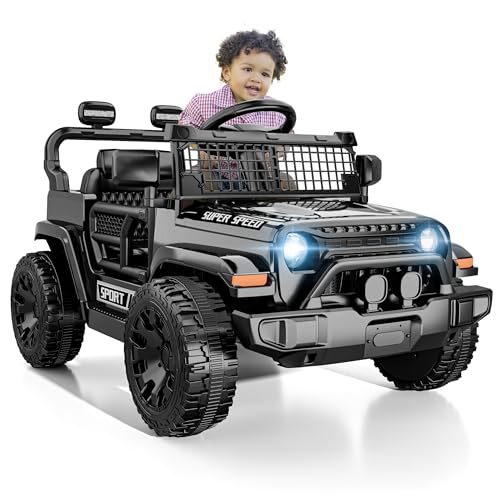
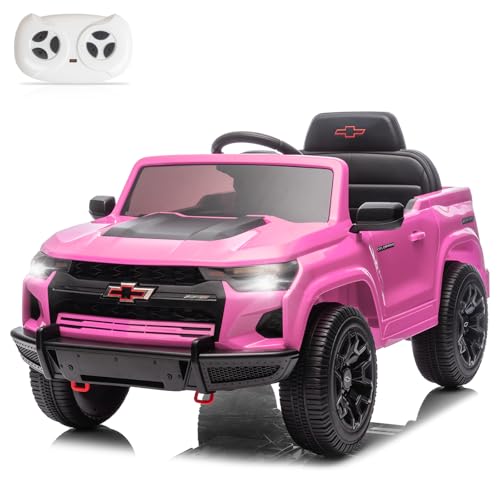
Electric Ride On Car with Remote Control: The Complete Parent Guide
Choosing a remote-controlled ride on car is about more than just fun — it's about safety, developmental appropriateness, and finding a model that grows with your child. This guide breaks down everything you need to know before making a confident decision.
Explore Recommended ModelsWhy Parental Remote Control Matters
An electric ride on car with remote control bridges the gap between a child's desire for independence and a parent's need for safety. For toddlers and preschoolers, the parental remote serves as a critical safety layer — allowing you to steer, accelerate, and stop the vehicle instantly if your child becomes distracted or encounters an obstacle.
The value of the remote extends beyond simple safety. It enables progressive learning: younger children can ride as passengers while you control the car, gradually transitioning to partial control (steering only or speed only), and eventually full independence as their coordination develops. This phased approach builds confidence without unnecessary risk.
For families with multiple children of different ages, a remote-controlled model offers remarkable versatility. The same vehicle can serve a two-year-old under full parental supervision and an eight-year-old in independent mode. This adaptability makes the investment far more practical than purchasing separate vehicles for each developmental stage.
How the Remote Control System Works
The parental remote communicates with the ride on car via radio frequency (RF), typically in the 2.4 GHz band. This frequency offers several advantages over older infrared systems: longer range, resistance to interference from sunlight, and the ability to pair multiple vehicles without cross-talk.
Entry-level models generally offer basic directional control — forward, reverse, left, right, and an emergency stop button. Mid-range and premium models add proportional speed control, meaning the parent can modulate acceleration smoothly rather than selecting from fixed speed steps. This subtle difference dramatically improves the riding experience, especially for younger children who are more sensitive to sudden movements.
The transition between parental control and child control is managed through a switch or key on the vehicle. Some models allow seamless switching mid-drive, while others require the vehicle to be stationary. Higher-end models may include a "training mode" where the parent retains speed limiting authority even when the child is steering.
Age Suitability & Developmental Stages
Age recommendations on ride on cars are a starting point, not an absolute rule. The right model depends on your child's physical size, coordination, attention span, and comfort level with motion.
12 to 24 Months: Full Parental Control
At this stage, children are primarily passengers. The parental remote is essential — your child experiences the joy of movement while you manage all navigation. Look for models with a secure harness, slow top speed, and soft-start acceleration. Many parents find that ride on toys for one-year-olds with remote control provide an excellent introduction to vehicular play without overwhelming the child.
2 to 3 Years: Guided Independence
Children begin to understand steering concepts and can handle simple directional input. The best approach is to let them steer while you control speed, or vice versa. This age group benefits from models with responsive remotes and clear visual feedback. Explore options for two-year-olds that balance safety features with opportunities for guided exploration.
3 to 5 Years: Transition to Independence
This is the prime age for remote-controlled ride on cars. Children have enough coordination to drive independently in safe environments, but the parental remote remains valuable for busy areas or unpredictable situations. Models for this age range often feature higher performance and more engaging features like music, lights, and realistic engine sounds. Consider ride on toys for three to five-year-olds with dual-mode operation.
5 to 8 Years: Independent Driving
Older children typically want full control, but a parental override remains a reassuring safety net. At this stage, look for larger models with higher weight capacity, more powerful motors, and genuine off-road capability. The remote becomes a backup rather than the primary control method.
Essential Safety Features Checklist
Not all remote-controlled ride on cars are created equal. Before making a decision, verify that your chosen model includes these critical safety elements:
- Reliable parental remote override — The remote must be able to stop the vehicle instantly and take full control at any moment.
- Soft-start acceleration — Prevents the vehicle from lurching forward when the accelerator is pressed, reducing the risk of falls.
- Speed governor — A mechanism to limit maximum speed, especially important for younger or less experienced drivers.
- Safety harness or seat belt — Essential for children under four; older children benefit from a secure lap belt.
- Child-proof doors — Doors that cannot be opened from the inside while the vehicle is in motion.
- Non-toxic, rounded-edge construction — All accessible surfaces should be free of sharp edges, and materials should meet safety standards.
- Battery safety — Sealed battery compartments, overcharge protection, and clear charging instructions.
- Sturdy wheels and suspension — Reduces vibration and improves stability on uneven surfaces.
For a broader discussion of safety standards across toy categories, our toy safety guide covers material safety, age labeling, and recall awareness.
Understanding Product Tiers
Remote-controlled ride on cars span a wide spectrum of quality, performance, and features. To help you navigate the market without relying on arbitrary price comparisons, we use a tier-based classification system that reflects relative positioning and build quality.
| Tier | Best For | Typical Characteristics | Remote Features |
|---|---|---|---|
| Entry-level | Ages 1–3, first-time riders | Single motor, simplified controls, lightweight construction, basic seats | Basic directional control with emergency stop; fixed speed steps |
| Mid-range | Ages 2–5, growing families | Dual motors, improved suspension, realistic styling, music and lights | Proportional speed control, wider range, smoother steering response |
| Premium | Ages 3–8, long-term use | High-torque motors, robust suspension, premium materials, larger batteries | Multi-channel remote, adjustable speed limits, training mode, extended range |
| Luxury / Flagship | Families seeking maximum capability | Brand-licensed designs, leather-style seats, advanced electronics, all-terrain tires | Full-featured remote with digital display, memory settings, precision control |
When comparing models, consider how the tier aligns with your intended use. An entry-level model is perfectly adequate for a toddler who will use the vehicle primarily under parental control on flat, paved surfaces. A mid-range or premium model makes more sense for families who plan to use the vehicle across multiple years and varied terrains.
The remote control system is often the clearest differentiator between tiers. Entry-level remotes typically offer on/off directional control with noticeable lag. Mid-range remotes introduce proportional input for smoother driving. Premium remotes may include features like gradual acceleration curves and the ability to fine-tune steering sensitivity.
Motors, Batteries & Performance
Two specifications have the most significant impact on real-world performance: motor configuration and battery capacity. Understanding these helps you set realistic expectations and choose a model that matches your child's riding habits.
Motor Configuration
Single-motor models drive one axle, typically the rear. They are lighter, more efficient, and adequate for flat surfaces and younger children. Dual-motor models power both axles, providing better traction, hill-climbing ability, and stability on uneven ground. For families with sloped driveways or gravel paths, dual motors are a meaningful upgrade.
Battery Capacity and Runtime
Battery capacity is measured in amp-hours (Ah) and voltage (V). Higher voltage generally translates to more power and speed, while higher amp-hours extend runtime. Entry-level models commonly feature 6V or 12V systems with 4–7 Ah batteries, delivering 45–60 minutes of continuous use. Mid-range and premium models often use 12V or 24V systems with 7–14 Ah batteries, extending runtime to 90 minutes or more.
Real-world runtime is affected by several factors: passenger weight, terrain incline, ambient temperature, and driving style. A 12V model that claims 90 minutes may deliver closer to 60 minutes with two children on a grassy slope. Always plan for shorter sessions than the maximum specification suggests, and consider a model with a removable battery for convenient charging.
Terrain & Environment Considerations
Where your child will ride is as important as how they will ride. The ideal model for a smooth driveway differs significantly from one intended for backyard adventures.
Paved surfaces: Almost any ride on car performs well on smooth concrete or asphalt. Prioritize tire grip and responsive steering over suspension complexity.
Grass and gravel: Look for models with wider, treaded tires, dual motors, and higher ground clearance. Suspension becomes important to absorb bumps and maintain stability.
Slopes: Dual motors with high torque are essential for climbing. Verify that the model's rated incline matches your environment. A vehicle that struggles on a mild slope can overheat its motors and shorten its lifespan.
Indoor use: Some families use ride on cars in spacious playrooms or basements. In these cases, prioritize a model with slow speed settings, soft-start acceleration, and non-marking tires.
If you're considering a two-seater for siblings or friends, our guide to two-seater electric cars covers the unique considerations for larger vehicles.
Explore Related Guides
- Electric Ride On Cars with Remote Control
- Electric Car with Parental Remote Control
- Ride On Toys for 2-Year-Olds
- Ride On Toys for 3-Year-Olds
- Ride On Toys for 4-Year-Olds
- Ride On Toys for 5-Year-Olds
- Electric Cars for 5-Year-Olds to Drive
- Electric Cars for 2-Year-Olds to Drive
- Drift Remote Control Car
- Drones for Kids
- Toy Safety Guide
- Outdoor Toys
Frequently Asked Questions
Most remote-controlled ride on cars are designed for children aged 1 to 5 years. The parental remote is especially valuable for toddlers who lack the coordination to steer independently. For older children aged 5 to 8, many models allow the child to take full control while the parent retains an override option.
The parental remote is a handheld transmitter that communicates with a receiver inside the car via radio frequency. It typically offers forward, reverse, left, right, and an emergency stop function. Higher-tier models offer proportional speed control, allowing the parent to modulate acceleration smoothly rather than switching between fixed speeds.
Prioritize a model with a reliable parental remote override, a soft-start mechanism to prevent sudden jolts, a safety belt or harness, sturdy doors with child-proof locks, and a speed governor that limits maximum velocity. Also check for non-toxic materials and rounded edges on all accessible surfaces.
Battery life varies by model tier. Entry-level models typically offer 45 to 60 minutes of continuous use, while mid-range and premium models with higher-capacity batteries can deliver 90 minutes to over two hours. Runtime is influenced by terrain, passenger weight, and speed settings.
Yes, many mid-range and premium models are designed with two seats and a higher weight capacity. However, be aware that added passenger weight reduces runtime and hill-climbing performance. For siblings close in age, a two-seater is often a better long-term investment than two separate single-seat vehicles.
Most ride on cars require assembly out of the box. Entry-level models typically involve attaching wheels, the steering wheel, and the seat — usually 30 to 45 minutes with basic tools. Premium models with more complex features may take longer, but manufacturers generally provide clear instructions and pre-assembled major components.
Ready to Choose the Right Ride On Car?
Our curated selection of remote-controlled ride on cars prioritizes safety, durability, and genuine developmental value. Each recommendation is based on hands-on evaluation and real-world feedback.
View Recommendations