Dollhouse Miniature Lights Battery Operated: The Complete Buyer's Guide
Everything you need to know before choosing battery-powered lighting for your dollhouse — from wiring-free installation to tier-by-tier comparisons and long-term maintenance.
Why battery operated lights matter: Battery-powered miniature lighting frees you from wall outlets and complex wiring, making it the most flexible way to bring a dollhouse to life. Whether you are finishing a starter dollhouse or upgrading a collector-grade doll house, this guide explains the options, the trade-offs, and the practical details that help you choose with confidence.
Dollhouse miniature lights that run on batteries have transformed the hobby. In the past, illuminating a dollhouse meant hiding wires, drilling holes, and accepting that the finished project had to stay near a power source. Battery operated systems remove those constraints. You can place a dollhouse on any shelf, in any room, and still enjoy warm, realistic lighting in every miniature room.
This guide is written for buyers who already know they want battery-powered dollhouse lighting and now need the details: what types exist, how they differ across quality tiers, how to install them cleanly, and how to keep them working for years. If you are still exploring the broader world of dollhouse collecting, the dollhouses guide offers useful context on scales and styles.
Types of Battery Operated Dollhouse Lights
Not all miniature lighting is built the same. The category splits into a few clear families, each suited to different dollhouse sizes and play styles.
LED Strip and Tape Lights
Flexible LED strips are the most versatile option. They can be cut to length, bent around corners, and adhered under ceilings or behind furniture. Battery operated versions usually connect to a small battery box with an inline switch. These are ideal for broad, even room lighting and work well in larger doll house builds where a single strip can light an entire floor.
Individual Bulb Fixtures
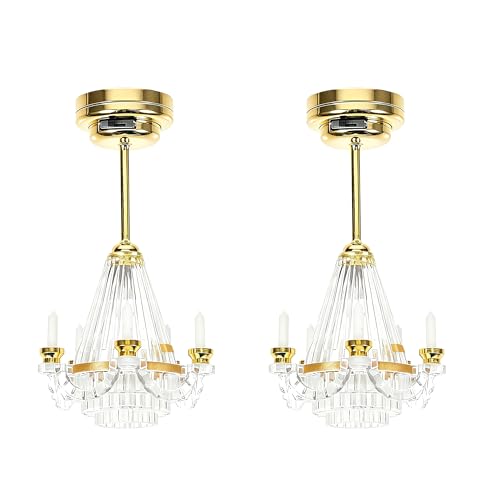
These are miniature replicas of real ceiling lights, wall sconces, and table lamps, each with its own LED and wiring lead. Individual fixtures deliver the most authentic look because each light has a believable housing. They typically connect to a central battery hub, and installation requires more planning since each fixture needs its own wire run.
Fairy Lights and Micro Strings
Ultra-thin copper wire strings with tiny LEDs are popular for a soft, scattered glow. They are especially good for gardens, patios, and attic spaces in a dollhouse, and they pair nicely with doll houses sized for larger dolls where scale allows visible strings.
Plug-In Battery Boxes with Multiple Ports
Rather than one battery per light, hub-style battery boxes accept multiple fixture leads and run them from a single battery pack. This is the most practical approach for a fully lit dollhouse and is the standard in mid-range and top-tier sets.
How to Compare Quality Tiers
Battery operated miniature lighting spans a wide range of build quality. The table below uses a tier system to help you match a set to your project without relying on any specific figures.
| Tier | Best For | Typical Characteristics |
|---|---|---|
| Entry-level | First dollhouse projects, seasonal displays, light use | Coin cell or small battery packs, basic inline switches, limited wire length, simpler housings |
| Mid-range | Regular hobbyists, fully furnished dollhouses, family play | Multi-port battery hubs, AA or AAA power, dimmable options, sturdier connectors, longer leads |
| Premium | Collector displays, detailed scale builds, long-term installations | Remote control, warm-white tuning, reinforced wiring, detailed fixture housings, efficient low-heat LEDs |
| Luxury | Museum-quality dioramas and heirloom dollhouses | Professional-grade components, modular expandability, refined color rendering, extensive accessory ranges |
A mid-range set usually offers a noticeably smoother experience than an entry-level one: connectors seat more firmly, switches feel more positive, and the battery hub is easier to mount out of sight. Premium sets add convenience features like remote dimming that matter most in large or hard-to-reach dollhouses.
Key Takeaway
Choose a tier based on how often the dollhouse will be lit and how visible the wiring will be. For a display piece seen daily, the mid-range or premium tier is the sensible choice. For an occasional seasonal display, an entry-level set is a solid starting point.
What to Look For Before Buying
Several practical details separate a satisfying installation from a frustrating one. Check these before committing to a set.
- Battery type and count: Coin cells keep fixtures tiny but need frequent replacement. AA and AAA packs are bulkier but last longer and are easier to source.
- Switch placement: Inline switches are simple; remote controls are more convenient for large builds. Consider whether you can reach the battery box once the dollhouse is in place.
- Wire length and gauge: Longer, slightly thicker leads are easier to route and less prone to breaking at the connector.
- LED color temperature: Warm white reads as cozy and realistic for living rooms and bedrooms; cool white suits kitchens and modern interiors.
- Heat output: Quality LEDs stay cool to the touch, which matters in a confined miniature space.
- Expandability: If you plan to add rooms later, a hub with spare ports saves you from buying a second system.
For collectors comparing lighting alongside other dollhouse details, the doll type comparison is a helpful companion read when deciding which figures will occupy the lit rooms.
Installation Tips for a Clean Result
Good installation is mostly about planning the wire runs before anything is glued or fixed in place.
- Plan the circuit first. Sketch which fixtures belong to which battery hub so you can group them logically by floor or room.
- Hide the hub early. Place the battery box in a basement, attic, or hidden closet space before assembling walls.
- Route wires along corners. Miniature wiring disappears fastest when it follows wall-floor junctions and behind furniture.
- Test before securing. Power everything up after rough placement and before final fixing — it is far easier to correct a flickering connector at this stage.
- Leave service access. Make sure you can reach the battery compartment and any inline switches without dismantling the dollhouse.
If the dollhouse will be handled by children, secure loose wiring with small clips and keep the battery box out of reach. The broader dollhouse overview covers safe play practices that apply to lighting as well.
Maintenance and Longevity
Battery operated miniature lights are low-maintenance, but a few habits keep them reliable for years.
- Remove batteries during long storage periods to prevent corrosion.
- Use rechargeable batteries in mid-range and premium hubs to keep running costs sensible over time.
- Inspect connectors annually — miniature plugs are the most common point of failure.
- Dust fixtures gently with a soft brush; never use liquid cleaners near the wiring.
- Keep spare LEDs and a spare battery hub on hand if the dollhouse is a long-term display.
Frequently Asked Questions
How long do battery operated dollhouse lights last?
Runtime depends on the battery type, the number of LEDs, and the brightness setting. Entry-level sets using coin cell batteries typically run for a shorter period, while mid-range and premium sets with AA or AAA batteries and efficient LEDs deliver noticeably longer illumination. Using rechargeable batteries and switching lights off when not in use extends runtime considerably.
Are battery operated dollhouse lights safe for children?
Yes, battery operated lights are generally the safest option for dollhouses because they avoid mains electricity entirely. Look for sets with enclosed battery compartments, low-heat LED bulbs, and secure wiring. Always supervise young children and follow the age recommendations on the packaging.
Can I mix battery operated lights from different sets?
It is possible but not recommended unless the voltage and connector types match. Mixing sets with different voltage ratings can cause flickering, dim output, or damage to the LEDs. For consistent results, choose a single system or verify compatibility before combining components.
Do battery operated dollhouse lights come with a remote control?
Many mid-range and top-tier sets include a remote control for on/off switching, dimming, and sometimes color temperature adjustment. Entry-level sets usually rely on a simple inline switch or a small switch on the battery box. Remote-controlled sets are especially convenient for large dollhouses where reaching the battery box is awkward.
Final Thoughts
Battery operated miniature lighting is the most flexible way to finish a dollhouse. It removes the need for outlets, keeps wiring hidden, and lets you light each room exactly as you imagine it. Match the tier to how often the dollhouse will be used and how visible the installation will be, plan your wire runs before assembling, and the result will look intentional rather than improvised.
If you are still deciding between dollhouse styles before committing to lighting, the battery operated miniature lights guide you are reading pairs well with the dollhouse and doll house overviews. For households with younger children, the safety notes in the dolls for 4 and 5 year olds guide are worth reviewing too.
Ready to Light Up Your Dollhouse?
Browse our curated selection of battery operated dollhouse lighting below and compare features side by side before you decide.
View Lighting Options