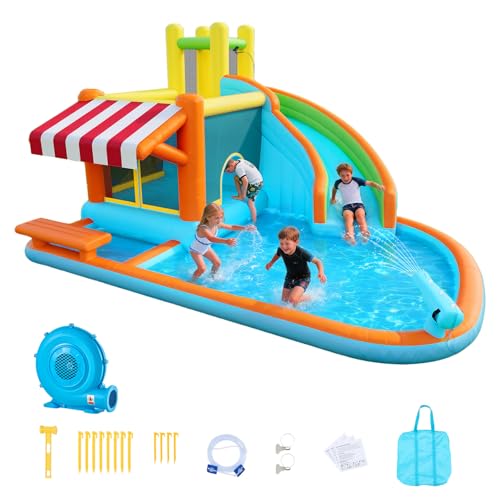
Bounce House and Water Slides for Sale: The Complete Buying Guide
Your trusted resource for choosing the right inflatable bounce house and water slide combination for backyard fun, family gatherings, and outdoor events.
A bounce house and water slide for sale is one of the most rewarding outdoor investments a family can make. It transforms an ordinary backyard into a destination for birthdays, summer weekends, and neighborhood gatherings. But with so many shapes, sizes, and construction tiers on the market, choosing the right one requires more than a quick glance at product photos. This guide walks you through the essential factors — from material quality and safety features to setup requirements and long-term durability — so you can make a confident, informed decision.
Whether you are a parent searching for a family-friendly inflatable water slide with pool, or an event organizer exploring commercial-grade bounce house options, the information below is structured to help you compare models on the criteria that actually matter. You will learn how residential and commercial tiers differ, what safety certifications to look for, and how to match a unit to your available space and intended frequency of use.
Why a Bounce House With Water Slide Is a Smart Outdoor Addition
Inflatable bounce houses with integrated water slides offer a unique combination of active play and cooling relief during warm months. Unlike standalone sprinklers or small wading pools, a combined unit encourages physical activity, imaginative play, and social interaction among children of different ages. For families who host gatherings regularly, owning an inflatable unit eliminates the need to arrange rental deliveries for every occasion and gives children consistent access to a fun, screen-free activity.
For those exploring rental options as an alternative to ownership, resources on blow-up water slide rentals for adults and blow-up water slides for adults available for rent provide useful context on what temporary setups offer. However, for families with adequate yard space and regular use in mind, a purchase often proves to be the more practical long-term choice.
Measure your yard twice before ordering. Account for the inflatable's footprint, the blower's position, the entry and exit paths, and a safety buffer around all sides. Overhead branches and power lines are easy to overlook but critical to check.
Types of Bounce House and Water Slide Combinations
The market offers several configurations, each suited to different spaces and play styles. Understanding these categories helps you narrow down your options quickly and avoid a mismatch between the product and your intended use.
Bounce House With Water Slide and Pool
This is the most popular configuration for family backyards. The unit combines a jumping area with a slide that ends in a shallow splash pool. Models in this category range from compact entry-level units to larger mid-range designs with climbing walls and dual slides. A well-designed bounce house with water slide and pool provides a complete play experience in a single footprint, which is ideal for yards with limited space.
Bounce House With Water Slide and Air Blower
The air blower is the engine of any inflatable. Units sold with a compatible blower included simplify setup and ensure the inflation system matches the manufacturer's specifications. A bounce house with water slide and air blower bundle is often the most convenient choice for first-time buyers, as it removes the guesswork of sourcing a separate blower with the correct airflow rating.
Standalone Blow-Up Water Slides
For families who already own a bounce house or prefer a dedicated sliding experience, standalone inflatable water slides are available in a wide range of sizes. A blow-up water slide with pool offers the thrill of a slide with a built-in landing pool, while compact models suit smaller yards. Larger designs, including those sized for adults, are covered in guides on blow-up water slide rentals for adults.
Commercial-Grade Inflatables
Commercial units are built for rental businesses, schools, churches, and event companies. They use heavier vinyl, reinforced stitching, and more robust anchor systems to withstand frequent setup and takedown. If you are evaluating commercial options, detailed comparisons of commercial inflatable water slides and commercial bounce houses with water slides can help you understand the differences in construction and intended duty cycle.
Residential vs. Commercial: Understanding Construction Tiers
One of the most important decisions is choosing between a residential and a commercial-grade unit. The difference is not just in size — it is in material thickness, seam construction, blower power, and overall build philosophy. The table below summarizes the key distinctions using universal tier descriptors.
| Feature | Entry-Level / Residential Tier | Mid-Range Tier | Commercial-Grade Tier |
|---|---|---|---|
| Intended Use | Occasional family use | Frequent family use and small events | Rental businesses, schools, public events |
| Material | Standard-duty vinyl | Heavier vinyl with reinforced seams | High-grade, heavy-duty vinyl with double stitching |
| Blower | Basic blower included or sold separately | Higher-output blower for consistent inflation | Commercial blower with continuous-duty rating |
| Setup Frequency | Seasonal or occasional | Regular weekend use | Daily or weekly commercial operation |
| Anchor System | Basic stakes and tie-downs | Reinforced anchor points | Heavy-duty anchor system with multiple attachment points |
Essential Tier
Good value for its tier. Best for families testing the waters with occasional backyard use and straightforward setup needs.
Balanced Tier
Solid choice for the category. Offers a well-specified feature set for families who plan to use their inflatable regularly throughout the season.
Top-Tier / Commercial-Grade
Built for heavy use. A long-term investment for rental operators and organizations that need reliable, repeated performance.
Safety Features That Matter
Safety should never be an afterthought with inflatable play equipment. The best units incorporate multiple layers of protection, from secure anchoring to non-slip surfaces and protective netting. When comparing models, verify that the following features are present and clearly documented by the manufacturer.
- Reinforced anchor points — look for multiple attachment points on all sides, with heavy-duty stakes or sandbag loops included.
- Safety netting or barriers — netting around the jumping area prevents accidental falls, while barriers at the top of slides keep riders centered.
- Non-slip climbing surfaces — textured ramps and steps reduce the risk of slips, especially when wet.
- Secure slide transitions — the connection between the slide and the pool or landing area should be smooth and reinforced.
- Clear weight and age limits — manufacturers specify maximum capacity per rider and total capacity. Respect these limits strictly.
- Blower safety features — a GFCI-protected cord and a blower positioned away from water are essential for water slide setups.
No set of safety features replaces adult supervision. Always have a responsible adult present during use, enforce capacity limits, and deflate and store the unit when not in use. For families considering indoor options during cooler months, a children's indoor bounce house can extend playtime, but the same supervision rules apply.
Setup, Space, and Site Preparation
Proper setup is the difference between a smooth, safe play session and a stressful one. Before purchasing, confirm that you have a flat, clear area large enough for the inflatable's footprint plus a safety margin. The ground should be free of sharp objects, and the surface should be suitable for anchoring stakes — grass is ideal, while hard surfaces may require sandbags instead.
Consider the blower placement carefully. It should be on a dry surface, connected to a grounded outlet, and positioned so that the inflation tube is not a trip hazard. For water slide models, ensure the pool area drains properly and that the hose connection is secure. Always follow the manufacturer's setup instructions precisely, and never modify the anchor system or blower configuration.
If your yard cannot accommodate a full bounce house and slide combination, a smaller blow-up slide with pool offers a more compact alternative. For families with above-ground pools, a blow-up slide for above-ground pool can add excitement without the footprint of a full inflatable structure.
Ready to Compare Bounce House and Water Slide Options?
Explore curated models, check availability, and find the right fit for your backyard or event business.
View Recommended ModelsPre-Purchase Checklist
Before you commit to a specific model, run through this checklist to make sure nothing is overlooked. A few minutes of verification now can save significant frustration later.
- Measure your yard and confirm the unit's footprint plus required clearance.
- Identify a grounded outlet near the setup area for the blower.
- Check the manufacturer's safety certifications and warranty terms.
- Confirm that the blower is included or that you are sourcing the correct model separately.
- Review the weight and age limits against your intended users.
- Verify that a storage bag and repair kit are included.
- Read owner reviews for real-world setup experiences and durability feedback.
- Plan for proper anchoring — stakes for grass, sandbags for hard surfaces.
Related Guides and Resources
Exploring complementary topics can help you build a complete outdoor play setup. If you are considering a dedicated water play area, guides on blow-up pools for adults provide useful context on larger splash options. For commercial buyers, comparisons of commercial inflatable water slides and commercial fiberglass water slides for sale cover the permanent-installation alternative. Families interested in indoor play equipment can explore children's outdoor play equipment and children's playhouse with swing and slide options.
Frequently Asked Questions
What should I look for when buying a bounce house with a water slide?
Focus on durable construction, reinforced seams, a reliable air blower, safety netting, and a design that matches your available space and intended use. Check the manufacturer's safety certifications and setup requirements before choosing a model.
How do I choose between a residential and commercial-grade inflatable water slide?
Residential models are designed for occasional family use and are lighter and easier to set up. Commercial-grade models use heavier materials, reinforced stitching, and are built for frequent use in rental businesses or public events. Match the tier to how often and where you plan to use it.
How much space do I need for a bounce house with a water slide?
Always follow the manufacturer's listed footprint dimensions and add clearance for the blower, entry and exit paths, and safety margins. Measure your yard or venue carefully and account for overhead obstacles such as branches and power lines.
What safety features are essential in an inflatable water slide?
Look for reinforced anchor points, non-slip climbing surfaces, safety netting or barriers, secure slide transitions, and clear weight and age limits. Proper anchoring and adult supervision are essential regardless of the model's features.
Can I use a bounce house with water slide on a hard surface?
Yes, but you will need sandbags instead of stakes for anchoring, and the surface must be flat and free of sharp debris. A safety mat or tarp underneath adds protection for both the inflatable and the users.
Final Thoughts
Choosing a bounce house and water slide combination is an investment in outdoor family fun. By understanding the construction tiers, prioritizing safety features, and planning your setup carefully, you can select a unit that delivers years of enjoyment. Whether you are outfitting a backyard for summer play or evaluating commercial options for an event business, the right inflatable brings together physical activity, social play, and the simple joy of a splash on a warm day.