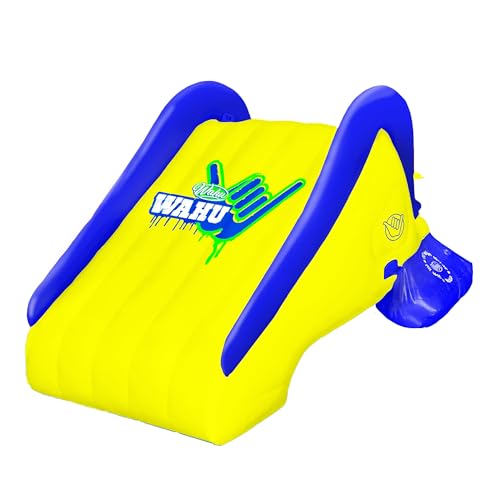
Blow Up Slide for Above Ground Pool: The Complete Buyer's Guide
Transform your backyard pool into a water park adventure. Learn how to choose, set up, and safely use an inflatable pool slide that fits your above ground pool perfectly.
Start the Guide🏊 Why an Inflatable Pool Slide? An inflatable slide instantly adds excitement to any above ground pool. It encourages active outdoor play, helps children build water confidence, and turns ordinary swim time into a highlight of the day. But choosing the right model requires attention to pool height, anchoring, weight limits, and material quality. This guide walks you through everything you need to know before making a confident purchase.
What to Look for in a Blow Up Slide for an Above Ground Pool
Above ground pools have unique structural characteristics that differ from in-ground pools. Their walls are elevated, decks may be limited, and anchoring options are constrained. A slide designed for an in-ground pool will not necessarily work safely on an above ground model. Below are the critical factors to evaluate.
1. Pool Height Compatibility
Above ground pools generally range from 36 inches to 54 inches in wall height. Your inflatable slide must match this height to provide a safe, gradual descent into the water. Slides intended for taller pools feature longer chutes and higher entry platforms. Attempting to use a slide that is too short for your pool wall creates an awkward drop; too tall, and the slide may not anchor securely. Always check the manufacturer's stated compatibility range before purchasing.
2. Weight Capacity and Age Rating
Residential inflatable slides typically carry weight limits between 100 and 250 pounds. Some premium and commercial-grade models support adult use. If multiple children will use the slide, consider a model with a higher weight capacity and reinforced seams. Age recommendations matter too — slides for younger children often have shallower chutes and lower entry points. Never exceed the manufacturer's stated limits, as this compromises both safety and the slide's structural integrity.
3. Anchoring and Stability System
This is arguably the most important safety consideration. A blow up slide must remain firmly in place during use. Look for these anchoring features:
- Weighted anchor bags — filled with water or sand to secure the base
- Tie-down straps — connect to the pool frame, ladder, or ground stakes
- Non-slip base — textured underside that grips the pool deck or platform
- Reinforced attachment points — metal or heavy-duty plastic D-rings rather than thin fabric loops
Some slides are designed to rest on a pool ladder platform, while others sit on a separate inflatable base. Confirm that the anchoring method suits your pool's configuration.
4. Material Quality and Durability
Inflatable slides are typically made from PVC, vinyl, or heavy-duty polyester with PVC coating. Entry-level models may use thinner material that punctures more easily. Mid-range and premium models feature thicker gauge PVC, double-stitched seams, and UV-resistant coatings that prevent fading and cracking. If the slide will be exposed to sunlight for extended periods, UV resistance is essential. A durable construction translates to multiple seasons of reliable use.
5. Slide Design and Safety Features
Key design elements to evaluate include:
- Chute length and slope — a gradual slope is safer and more comfortable than a steep drop
- Side walls or rails — keep riders centered and prevent accidental falls
- Entry platform or step — provides a stable standing area before sliding
- Non-slip climbing surface — textured steps or handles for safe ascent
- Splash pool at the base — some models include a small landing zone that cushions entry into the main pool
6. Inflation and Setup Requirements
Most inflatable slides require an electric air pump (often not included) and take 10–30 minutes to inflate fully. Consider where you will position the slide and whether your pool deck or ladder platform can accommodate it. Some models are designed to be used with a separate inflatable landing mat that sits inside the pool. Check whether the slide requires a specific water depth and whether it can remain inflated between uses or must be deflated and stored after each session.
Comparing Slide Types by Tier
To help you navigate the market, here is a comparison of inflatable pool slide categories using universal quality descriptors.
| Tier | Best For | Key Characteristics |
|---|---|---|
| Entry-level | Occasional use, younger children | Lighter material, shorter chute, basic anchor bags, simpler design |
| Mid-range | Regular family use, mixed ages | Thicker PVC, reinforced seams, longer chute, multiple anchor points, UV coating |
| Premium | Frequent use, older children and teens | Heavy-duty construction, extended chute, commercial-grade valves, robust anchoring system |
| Commercial-grade | Rental, daycare, heavy traffic | Industrial PVC, double-reinforced seams, large weight capacity, professional anchoring hardware |
💡 Pro Tip: If you plan to use the slide with a blow up slide with pool combination set, check that the slide's anchoring system is compatible with the pool's frame. Integrated sets often provide the most stable and hassle-free experience.
How to Set Up Your Inflatable Slide Safely
Proper installation is critical to preventing accidents. Follow these steps for a secure setup:
- Choose the right location. Position the slide on a flat, stable surface adjacent to your pool. If using a pool ladder platform, ensure it is rated for the combined weight of the slide and the rider.
- Inflate fully. Use an electric pump to inflate the slide to the recommended firmness. Under-inflation makes the slide unstable; over-inflation stresses seams.
- Anchor all points. Fill anchor bags with water or sand as directed. Secure all tie-down straps to the pool frame, ladder, or ground stakes. Test the slide by gently pushing it — it should not shift.
- Check water depth. Ensure the pool's water level meets the minimum depth required by the slide manufacturer. The landing area should be clear of toys, floats, and other obstructions.
- Establish rules. One rider at a time, feet-first sliding, no jumping from the top, and adult supervision at all times.
⚠️ Safety Note: Always supervise children around pool slides. Ensure the slide is used only by swimmers who are comfortable in the water. For added backyard fun, consider pairing your pool slide with a blow up water slide and bounce house for a complete entertainment zone.
Maintenance and Storage Tips
To extend the life of your inflatable pool slide:
- Rinse with fresh water after each use to remove chlorine and salt residue
- Dry thoroughly before folding and storing — moisture encourages mold and mildew
- Store in a cool, dry place away from direct sunlight during off-season
- Inspect seams, valves, and anchor points regularly for wear or damage
- Use a repair patch kit for minor punctures to prevent small issues from becoming major ones
Frequently Asked Questions
Are blow up slides safe for above ground pools?
Yes, when used correctly. Choose a slide rated for your pool's height, ensure proper anchoring, maintain adult supervision, and follow the manufacturer's weight and age guidelines. Always check that the slide is designed specifically for above ground pool use.
How do I attach an inflatable slide to an above ground pool?
Most models use a combination of weighted anchor bags, tie-down straps secured to the pool frame or ground stakes, and a stable base that rests on the pool deck or ladder platform. Always follow the included instructions and test stability before use.
What pool height is suitable for a blow up slide?
Above ground pools typically range from 36 to 54 inches in wall height. Choose a slide whose manufacturer explicitly states compatibility with your pool's wall height. Slides designed for higher walls generally feature longer chutes and more robust anchoring systems.
Can adults use inflatable pool slides?
Some premium and commercial-grade inflatable slides are rated for adult use, but many residential models are designed for children. Always check the manufacturer's weight limit and age recommendation before allowing adults to use the slide.
How do I maintain and store an inflatable pool slide?
Rinse with fresh water after each use, dry thoroughly before storage, and keep it away from sharp objects. Store in a cool, dry place during off-season. Periodically inspect seams, valves, and anchor points for wear.
Ready to Find the Perfect Slide?
Browse our curated selection of inflatable pool slides and compare features side by side.
Explore Top Picks