Indoor Jumpy House: The Complete Guide to Safe Home Bounce Fun
Everything parents need to know before bringing an indoor bounce house home — safety standards, size selection, material quality, setup requirements, and the features that truly matter for everyday family play.
START THE COMPLETE GUIDE🧸 Why an Indoor Jumpy House? An indoor jumpy house transforms rainy days, winter breaks, and after-school hours into active, joyful play. Unlike outdoor inflatables that depend on weather, an indoor bounce house gives children a dedicated space for physical activity, vestibular development, and social play — right inside your home. This guide walks you through every decision point so you can choose confidently and use it safely for years.
What Exactly Is an Indoor Jumpy House?
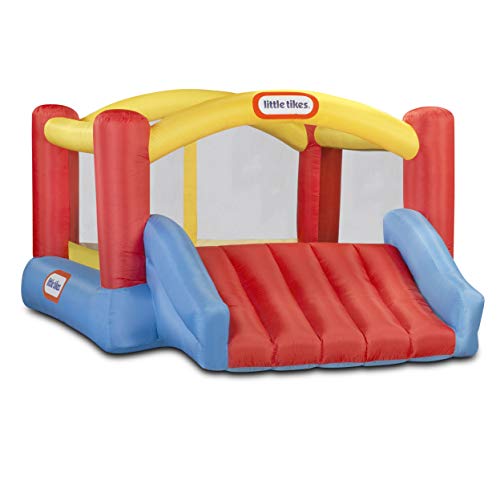
An indoor jumpy house — also called an indoor bounce house or home bouncer — is a compact inflatable structure designed specifically for use inside the home. Unlike commercial-grade inflatables found at fairs, indoor models are scaled down, built with softer materials, and engineered for lower ceilings and limited floor space. They typically feature a jumping area, protective walls, and often a small slide or hoop for added engagement.
The key distinction lies in blower type and anchoring. Indoor models use quieter blowers and rely on weight bags or suction-style bases rather than heavy ground stakes. Many modern designs also incorporate mesh netting for visibility, padded floors, and reinforced seams — features that matter enormously for daily home use. If you are exploring broader home play options, our guide to indoor play equipment for home covers complementary solutions like climbing frames and soft play sets.
Why Families Choose an Indoor Bounce House
Year-Round Activity
Children get consistent physical exercise regardless of weather. Regular bouncing supports gross motor development, balance, and coordination — especially valuable for energetic toddlers and preschoolers.
Screen-Free Engagement
An indoor jumpy house naturally pulls kids away from tablets and televisions. It creates an inviting physical play zone that siblings and friends gravitate toward, encouraging cooperative and imaginative play.
Safe, Controlled Environment
Indoors, the play surface is flat and predictable. Parents can supervise closely, and the soft inflatable walls cushion falls far better than hard floors or outdoor terrain.
Party & Playdate Ready
An indoor bounce house instantly turns a living room or playroom into a party destination. It is a reliable hit for birthdays, sleepovers, and holiday gatherings without the logistics of venue rental.
Therapy & Sensory Support
Many occupational therapists recommend controlled bouncing for sensory-seeking children. The rhythmic motion provides proprioceptive input that can help with regulation and focus.
Long-Term Investment
A well-chosen indoor model serves a family for years — through toddlerhood, preschool, and early elementary ages. It is a long-term investment in active, healthy play habits.
Indoor Jumpy House Tiers: Entry-Level to Premium
To help you compare options without getting lost in specifications, we classify indoor jumpy houses into three broad tiers based on construction quality, feature set, and intended usage frequency. This framework focuses on build and capability rather than any numeric figures.
| Tier | Best For | Typical Features | Construction Notes |
|---|---|---|---|
| Entry-Level | Occasional use, small spaces, first-time buyers | Basic jump area, simple blower, minimal accessories | Lighter fabric, shorter warranty, suitable for supervised light play |
| Mid-Range | Regular family use, multiple children, small playdates | Slide or hoop, mesh walls, quieter blower, carry bag | Reinforced seams, thicker PVC, better stability and durability |
| Premium | Frequent use, larger families, long-term investment | Integrated slide, basketball hoop, storage pockets, ultra-quiet blower | Commercial-grade materials, double-stitched seams, extended warranty |
A mid-range model typically offers a noticeably smoother blower and more stable walls than an entry-level unit, making it a solid choice for households with two or more children. Premium models are engineered for near-daily use and often include features that simplify setup and storage. If you are also considering larger indoor climbing options for older children, our overview of indoor climbing toys for 4-year-olds provides useful context on how bounce houses compare with climbing frames.
Safety First: Non-Negotiable Considerations
Safety is the single most important factor when choosing and using an indoor jumpy house. Inflatable play carries inherent risks, and the home environment introduces unique challenges — low ceilings, nearby furniture, and hard floors. The following checklist covers the essentials every parent should verify.
- Age and weight limits: Always follow the manufacturer's stated age range and maximum weight capacity. Never allow older or heavier children to jump alongside toddlers.
- Ceiling clearance: Measure your ceiling height and compare it to the inflated height of the bounce house. Children can bounce surprisingly high; allow a safe margin of at least one foot above the recommended clearance.
- Floor surface: Place the jumpy house on a flat, level surface. Use a padded play mat underneath on hard floors to reduce impact noise and provide an extra layer of cushioning.
- Blower and anchoring: Ensure the blower is stable and the unit is properly anchored with weight bags or the manufacturer's recommended system. Never improvise with tape or household items.
- Supervision: An adult should supervise children at all times during use. Establish clear rules: no shoes, no food or drinks, no sharp objects, and no rough play near the entrance.
- Ventilation and placement: Keep the blower away from curtains, furniture, and heat sources. Ensure the room is well-ventilated and that the blower cord is secured to prevent tripping.
⚠️ Important Safety Reminder: Indoor jumpy houses are not a substitute for professional supervision. Children should never be left unattended inside or near an inflated bounce house. Deflate and store the unit immediately after use, and inspect seams, blower connections, and anchor points before every session. If you notice any damage — tears, loose stitching, or a failing blower — discontinue use until repaired or replaced.
For families who also maintain outdoor play areas, our related guide on indoor playground equipment for sale explores how to build a comprehensive home play environment that balances active and quiet play zones. If you are specifically outfitting a space for younger toddlers, the recommendations in our indoor climbing toys for 2-year-olds article can help you choose age-appropriate physical play equipment.
Sizing and Space Planning for Your Home
Indoor jumpy houses come in a range of footprints, from compact units designed for a single toddler to larger models that accommodate two or three children comfortably. Accurate space planning prevents the frustration of a unit that does not fit or leaves no room for safe supervision.
Measure your intended play area — length, width, and height — and compare it to the inflated dimensions of the bounce house, not the packaged size. Allow at least two feet of clearance on all sides for safe entry, exit, and blower placement. Also consider the blower tube: it requires a clear path to the unit and should not cross a walkway.
For families with older children who want more demanding physical play, exploring indoor climbing toys for 10-year-olds may reveal complementary options that pair well with a bounce house in a larger playroom. And if you are setting up a dedicated play zone for a three-year-old, our guide to indoor climbing toys for 3-year-olds offers useful comparisons between bouncing and climbing as developmental activities.
Materials, Blowers, and Build Quality
The quality of an indoor jumpy house is largely determined by its fabric, seams, and blower. Most indoor models use PVC or oxford nylon. PVC is heavier, more puncture-resistant, and easier to wipe clean — ideal for households with pets or frequent use. Oxford nylon is lighter and more packable but generally less durable over the long term.
Look for double-stitched seams and reinforced stress points at corners and anchor loops. A quality blower is equally important: it should be quiet enough for indoor use, have a thermal protection switch, and maintain consistent pressure without overheating. Premium models often include a blower with a built-in GFCI plug for added electrical safety.
Storage and setup convenience also matter. A model that takes fifteen minutes to inflate and five minutes to fold will see far more use than one that requires a frustrating wrestling match each time. Look for units that include a carry bag, a repair patch kit, and clear setup instructions.
Frequently Asked Questions
Making Your Decision: A Confident Path Forward
Choosing an indoor jumpy house comes down to three core questions: How much space do you have? How often will it be used? And what safety features are non-negotiable for your family? Answer those honestly, and the right model becomes clear.
For occasional use in a compact playroom, an entry-level unit is a sensible starting point. For families with multiple children who will use the bounce house regularly, a mid-range model with reinforced seams and a quieter blower delivers meaningful improvements in durability and experience. And for those who view this as a long-term investment in daily active play, a premium model offers the build quality and features that justify the higher tier.
Whichever tier you choose, prioritize safety certifications, proper anchoring, and adult supervision. An indoor jumpy house is more than a toy — it is a dedicated space for movement, laughter, and healthy development. With the right preparation, it will become one of the most-used and most-loved play investments in your home.