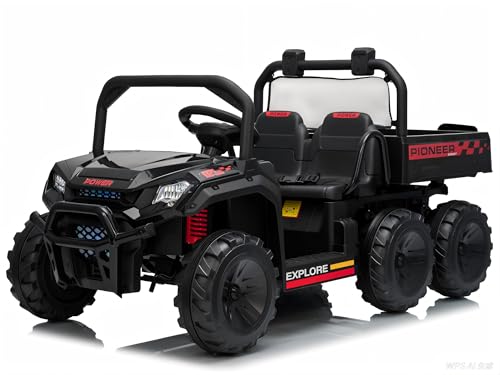
Drivable Toy Cars for 8 Year Olds: The Complete Buying Guide
Your eight-year-old is ready for real driving thrills. Discover how to choose a safe, durable, and exciting ride-on car that matches their confidence and your peace of mind.
START THE GUIDE🚗 Why This Age Matters: Eight-year-olds have outgrown toddler ride-ons. They need vehicles with genuine steering response, higher weight capacity, longer battery life, and controls that feel rewarding rather than restrictive. This guide walks you through every decision — from drivetrain type and safety systems to seating configuration — so you can confidently pick the right drivable toy car for your child.
What Makes a Drivable Toy Car Right for an 8-Year-Old?
At eight, children typically weigh between 50 and 75 pounds and stand tall enough to reach pedals and handlebars comfortably. They also possess the coordination to manage steering, acceleration, and braking with practice. The ideal drivable toy car for this age group bridges the gap between play and real driving — it should feel responsive, not toy-like, while remaining safely bounded by design.
Parents researching electric cars for 8-year-olds to drive often ask whether a standard ride-on is sufficient. The answer depends on experience: first-time drivers benefit from a model with adjustable speed limits and parental remote override, while seasoned riders can handle a higher-tier vehicle with more power and sharper handling. Either way, the car must physically fit the child — check weight capacity, seat depth, and legroom before anything else.
Battery & Runtime
Look for a battery pack that delivers at least 45 minutes of continuous driving. Mid-range and high-end tier models often use dual 12V batteries for extended sessions and stronger torque on grass or slight inclines.
Motor & Drivetrain
A single motor suits flat driveways and smooth pavement. For multi-surface play or two-seater cars, a dual-motor setup provides better traction and climbing ability without straining the gearbox.
Steering & Control Feel
Realistic rack-and-pinion style steering gives an 8-year-old the feedback they crave. Avoid overly loose steering that feels disconnected — it undermines confidence and safety.
Seat & Ergonomics
An 8-year-old needs a seat with proper back support and a seat belt that fits snugly. Adjustable seats are a bonus for growing children, extending the car's useful life by a year or more.
Comparing Tiers: Which Level Suits Your Child?
Drivable toy cars for this age group fall into three broad tiers. Each offers a different balance of features, durability, and driving experience. Use this comparison to align your choice with your child's experience and your intended use.
| Tier | Best For | Key Characteristics |
|---|---|---|
| Entry-Level | First-time drivers on smooth, flat surfaces | Single motor, basic 6V or 12V battery, manual steering, simple seat belt. Solid choice for supervised driveway play. |
| Mid-Range | Confident riders who want longer sessions and varied terrain | Dual motor option, larger battery pack, parental remote control, soft-start acceleration, upgraded suspension, and more realistic detailing. |
| High-End Tier | Experienced young drivers and families who want longevity | Reinforced chassis, high-capacity battery with fast-charge support, precision steering, premium seat materials, LED lighting, and advanced safety electronics. |
A mid-range model often represents the sweet spot for an eight-year-old: it delivers enough power and runtime for genuine excitement without overwhelming a developing driver. Families with generous outdoor space and a child who has already mastered basic ride-ons may find a high-end tier car a worthwhile long-term investment. If you are also considering larger vehicles, explore electric ride-on toys for 8-year-olds for a broader view of what is available.
Safety Features That Matter Most
Safety is the non-negotiable foundation of any drivable toy car. At eight years old, children are more capable but still prone to distraction and overconfidence. The right safety systems protect them without dampening the fun.
- Parental remote control: Allows you to override steering and speed if your child ventures too far or loses control. Essential for first-time drivers.
- Adjustable speed limiter: Lets you cap the top speed while your child builds confidence, then raise it as skills improve.
- Seat belt with secure buckle: A properly fitted three-point or lap belt keeps the child anchored during sudden stops.
- Soft-start acceleration: Prevents jerky launches that can startle young drivers and strain the drivetrain.
- Automatic braking on release: The car should decelerate smoothly when the accelerator pedal is released, mimicking real vehicle behavior.
- Reinforced bumpers and rounded edges: Protects both the child and the car during minor collisions with obstacles.
- Battery safety electronics: Overcharge protection, thermal cut-off, and secure battery compartment latches are hallmarks of well-engineered models.
Always supervise play, especially in the first few sessions. Choose flat, obstacle-free surfaces away from traffic, pools, and steep slopes. For a deeper look at powered ride-ons across age groups, see our guide to electric ride-on toys for 8-10 year olds.
Single-Seater vs. Two-Seater: Making the Right Call
An eight-year-old's social world is expanding, and the choice between a single-seater and a two-seater affects how the car will be used. A single-seater is lighter, more nimble, and easier to store — ideal for solo adventures and tighter driveways. A two-seater invites siblings and friends to share the experience, fostering cooperative play and turn-taking.
However, two-seaters demand more space, a stronger motor, and a larger battery to carry the extra weight. They also require a more mature driver who can manage the vehicle's increased momentum. If your child will primarily drive alone, a well-specified single-seater in the mid-range or high-end tier will deliver a more responsive and satisfying experience. For families considering larger multi-passenger options, our guide to two-seater electric cars for older kids offers useful perspective.
Matching the Car to Your Terrain
Where your child will drive matters as much as how they drive. Smooth pavement and flat driveways are forgiving and suit entry-level and mid-range models alike. Grass, gravel, and slight inclines demand more torque, better traction, and a more robust suspension system.
If your yard is uneven or you plan to visit parks with mixed surfaces, prioritize a dual-motor model with treaded tires and independent suspension. These features prevent wheel spin, reduce vibration, and protect the gearbox from premature wear. High-end tier cars often include these refinements as standard, while mid-range models may offer them as upgrades. For a broader selection of vehicles built for varied terrain, browse electric ride-on toys for 8-10 year olds.
Maintenance Tips for Long-Lasting Performance
A drivable toy car is an investment in play. Simple maintenance habits keep it running smoothly season after season. Charge the battery fully after each use and avoid leaving it depleted for extended periods — deep discharges shorten battery life. Store the car indoors or under a weather-resistant cover to protect electronics and upholstery.
Check tire pressure (for pneumatic tires), tighten bolts on the steering assembly, and inspect the seat belt for fraying every few weeks. Clean the chassis with a damp cloth and mild soap, avoiding direct water spray on electrical components. For a comprehensive look at caring for powered ride-ons, see our toy longevity tips.
Related Guides You May Find Helpful
- Electric Ride-On Toys for 8-Year-Olds
- Electric Cars for 8-Year-Olds to Drive
- Electric Ride-On Toys for 8-10 Year Olds
- Electric Ride-On Toys for 7-Year-Olds
- Two-Seater Electric Cars for Older Kids
- Electric Cars with Roof for Older Kids
- Electric Ride-On Cars with Remote Control
- Toy Longevity Tips
- Fun Outdoor Toys for 7-Year-Olds
- Fun Outdoor Games for 8-12 Year Olds
Frequently Asked Questions
What should I look for in a drivable toy car for an 8 year old?
Focus on battery capacity for longer ride times, a reinforced chassis for durability, maximum speed suited to your child's experience level, and safety features such as seat belts, parental remote control, and smooth acceleration. Also confirm the weight capacity supports your child comfortably.
Are drivable toy cars safe for 8 year olds?
Yes, when used as intended and supervised. Choose models with seat belts, speed limiters, soft-start acceleration, and parental remote override. Always ride on flat, safe surfaces away from traffic and follow the manufacturer's age and weight guidelines.
How long do ride-on toy car batteries last?
Typical ride times range from 45 to 90 minutes depending on battery capacity, terrain, and the child's weight. Higher-tier models with larger battery packs tend to deliver longer sessions. Charging times usually span several hours, so plan play sessions accordingly.
Should an 8 year old get a single-seater or two-seater ride-on car?
A single-seater is ideal for solo driving and manoeuvring in tighter spaces. A two-seater encourages cooperative play with siblings or friends but requires more space and typically a more powerful motor. Consider your yard size and how the car will be used.
Ready to Choose the Perfect Drivable Toy Car?
An eight-year-old's ride-on car is more than a toy — it is a confidence builder, a gateway to outdoor adventure, and a source of memories. By prioritizing safety electronics, matching the drivetrain to your terrain, and selecting a tier that fits your child's experience, you set the stage for years of joyful driving. Explore our recommended models below and find the car that sparks your child's imagination.