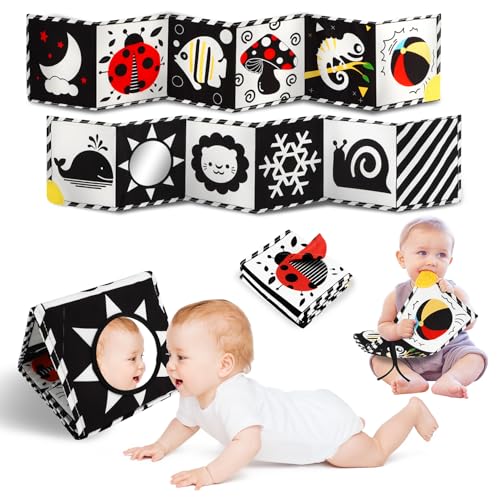
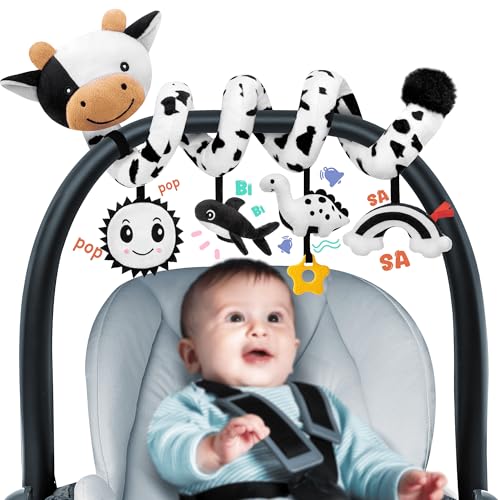
Black & White Infant Toys
The ultimate guide to high-contrast toys that stimulate your baby's vision, focus, and early brain development from birth to 6 months.
Shop Top Picks👶 Why black and white? Newborns see the world in blurry shades of gray. High-contrast patterns (black, white, and bold geometric shapes) are the first visual images they can actually focus on. These toys help strengthen eye muscles, improve attention span, and lay the foundation for cognitive milestones.
Key Benefits of High-Contrast Toys
👁️ Visual Tracking
Helps babies learn to follow objects with their eyes, a crucial early skill.
🧠 Cognitive Growth
Simple patterns stimulate neural connections and spatial awareness.
😌 Calming Effect
High-contrast images can be soothing and reduce overstimulation in newborns.
🤝 Tummy Time Fun
Black and white books and mats encourage longer, more engaged tummy time sessions.
What to Look for in Black & White Infant Toys
- High contrast patterns: Bold stripes, checkerboards, and spirals are most effective.
- Safe materials: BPA-free, non-toxic, and soft edges for mouthing.
- Multi-sensory: Some include crinkle paper, mirrors, or gentle rattles.
- Versatile use: Ideal for strollers, car seats, and playmats.
- Age-appropriate: Designed for 0–6 months, but many are loved well beyond.
Looking for more age-specific sensory toys? Check out our curated guides for sensory toys for 6‑month‑olds and toys for infants 0‑6 months. For newborns, our 0‑3 month toy list is a great starting point.
Why Black and White? The Science Behind Visual Development
At birth, a baby’s retina and optic nerve are still developing. They can only see objects 8–12 inches away and perceive high-contrast edges most clearly. Black and white toys provide the maximum contrast, which is why they capture attention faster than colorful toys. By using these toys regularly, you’re helping your baby practice focusing, tracking, and discriminating between shapes – all essential for later reading and hand‑eye coordination.
Many pediatric optometrists recommend black-and-white mobiles, flashcards, and floor gyms during the first three months. As your baby grows, you can gradually introduce red accents, then full color. But even at 6 months, many infants still enjoy the crisp visual input of monochrome designs.
If you’re building a full sensory kit, consider pairing high‑contrast toys with sensory bins for 2‑year‑olds (for later stages) or explore our gift guide for 1‑year‑olds to see how visual skills progress. For tummy time, a black and white floor mat can be a game‑changer.
Frequently Asked Questions
At what age should I start using black and white toys?
You can start from birth. Newborns are drawn to high-contrast patterns, and these toys are perfect for the first 3–4 months.
Are black and white toys better than colorful ones for infants?
In the first few months, yes. Babies’ color perception matures around 4–6 months, so until then, high-contrast black/white toys are more engaging and beneficial.
Can I make my own black and white toys?
Absolutely! You can print high-contrast images, use black and white felt, or even draw bold patterns on paper. Just ensure everything is safe and baby-proof.
How long should I use these toys?
They remain useful up to about 6–8 months. After that, you can transition to colorful toys and continue using the black/white ones for contrast play.
Explore more developmentally appropriate toys: toys for infants 3‑6 months, gifts for 6‑year‑olds, or cool toys for 4‑year‑olds to see how play evolves.