Battery Powered Ride On Toys: The Complete Buyer's Guide
Everything you need to know before choosing an electric ride on toy for your child — from battery types and safety features to age suitability, terrain performance, and remote-control options. Research confidently, then decide.
See Top Recommended ModelsWhat This Guide Covers
- What Makes a Great Battery Powered Ride On Toy
- Types of Ride On Toys: Cars, Trucks, ATVs & More
- Battery Basics: 6V, 12V & 24V Explained
- Age Suitability & Developmental Benefits
- Essential Safety Features to Check
- Terrain & Performance Considerations
- Remote Control vs. Independent Driving
- Market Tier Comparison: Entry-Level to Premium
- Top Recommended Ride On Toys
- Frequently Asked Questions
What Makes a Great Battery Powered Ride On Toy
A battery powered ride on toy is more than a simple plaything — it is a vehicle that blends imagination, physical coordination, and outdoor adventure. For parents researching before a purchase, the key is understanding that not all ride on toys are built to the same standard. A well-designed model balances four critical pillars: a reliable battery system, a sturdy chassis, intuitive controls, and age-appropriate speed limits.
The best models on the market feature reinforced frames that resist tipping, smooth-rolling wheels that handle uneven surfaces, and a battery management system that prevents overcharging. Many parents searching for battery operated ride on toys quickly discover that the quality gap between entry-level and mid-range models is significant — particularly in motor smoothness and seat comfort.
If you are specifically shopping for a toddler, models designed for two-year-olds prioritize low speed and parental remote control, which you can explore further in our guide to battery powered ride on toys for 2 year olds. For older children ready for independent driving, the focus shifts to motor power, suspension, and terrain capability.
Types of Ride On Toys: Cars, Trucks, ATVs & More
The ride on toy category spans a wide range of vehicle styles, each suited to different play patterns and terrains. Understanding the distinctions helps you match the toy to your child's personality and your outdoor space.
Ride On Cars
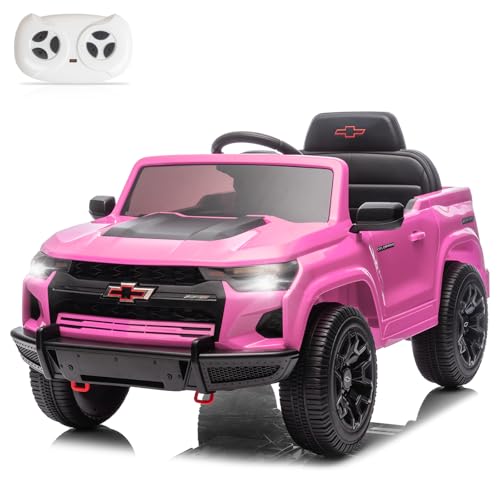
The most popular category, ride on cars mimic real vehicles — from sleek sports cars to classic cruisers. They typically feature a single seat, forward/reverse gears, and often include remote control for parental supervision. These are ideal for paved driveways and flat yards.
Ride On Trucks & Jeeps
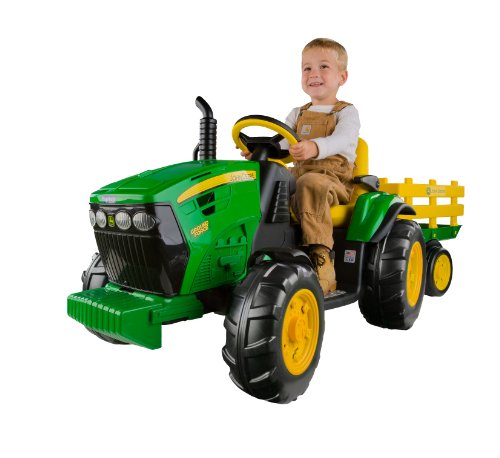
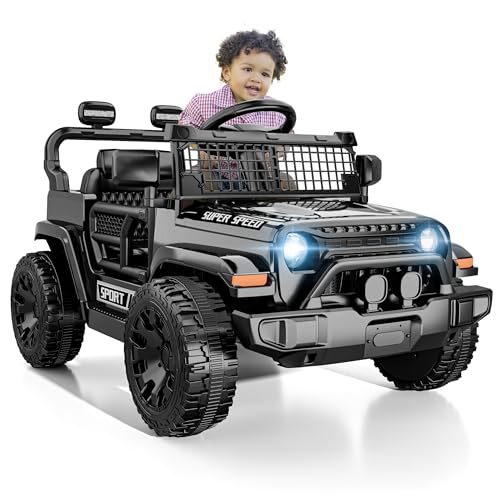
Built with a more rugged aesthetic, ride on trucks and jeeps often feature higher ground clearance and knobby tires. They appeal to children who enjoy off-road pretend play. Many models in this category include cargo beds or working doors for added realism.
Ride On ATVs & Four-Wheelers
ATV-style ride on toys offer a straddle seat and handlebar steering, providing a different riding posture. They are excellent for developing balance and steering coordination. For families with rougher terrain, an battery powered four wheeler with rubber tires delivers superior traction and a smoother ride compared to plastic-wheel alternatives.
Ride On Motorcycles & Scooters
These two-wheel-styled models (often with training wheels or wide stable bases) introduce a different steering dynamic. They are generally best for children aged four and up who have mastered basic coordination.
Battery Basics: 6V, 12V & 24V Explained
The battery voltage is the single most important specification for understanding a ride on toy's performance envelope. It directly influences speed, torque, run time, and the weight the vehicle can carry. Here is how the three common voltage classes compare:
| Voltage Class | Typical Speed Range | Best For | Market Tier |
|---|---|---|---|
| 6V | Slow, walking pace | Toddlers (18 months–3 years), indoor & flat patio use | Entry-level |
| 12V | Moderate, brisk walk to light jog | Preschoolers & young school-age (3–7 years), driveways & lawns | Mid-range |
| 24V | Faster, capable of light off-road | Older children (7–10+ years), uneven terrain & hills | Premium / High-end |
Beyond voltage, battery chemistry matters. Sealed lead-acid (SLA) batteries are common in entry-level and mid-range models — they are robust but heavy. Lithium-ion batteries, found in premium models, offer lighter weight, faster charging, and longer cycle life. If you are replacing a battery or charger, ensure compatibility; our guide to a 6 volt battery charger for toy car explains the matching requirements.
Age Suitability & Developmental Benefits
Matching the ride on toy to your child's developmental stage is essential for both safety and enjoyment. A toy that is too advanced creates frustration and risk; one that is too basic is quickly outgrown.
- 18 months–3 years: Choose 6V models with parental remote control, a padded seat, and a safety harness or high backrest. Speed should be limited to a slow walking pace. These builds support gross motor development and cause-and-effect understanding.
- 3–5 years: 12V models with dual control (remote + manual) allow the child to practice steering while parents retain override capability. This stage builds spatial awareness and directional control.
- 5–7 years: Children can handle independent driving on 12V models with progressive acceleration. Look for models with a functional steering wheel, working pedals, and realistic dashboard elements that fuel imaginative play.
- 7–10+ years: 24V models with suspension, higher ground clearance, and rugged tires suit older riders who want genuine terrain capability. These models often support higher weight limits and longer run times.
For a deeper age-by-age breakdown, our age-appropriate toys guide provides a broader developmental framework that complements this vehicle-specific advice. Parents of six- to eight-year-olds often find that battery operated cars for 8 year olds represent the sweet spot where independent driving skill meets vehicle capability.
Essential Safety Features to Check
Safety is non-negotiable with any motorized toy. Before purchasing, verify that the model includes the following features. The absence of any one of these should prompt serious reconsideration.
- Parental remote control: Allows you to stop or redirect the vehicle instantly. Essential for riders under five.
- Seat belt or safety harness: A three-point belt is the minimum; a five-point harness is preferable for toddlers.
- Speed governor / low-speed mode: Limits top speed to suit the rider's experience level.
- Soft-start acceleration: Prevents jerky lurches that can startle young riders and cause loss of control.
- Automatic braking on release: The vehicle should decelerate smoothly when the accelerator is released.
- Non-toxic, certified materials: Look for compliance with ASTM F963 (US), EN71 (EU), or equivalent regional safety standards.
- Sturdy, tip-resistant chassis: A wide wheelbase and low center of gravity reduce rollover risk during turns.
Terrain & Performance Considerations
Where your child will ride has a profound impact on which model is suitable. A vehicle that performs beautifully on a smooth driveway may struggle on grass, gravel, or slight inclines. Consider these terrain factors:
Paved surfaces (driveways, sidewalks, patios): Most ride on toys perform well here. Even entry-level 6V models handle flat pavement confidently. Prioritize smooth-rolling wheels and responsive steering.
Grass and lawns: Grass increases rolling resistance significantly. A 12V model with moderate torque is the realistic minimum for consistent performance. Look for treaded tires and a motor rated for sustained load.
Gravel, dirt, and uneven ground: This is the domain of 24V models with suspension and high-traction rubber tires. An all terrain monster truck remote control style vehicle is purpose-built for this environment, with oversized wheels and reinforced undercarriage.
Hills and slopes: Only high-end tier models with powerful motors and effective brakes should be used on inclines. Always verify the manufacturer's maximum slope rating — and remember that what goes up must come down, so braking capability is as important as climbing power.
Remote Control vs. Independent Driving
The choice between a remote-controlled model and one designed for independent driving depends entirely on the rider's age and experience. Many quality models offer both modes, allowing the toy to grow with your child.
Remote control mode is indispensable for toddlers and early preschoolers. The parent operates the vehicle via a handheld transmitter, typically with forward/reverse and left/right controls, plus an emergency stop. This mode builds familiarity with the vehicle's motion without requiring steering skill. If this is your priority, our guide to battery powered ride on toys with remote control details the features that distinguish a responsive, reliable remote system from a laggy one.
Independent driving mode engages the child's own steering and pedal inputs. This is where the developmental benefits accelerate — coordination, spatial judgment, and responsibility all come into play. The ideal progression is a model that supports remote override even in independent mode, giving parents a safety net during the transition.
For families shopping for a two-year-old, models like those featured in our battery operated ride on car with remote control guide are designed specifically for this dual-control phase.
Market Tier Comparison: Entry-Level to Premium
Because this guide avoids any specific figures, the following comparison uses universal market tiers to help you understand what each level of the market typically delivers. Use this to calibrate your expectations before comparing individual models.
| Tier | Typical Build & Features | Best For |
|---|---|---|
| Entry-level | 6V system, plastic wheels, basic seat, simple forward/reverse, often remote-capable. Lighter construction. | Toddlers on flat, paved surfaces under close supervision. |
| Mid-range | 12V system, treaded plastic or rubber tires, padded seat, dual-mode control (remote + manual), soft-start acceleration, functional doors and lights. | Preschoolers and young school-age children on mixed flat surfaces. |
| Premium / High-end | 24V system, suspension, rubber tires, reinforced steel chassis, leather-look seating, LED lighting, Bluetooth audio, full parental override, longer run times. | Older children (7+) on varied terrain, families wanting longevity and off-road capability. |
Models at the premium tier justify their position through durability and feature depth rather than superficial styling. A mid-range model typically offers a noticeably smoother acceleration curve than an entry-level counterpart, while a premium model adds suspension that transforms the ride on uneven ground. For a broader view of how ride on vehicles fit into the wider toy landscape, our battery powered ride on toys hub connects to related guides across the site.
Ready to compare specific models?
Browse our curated selection of recommended battery powered ride on toys below — each with verified availability and detailed specifications.
Frequently Asked Questions
How long do battery powered ride on toys typically last?
With proper care, a quality ride on toy should provide several years of regular use. The battery is usually the first component to age — sealed lead-acid batteries typically last 1–2 years before losing capacity, while lithium-ion batteries can last 3–5 years. Storing the vehicle indoors and avoiding full discharge extends battery life considerably.
Can a ride on toy be used indoors?
Smaller 6V models can be used on smooth indoor floors, but most ride on toys are designed for outdoor use. Wheels may mark hardwood or tile, and the turning radius can be awkward in confined spaces. If indoor use is a priority, look for models with soft rubber wheels and a compact footprint.
What is the difference between 12V and 24V ride on toys?
The voltage determines the power available to the motor. A 12V model is suited to flat driveways and lawns, offering moderate speed. A 24V model delivers more torque and higher top speed, making it capable of handling hills, rougher terrain, and heavier riders. The trade-off is weight, complexity, and the need for more vigilant supervision.
Are ride on toys with remote control safer?
Remote control adds a significant safety layer for younger children, allowing a parent to stop or redirect the vehicle instantly. However, remote control does not replace supervision or the need for other safety features like seat belts and speed limits. For children under five, a remote-capable model is strongly recommended.
How do I maintain the battery for long life?
Charge the battery fully after each use, avoid leaving it discharged for extended periods, and store the vehicle in a cool, dry place. If storing for the off-season, charge the battery monthly. Avoid exposing the battery to extreme heat or cold, and never use a charger that is not designed for the specific battery type.
What should I check before letting my child ride?
Verify that the seat belt is fastened, the battery is securely in place, and the remote control (if applicable) is paired and responsive. Inspect the wheels and chassis for damage, and ensure the riding area is free of obstacles, traffic, and water hazards. Always supervise actively — stay within arm's reach for younger riders.
Whether you are choosing a first ride on toy for a toddler or upgrading for an older child ready for off-road adventure, the principles in this guide — battery capability, safety features, tier awareness, and terrain matching — will help you make a confident, informed decision.