
Wooden Stacker: The Complete Guide to Benefits, Types & Safety
Discover why the classic wooden stacker remains one of the most valuable developmental toys for babies and toddlers. This in-depth guide covers the cognitive and motor benefits, the main types available, safety considerations, and how to select the right stacking toy for your child's stage.
Explore Top PicksThe wooden stacker is one of the most enduring toys in early childhood. Long before screens and electronic gadgets, generations of children learned to grasp, sort, and balance with a simple set of rings on a wooden post. Today, this classic design remains a staple in nurseries, Montessori classrooms, and playrooms around the world — and for good reason. A well-made wooden stacker combines simplicity with profound developmental value, offering open-ended play that grows with your child.
If you are researching the best wooden stacker for a baby shower, a first birthday, or your own toddler, you likely have questions: Which type suits which age? What should you look for in materials and finish? How can you be sure the toy is safe? This guide answers those questions in full, so you can make a confident, informed decision.
What Is a Wooden Stacker?
A wooden stacker is a traditional developmental toy consisting of a wooden base, a central post (or several posts), and a series of wooden pieces — typically rings, discs, or geometric shapes — that a child threads onto the post. The goal is to stack the pieces in the correct order or in creative combinations, building towers, patterns, and structures.
Unlike plastic versions that may rely on snap-together connections, wooden stackers rely on gravity, balance, and the child's own coordination. This makes them an excellent tool for developing fine motor control, hand-eye coordination, and problem-solving skills. The tactile nature of wood — its weight, texture, and warmth — also provides valuable sensory feedback that plastic simply cannot replicate.
Developmental Benefits of Wooden Stacking Toys
The wooden stacker is far more than a simple pastime. Child development specialists frequently recommend stacking toys because they support several key areas of growth simultaneously:
Fine Motor Skill Development
Grasping rings, aligning them with a post, and releasing them gently requires precise finger control. As your child practices, they strengthen the small muscles in their hands and fingers — skills that later translate to holding a pencil, using scissors, and buttoning clothes. For a broader look at toys that target these abilities, see our guide to toys that help develop fine motor skills.
Hand-Eye Coordination
Bringing a ring to a post and aligning the hole with the peg demands visual tracking and spatial awareness. Repeated practice refines the coordination between what the eyes see and what the hands do — a fundamental building block for nearly every future physical task.
Cognitive and Problem-Solving Skills
Stacking toys introduce early concepts of size, order, and sequence. A child learns that the largest ring must go first, that smaller rings fit on top, and that the tower becomes unstable if the balance is wrong. These are the foundations of logical thinking and cause-and-effect reasoning.
Language and Color Recognition
Parents naturally narrate during play: "Let's put the red ring on top," "This one is bigger," "Can you find the blue one?" This conversational play builds vocabulary, color recognition, and comparative language (bigger, smaller, taller, shorter).
Patience and Concentration
Stacking requires focus and persistence. When a tower topples, a child learns to try again — building resilience and the ability to concentrate on a task, which are essential for school readiness.
Creative and Open-Ended Play
Beyond the intended stacking, wooden pieces can become pretend food, building blocks, or characters in imaginative play. This open-ended quality is what makes a quality wooden stacker such a long-lasting toy.
Types of Wooden Stackers
Not all stackers are the same. The design you choose should match your child's age, developmental stage, and interests. Here are the most common types:
| Type | Best For | Key Features |
|---|---|---|
| Classic Ring Stacker | 6–18 months | Single central post, graduated rings, often with a rounded top. Simplest entry point. |
| Geometric Shape Stacker | 12–24 months | Multiple shaped pieces (triangles, squares, circles) on one or several posts. Introduces shape sorting. |
| Rocking/Roly-Poly Stacker | 6–12 months | Curved base that rocks, encouraging tracking and reaching. Often combines stacking with movement. |
| Multi-Post Sorter Stacker | 18–36 months | Several posts of different heights, requiring the child to match piece size to post length. |
| Montessori Stacker | 12 months+ | Minimalist, natural finish, often fewer pieces. Emphasizes independence and real-life materials. |
Classic Ring Stacker
The most recognizable form: a cone-shaped or straight post with graduated wooden rings. It is the ideal first stacker for a baby learning to grasp and release, typically from around six months. Look for smooth, rounded edges and a stable base.
Geometric Shape Stacker
These combine stacking with shape sorting. Your child must both match the shape to the correct post and stack the pieces. This bridges the gap between pure stacking and more complex sorting puzzles, making it ideal for toddlers who have mastered the basic ring stacker.
Montessori Stackers
Montessori-inspired stackers favor natural wood finishes, simple geometric forms, and a focus on real materials. They are usually designed to be self-correcting, meaning the child can see for themselves whether a piece fits correctly. If you are building a Montessori-inspired play space, consider pairing a stacker with wooden toys for 1–2 year olds.
Wooden Stacker Safety: What Parents Must Know
Because stackers are often used by babies who mouth and explore objects intensively, safety is paramount. Follow these guidelines:
- Check the finish: Choose water-based, non-toxic paints and finishes. Avoid toys with strong chemical odors or peeling paint.
- Inspect for choking hazards: Ensure the smallest piece is too large to fit through a toilet paper tube (approximately 1.75 inches / 4.4 cm in diameter). Small pieces are a serious risk for children under three.
- Look for smooth edges: Sanded, rounded edges prevent splinters and cuts. Run your finger along every edge before giving the toy to a child.
- Verify the base is stable: A wide, solid base prevents the stacker from tipping easily during play.
- Check for recalls: Stay informed about toy recalls through consumer safety agencies in your region. For more on this, see our toy safety guide.
- Supervise play: Always supervise young children, especially during the mouthing stage. Remove any damaged pieces immediately.
Safety first: Always follow the age recommendation on the packaging. A stacker labeled for 12+ months may contain small parts unsuitable for a younger baby, even if the toy looks simple.
How to Choose the Right Wooden Stacker
When comparing options, focus on materials, construction, and design rather than any single attribute. Here is a practical framework:
1. Match the Design to Your Child's Age
For babies under one year, choose a simple ring stacker with a stable base and few, large pieces. For toddlers aged 12–24 months, geometric or multi-post stackers offer more challenge. For children approaching three, look for stackers that introduce counting, sorting, or pattern play.
2. Prioritize Material Quality
Solid hardwood (such as maple, beech, or rubberwood) is more durable than plywood or MDF and resists chipping. A mid-range stacker will typically use solid hardwood with a water-based finish; a premium or high-end tier option will feature precisely sanded edges, consistent paint coverage, and thicker pieces designed for years of use.
3. Examine the Finish and Paint
Look for water-based, non-toxic paints and finishes that are safe if mouthed. A quality finish will not peel or flake with normal use. Avoid overly glossy finishes that can chip.
4. Consider the Base and Post
A wide, weighted base keeps the toy stable as your child learns. The post should be securely attached — ideally through a screw or dowel that extends into the base, not simply glued. A rounded top on the post prevents injury if a child falls onto it.
5. Think About Longevity
A well-constructed wooden stacker can last through multiple children. Choose classic designs over gimmicky ones, as classic forms remain engaging longer. A sturdy wooden stacker is a long-term investment in your child's play collection.
6. Read Reviews and Compare Features
Parent reviews often reveal real-world details about durability, paint quality, and size. Compare features across models — piece count, material, finish — rather than relying on a single source. Our toy reviews section offers detailed comparisons.
Wooden Stacker by Age: A Quick Reference
- 6–12 months: Simple ring stacker; focus on grasping, releasing, and cause-and-effect. See toys for 8 month old for complementary ideas.
- 12–18 months: Geometric shape stacker; introduces matching and early problem-solving.
- 18–24 months: Multi-post stacker; challenges size and length matching. Pair with toys to keep an 18 month old busy.
- 24–36 months: Counting and pattern stackers; supports early math and language development.
Caring for Your Wooden Stacker
Wooden toys are naturally durable, but a little care goes a long way. Wipe the pieces with a damp cloth and mild soap, then dry immediately — never soak wooden toys in water. Avoid harsh chemicals and dishwashers, which can warp the wood and damage the finish. Periodically inspect for splinters or loose paint, and retire any damaged pieces. For more maintenance advice, see our toy cleaning guides.
Why the Classic Wooden Stacker Endures
In a market flooded with battery-powered gadgets and licensed characters, the wooden stacker remains remarkably relevant. Its appeal is rooted in simplicity: it does one thing well, and it invites the child to do the work. That active engagement — rather than passive entertainment — is what builds skills. The tactile warmth of wood, the satisfying clack of rings landing on a post, and the open-ended possibilities make it a toy that children return to again and again.
Whether you are shopping for a first birthday gift, building a Montessori-inspired nursery, or simply looking for a screen-free activity, the wooden stacker is a dependable choice that supports development at every stage.
Explore More Wooden & Developmental Toys
Frequently Asked Questions About Wooden Stackers
At what age should my child start using a wooden stacker?
Most babies can begin exploring a simple ring stacker around six months, once they can sit with support and grasp objects. Always follow the age recommendation on the product. Younger babies can explore the pieces with supervision, while older toddlers can attempt more complex stacking.
Are wooden stackers safe for teething babies?
Many wooden stackers are safe for mouthing if finished with non-toxic, water-based paints and smooth, splinter-free edges. However, always check that no piece is small enough to be a choking hazard, and supervise closely. If the paint peels, remove the toy from use.
How many rings should a first stacker have?
Five to eight rings is typical for a classic stacker. Fewer pieces can be less overwhelming for a very young baby, while more pieces offer extended play for toddlers. Choose based on your child's attention span and age.
What is the difference between a stacker and a shape sorter?
A stacker focuses on threading pieces onto a post, developing balance and sequencing. A shape sorter requires matching a shape to a corresponding hole, developing matching and spatial reasoning. Many wooden toys combine both features.
Can wooden stackers be passed down to siblings?
Yes — a well-made wooden stacker with a solid hardwood construction and a quality finish can last for years and be safely passed down, provided it is inspected for wear and damage before each use.
Recommended Wooden Stackers & Stacking Toys
⚠️ AFFILIATE DISCLOSURE: This website contains affiliate links. As an Amazon Associate, we earn from qualifying purchases. If you make a purchase through these links, we may receive a small commission at no additional cost to you. Read our full affiliate policy.

Melissa & Doug Rainbow Stacker Wooden Ring Educational Toy - Wooden Stacking Rings, Stacker Toys for Toddlers Ages 2+
Check price on Amazon
Melissa & Doug Geometric Stacker - Wooden Educational Toy,25 count(pack of 1)
Check price on Amazon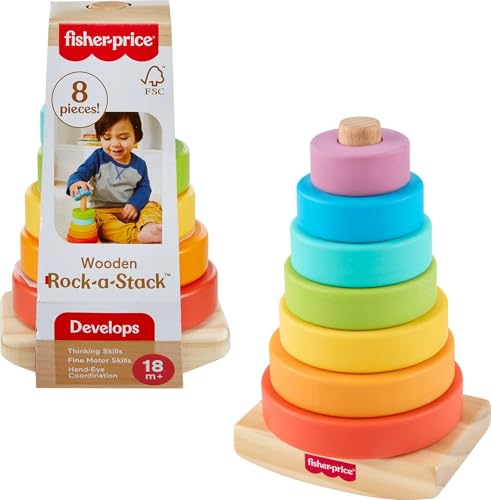
Fisher-Price Wood Rock-a-Stack Activity Toy | Wooden Base & 7 Stackers, Sorting & Stacking Play, Fine Motor Skills, Problem Solving, Toddlers Ages 18+ Months
Check price on Amazon
Melissa & Doug Stack and Sort Board - Wooden Educational Toy With 15 Solid Wood Pieces
Check price on Amazon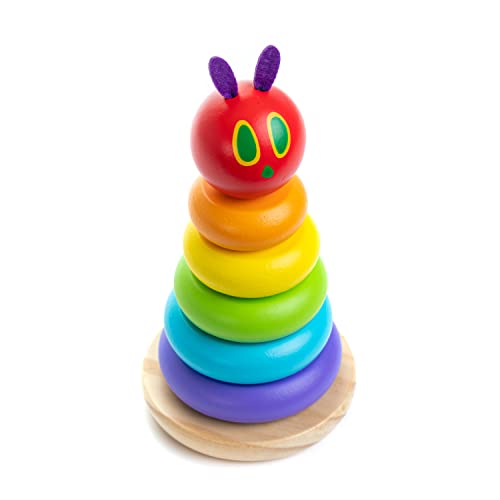
World of Eric Carle, The Very Hungry Caterpillar Wooden Stacker with Colorful Rainbow Rings, 7 Inch Stacking Solid Wood Educational Developmental Toy –Sorting and Stacking
Check price on Amazon
TUOWITA Wooden Rainbow Stacking Toy, Wood Stacker Arch Game, Montessori Arch Bridge Rainbow Building Blocks, Colorful Stacking Blocks Puzzles for Kids 2 3 4 5 Years Old, Rainbow Decor Toys
Check price on Amazon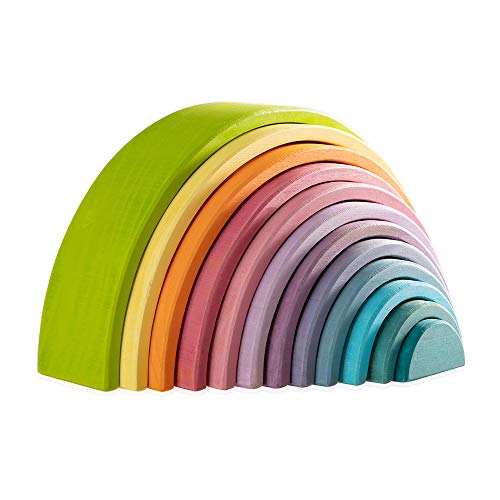
MERRYHEART Wooden Rainbow Stacking Toy, 12 Piece Multicolor Wooden Arch Stacker, Extra Large Pastel Bow Shaped Stacking Toy, Nesting Puzzle Building Blocks Educational Toys for Kids Toddlers
Check price on Amazon