Tummy Time Toys for 4 Month Old: A Complete Guide
At four months, your baby is ready to explore the world from a new angle. Discover how the right tummy time toys can strengthen neck and core muscles, boost sensory development, and turn floor time into an exciting daily adventure.
See Our Top Recommendations👶 Why Tummy Time Matters at 4 Months: By four months, most babies can hold their head up steadily and may even start to push up on their forearms. Tummy time is no longer just about neck strength—it's about building the foundation for crawling, reaching, and visual tracking. The right toys transform this essential exercise into play, encouraging your baby to stay engaged for longer stretches. This guide covers what to look for, how to choose safely, and which types of toys deliver the most developmental benefit.
What Makes a Great Tummy Time Toy for a 4-Month-Old?
At this stage, your baby's senses are rapidly developing. They can track moving objects with their eyes, reach for things, and are beginning to understand cause and effect. A good tummy time toy should address these emerging skills while being safe and easy to use during floor play.
👁️ Visual Stimulation
High-contrast patterns, bright colors, and gentle movement help your baby practice visual tracking. Toys with mirrors are especially engaging—babies at this age are fascinated by faces, including their own reflection.
🖐️ Reaching & Grasping
Lightweight toys with easy-to-grab handles or rings encourage your baby to lift their head and reach forward, which builds shoulder and arm strength essential for crawling.
🔊 Auditory Feedback
Soft rattles, crinkly fabrics, and gentle musical elements teach cause and effect. When your baby bats at a toy and hears a sound, they learn that their actions have results.
🛡️ Safety First
Look for toys with no small parts, rounded edges, and non-toxic materials. Toys should be easy to clean and free from long cords or straps that could pose a hazard during supervised floor play.
Choosing the Right Tier: A Practical Comparison
Not all tummy time toys are created equal. The table below outlines common tiers available in the market so you can match your choice to your family's needs. Remember that the best toy is one that suits your baby's current developmental stage and your home environment.
| Tier | Best For | Typical Features |
|---|---|---|
| Essential Tier | Simple, everyday tummy time sessions | Basic rattles, crinkle cloths, simple mirror cards; lightweight and easy to store |
| Balanced Tier | Babies who need extra engagement and variety | Multi-sensory play mats, toys with adjustable features, combination of textures and sounds |
| Top-Tier | Long-term developmental use across multiple stages | Convertible play gyms, high-quality wooden or fabric toys, toys that grow with your baby |
Types of Tummy Time Toys That Work Best at 4 Months
Babies at this age respond well to a mix of sensory experiences. Here are the categories that consistently deliver results, along with guidance on how to use them effectively.
1. Fold-Out Mirror Toys
Mirrors are a classic tummy time tool because babies love faces. A simple fold-out mirror placed just in front of your baby encourages them to lift their head and push up on their arms. Look for mirrors with soft fabric frames and high-contrast patterns on the reverse side.
2. Crinkle & Textured Cloths
Lightweight cloths that crinkle when touched are perfect for babies learning cause and effect. They're easy for small hands to grasp and provide auditory feedback that rewards reaching. Choose ones with varied textures to stimulate tactile senses.
3. Soft Rattles & Sensory Balls
Rattles with easy-grip handles and soft sensory balls encourage batting and grasping. At four months, your baby may not yet hold objects for long, but the attempt itself builds coordination. Opt for lightweight designs that won't hurt if they accidentally drop them.
4. Play Mats with Arches
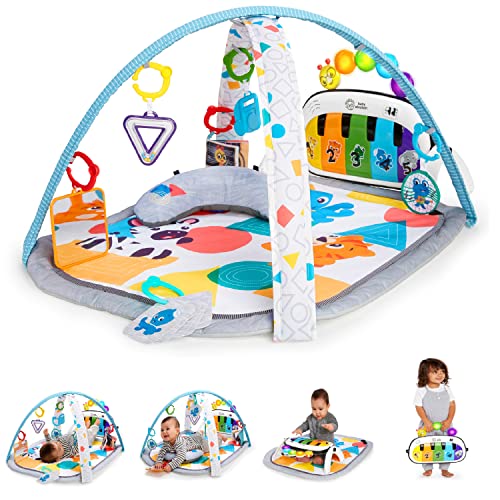
A play mat with a removable arch can transform tummy time into a full sensory experience. Hanging toys encourage your baby to reach upward, while the mat provides a comfortable, clean surface. Look for mats that are easy to wipe down and can be used without the arch as your baby grows.
Tummy Time Safety Checklist
Safety is non-negotiable during tummy time. Always supervise your baby, and keep these guidelines in mind:
- Always place your baby on a firm, flat surface—never on a bed, sofa, or other soft surface.
- Keep toys within arm's reach but away from the face to avoid obstruction.
- Check toys regularly for loose parts, tears, or worn seams.
- Use toys that are labeled as safe for infants and free from small components.
- Limit sessions to short, frequent intervals—start with a few minutes at a time.
How to Make Tummy Time Enjoyable
Some babies resist tummy time at first. The right approach can make all the difference:
🎯 Get on Their Level
Lie down face-to-face with your baby. Your face is the most engaging toy of all. Talk, sing, and make eye contact to keep them engaged.
⏱️ Keep It Short
Aim for short sessions several times a day rather than one long one. Two to three minutes, repeated frequently, is more effective than pushing for longer.
🔄 Rotate Toys
Introduce one or two toys at a time and rotate them to keep things fresh. Novelty is a powerful motivator for babies at this age.
Ready to find the right tummy time toy for your four-month-old? Explore our curated selection below, chosen for developmental value and safety.
Browse Recommended ToysRelated Guides for Your Baby's Development
Looking for more guidance? These resources cover adjacent stages and complementary topics:
- 👉 Tummy Time Toys for 3 Month Old — See how the approach evolves from three to four months.
- 👉 Toys for a Five Month Old — What comes next as your baby gains more control.
- 👉 Toys for 8 Month Old — Explore the transition to crawling and sitting.
- 👉 Toys for Gross Motor Skills — Understand how toys support large muscle development.
- 👉 Toys That Help Develop Fine Motor Skills — A companion guide for hand and finger coordination.
- 👉 Toys for Newborns to 3 Months — A look back at the earliest developmental stages.
Frequently Asked Questions
How long should tummy time last at 4 months?
At four months, aim for short sessions of 3–5 minutes, several times a day. As your baby gets stronger and more comfortable, you can gradually extend the time. The key is consistency rather than duration—frequent short sessions are more effective than one long one.
What if my baby hates tummy time?
Resistance is common. Try incorporating tummy time when your baby is alert and content, such as after a nap or diaper change. Get down on the floor with them, use a mirror, or introduce a new toy. If your baby becomes distressed, take a break and try again later. Never force it.
Are electronic toys good for tummy time?
Light-up or musical toys can be engaging, but simple, non-electronic toys are often better for fostering independent exploration. At four months, babies benefit most from toys that respond to their own actions—like crinkly cloths or rattles—rather than passive entertainment.
Can I use a pillow or cushion during tummy time?
A small, firm pillow or rolled towel under the chest can help babies who are still building strength. However, always supervise closely and ensure the baby's face is never obstructed. Never use soft bedding or loose blankets on the floor during tummy time.
When should I introduce a play mat with an arch?
Four months is a great time to introduce a play mat with a removable arch. Your baby can lie on their back and bat at hanging toys, or you can use the mat alone for tummy time. Choose one with adjustable or removable arches so it grows with your baby.