STEM Building Toys for 6 Year Olds: The Complete Parent Guide
Everything you need to choose the right STEM building set for your 6-year-old — developmental benefits, safety checks, feature comparisons, and expert-informed recommendations to make a confident choice.
Explore Recommended SetsWhat Makes a Building Toy a STEM Toy?
Not every building set is a STEM toy. A building set earns the STEM label when it intentionally engages science, technology, engineering, or math reasoning. For a 6-year-old, that usually means the toy asks the child to think about structure, balance, motion, or sequence — not just to snap pieces together. The best sets combine hands-on assembly with open-ended experimentation, so children learn engineering principles without feeling like they are studying.
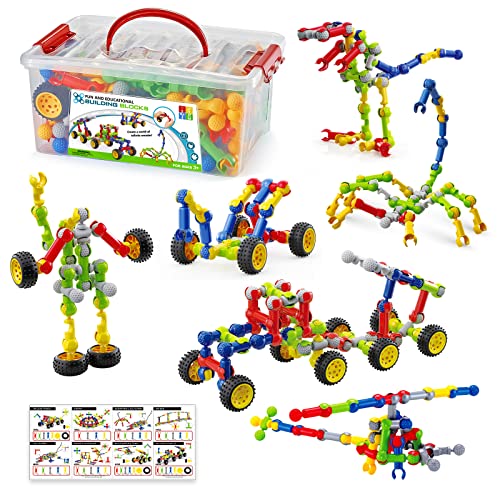
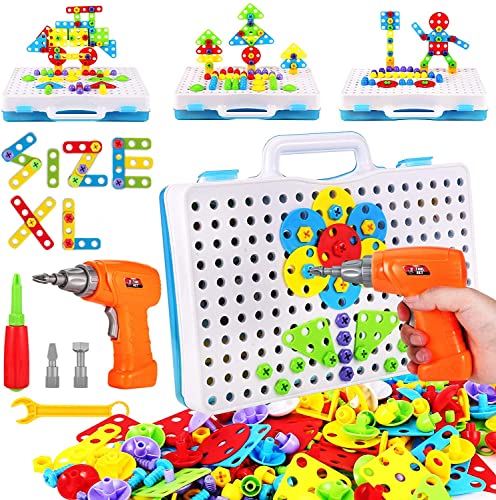
STEM building toys for 6 year olds typically fall into a few families: classic interlocking brick systems, magnetic tile sets, gear and mechanism kits, and junior engineering sets with real moving parts. Each family develops different skills, and many families find that a mix works best. If you want to broaden the search beyond building sets, our STEM toys collection covers robotics, science kits, and coding toys for the same age group.
Developmental Benefits for 6-Year-Olds
Six is a pivotal age for fine motor control and logical thinking. STEM building toys meet children exactly where they are and push them gently forward. The benefits show up in everyday play and carry into classroom learning.
Fine Motor Precision
Snapping, aligning, and connecting small pieces strengthens hand muscles and hand-eye coordination — the same skills used for handwriting and drawing.
Spatial Reasoning
Children rotate pieces mentally, judge symmetry, and plan structures in 3D. This is foundational for math and geometry later in school.
Problem-Solving & Persistence
Builds rarely work on the first try. Children learn to test, adjust, and retry — building resilience alongside technical thinking.
Early Engineering Concepts
Gears, axles, and moving parts introduce mechanical reasoning. Children observe cause and effect and begin to understand how things work.
Language & Collaboration
Explaining a build to a sibling or parent builds vocabulary and communication. Cooperative building projects teach teamwork and turn-taking.
Focus & Patience
Multi-step builds stretch attention spans in a healthy way. Completing a project gives children a real sense of accomplishment.
Key Features to Look For
When you compare sets, focus on features that match a 6-year-old's abilities. The right set challenges without frustrating, and it stays interesting after the first build.
- Piece count in the mid-range tier: Sets with roughly 100–300 pieces suit most 6-year-olds. Entry-level sets with fewer pieces work for beginners; top-tier sets with more pieces suit patient builders who enjoy longer sessions.
- Clear, visual instructions: Step-by-step diagrams with minimal text work best, because many 6-year-olds are still developing reading fluency.
- Age-appropriate safety labeling: Choose sets labeled for ages 6 and up. Check for rounded edges, non-toxic materials, and sturdy connections that won't pinch fingers.
- Moving parts and mechanisms: Gears, pulleys, wheels, and hinges add real STEM value by letting children observe cause and effect.
- Open-ended potential: The best sets include enough basic pieces to build beyond the instruction manual. Open-ended pieces extend play value for months.
- Durable construction: Look for reinforced connections and high-grade plastic or sustainably sourced wood. Solid builds survive enthusiastic play and last through siblings.
- Storage and organization: A sorted set is a used set. Storage bins or labeled compartments keep pieces manageable. If organization is a challenge at home, our guide to storage bins offers practical solutions.
Choosing by Tier: A Feature Comparison
Rather than focusing on any single number, compare sets by their position in the market and what they typically offer. The table below groups common set types by tier and highlights what each is best for.
| Set Type | Tier | Typical Piece Range | Best For |
|---|---|---|---|
| Classic interlocking bricks | Entry-level to mid-range | 100–250 | First-time builders and guided builds |
| Magnetic tile sets | Essential tier | 32–100 | Open-ended play and geometry exploration |
| Gear and mechanism kits | Mid-range | 60–150 | Cause-and-effect learning and mechanical thinking |
| Junior engineering sets | Mid-tier to high-end tier | 100–300 | Structured STEM projects with real moving parts |
| Large themed build sets | Premium tier | 300+ | Display-worthy builds and long-term projects |
As a rule of thumb, a mid-range set usually offers a better balance of pieces, instructions, and mechanisms than an entry-level set — and it tends to stay engaging longer. A premium-tier set can be a worthwhile long-term investment if your child already shows strong interest in building. For a broader look at how building sets evolve across ages, see our guide to STEM building toys for 10-year-olds.
Safety Considerations for 6-Year-Olds
Safety comes first, especially at an age when children still explore with their hands and mouths. Follow these practical guidelines:
- Always check the age label. A set labeled "6+" has been assessed for children at that developmental stage.
- Avoid sets with small parts intended for older children — they can pose a choking hazard for younger siblings in the home.
- Look for non-toxic finishes and paints, especially on wooden sets.
- Check connections and edges for sharp points or pinching risks before the first build.
- Supervise the first few building sessions, then let independence grow as your child demonstrates safe handling.
- Inspect pieces periodically for cracks or loose parts and remove damaged pieces from the set.
How to Encourage STEM Play at Home
The toy is only half the equation. How you set up playtime matters just as much. Try these approaches to get more value from any STEM building set:
- Start guided, then let go: Build the first model together using the instructions, then challenge your child to modify it. "Can you make it taller without it falling?" turns assembly into engineering.
- Ask open questions: "What do you think will happen if we add another wheel?" encourages prediction and testing — the heart of STEM thinking.
- Create a build zone: A dedicated mat or table keeps pieces contained and signals that building is a valued activity.
- Rotate sets: Put a set away for a few weeks, then bring it back. Rotation keeps novelty high and extends the life of every toy.
- Celebrate the process: Praise planning and persistence more than the final result. A collapsed tower that was thoughtfully built is still a successful STEM session.
For more ideas on making playtime purposeful, explore our play ideas collection, and for younger builders in the family, see STEM building toys for 6 year olds alongside our age-based guides.
Frequently Asked Questions
What makes a building toy a STEM toy?
A building toy qualifies as STEM when it engages science, technology, engineering, or math thinking. This includes sets that require structural planning, mechanical reasoning, spatial logic, or programmable components. Many classic building sets count as STEM because they naturally develop engineering and math skills through hands-on assembly.
How many pieces should a STEM building set for a 6 year old have?
For most 6 year olds, a set with roughly 100 to 300 pieces is a comfortable mid-range tier. Entry-level sets with fewer pieces suit children who are new to building, while top-tier sets with more pieces reward patient builders. Always check the manufacturer's age recommendation.
Are STEM building toys safe for 6 year olds?
Yes, when you follow age labels and safety warnings. At age 6, children should use sets labeled for ages 6 and up. Avoid sets with small parts intended for older children, and check for non-toxic materials and rounded edges. Adult supervision is still recommended for first-time builders.
How do building toys help 6 year olds learn?
Building toys strengthen fine motor skills, spatial reasoning, and problem-solving. They encourage planning, trial and error, and persistence. STEM-oriented sets add early engineering and math concepts such as symmetry, balance, and simple mechanics, all through play.
Should I choose a themed set or an open-ended building set?
Both have value. Themed sets offer guided builds and a sense of accomplishment, while open-ended sets encourage creativity and free exploration. Many parents find a balanced approach works best, starting with a guided set and adding open-ended pieces over time.