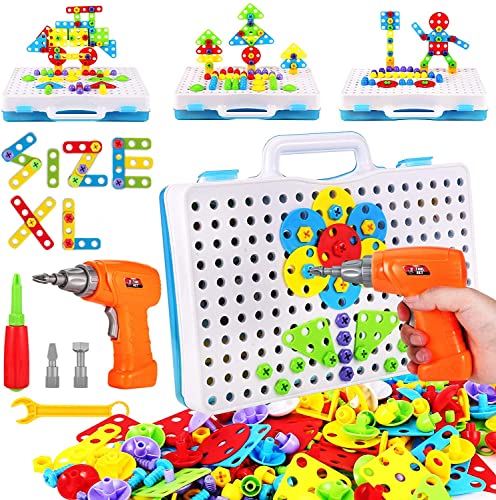
STEM Building Toys for 10 Year Olds: The Complete Guide to Smart Play
Your 10-year-old is ready for more than just bricks. Discover engineering kits, robotics sets, and construction toys that turn curiosity into real problem-solving skills — and keep them building for hours.
SEE TOP PICKS🧠 Why this age matters: At 10, kids are transitioning from simple assembly to genuinely complex building. They can follow multi-step instructions, understand cause-and-effect mechanisms, and start experimenting with design iteration. The right STEM building toy meets them at that exact stage — challenging enough to stay exciting, structured enough to avoid frustration.
What Makes a Building Toy Truly STEM?
Not every construction set earns the STEM label. A toy qualifies as STEM when it genuinely integrates science, technology, engineering, or mathematics into the building process — not just when the packaging says so. For 10-year-olds, the strongest STEM building toys share several characteristics:
- Mechanically functional components — gears, pulleys, axles, linkages, and motors that behave according to real physical principles.
- Open-ended problem solving — the child must figure out how to make something work, not just follow a diagram.
- Iterative design — the set encourages testing, failing, and rebuilding with improvements.
- Progressive complexity — beginners can start simple, while advanced builders can tackle ambitious projects.
- Cross-disciplinary thinking — building a motorized crane, for instance, combines structural engineering, mechanical advantage, and basic physics.
If you're exploring broader options for this age group, our guide to top 10 toys for 10 year olds covers categories beyond building, while STEM toys for 8 year olds offers a useful comparison point for younger siblings.
Skills Your 10-Year-Old Develops
STEM building toys do more than occupy time. They build transferable skills that carry into school and beyond:
Spatial Reasoning and Visualization
Translating a 2D instruction sheet into a 3D object exercises mental rotation and spatial planning — abilities that support later work in geometry, architecture, and engineering.
Fine Motor Precision
Connecting small pins, aligning gears, and threading axles all refine dexterity and hand-eye coordination at an age when these skills are still rapidly developing.
Logical Sequencing and Planning
Complex builds require following ordered steps and understanding why the order matters. Kids learn to plan ahead rather than assemble randomly.
Resilience and Debugging
When a motorized model doesn't move as expected, the child has to diagnose the problem — a gear installed backward, a loose connection, a misaligned axle. That's real debugging, just without a screen.
Creativity Within Constraints
Building with a limited set of parts forces creative problem-solving. Kids learn to work within constraints, an essential engineering mindset.
💡 Parent tip: Resist the urge to fix a broken build for your child. Ask questions instead — "What do you think is happening here?" — and let them work through the diagnosis. That process is where the learning happens.
Main Types of STEM Building Toys for 10 Year Olds
The market breaks down into a few broad families, each with distinct strengths:
1. Mechanical Engineering Kits
These sets use gears, cams, and linkages to build machines — cranes, cars, conveyor belts, and moving contraptions. They teach mechanical advantage and cause-and-effect directly. Look for sets with printed experiment guides that explain the physics behind each build.
2. Robotics and Coding Kits
Robotics kits pair building components with programmable controllers and sensors. At the 10-year-old level, most use block-based coding interfaces that introduce logic, loops, and conditionals without requiring text-based programming. These are often the highest-engagement option for kids who enjoy technology.
3. Structural and Architectural Sets
These focus on load-bearing design — bridges, towers, and buildings. They're excellent for teaching structural principles and are often more open-ended than mechanical kits. Magnetic tile systems and precision beam sets fall into this category.
4. Hybrid Construction Systems
Some systems combine traditional brick-style building with motors, sensors, or app-connected components. These bridge the gap between classic construction play and modern STEM learning, making them an easy entry point for kids already comfortable with standard building blocks.
If your child also enjoys active play, it's worth noting that STEM interests often coexist with outdoor exploration — our top outdoor toys guide covers options that complement indoor building sessions.
Understanding Product Tiers
STEM building toys span a wide range of complexity and component quality. To help you navigate without getting lost in specifications, we use a consistent tier system throughout this guide:
| Tier | Typical Characteristics | Best For | Build Complexity |
|---|---|---|---|
| Entry-Level | Basic components, clear step-by-step instructions, fewer specialized parts | First-time builders or kids new to mechanical systems | Low to moderate |
| Mid-Range | Motors, sensors, or more varied mechanical elements; multiple build options | Kids with some building experience ready for moving parts | Moderate |
| Premium | Programmable controllers, advanced components, extensive project libraries | Enthusiastic builders who want depth and replayability | Moderate to high |
| Top-Tier | Professional-grade components, open-ended engineering challenges, long-term growth path | Kids seriously interested in engineering or robotics | High |
How to read this: Mid-range sets usually offer smoother mechanical action and more reliable connections than entry-level models, while top-tier sets include components that remain challenging for years. Choose the tier that matches your child's current experience level, not just their age.
How to Choose the Right Set
Match the Build to Their Experience
A 10-year-old who has never built a mechanical model will likely feel overwhelmed by a top-tier robotics kit. Start one tier below what you think they can handle — success builds confidence, and confidence drives continued engagement.
Consider Their Play Style
Some kids love following instructions to a perfect finished model. Others want to freestyle and invent. Open-ended systems reward the inventors; structured kits with clear goals suit the instruction-followers. Ideally, choose a set that supports both.
Check the Component Quality
Look for sets with durable construction — reinforced connectors, sturdy gears, and parts that won't strip or snap under normal use. Reviews from other parents are the most reliable signal here.
Think About Replayability
A set that builds one model and then sits on a shelf is a poor investment. Prioritize kits with multiple build options, expansion packs, or open-ended component libraries that support ongoing creation.
Assess the Learning Curve
The best STEM building toys are slightly beyond the child's current comfort zone — challenging enough to engage, but not so hard that they give up. If a set includes a project library that grows in difficulty, that's a strong sign it will stay relevant.
🎯 Quick decision framework: New to STEM building? Go entry-level or mid-range with clear instructions. Already comfortable with mechanical toys? Mid-range with motors. Already built robots or coded before? Premium or top-tier with programmable components.
For complementary ideas, our gifts for 10 year olds roundup includes building-adjacent options, and educational toys for 5 year olds shows how early skill-building sets the foundation for later STEM confidence.
Safety and Age Guidelines
STEM building toys for 10-year-olds are generally safe when used as intended. A few practical guidelines:
- Follow the age label. Sets marked 8+ or 10+ account for small parts and complexity. If there are younger siblings, keep small components stored separately.
- Check for battery safety. Motorized and robotics kits use batteries or rechargeable packs. Follow charging instructions carefully and inspect for damage before use.
- Supervise initial builds. Even independent 10-year-olds benefit from a parent nearby during the first session, especially with kits involving motors or programmable components.
- Inspect regularly. Check for cracked components, loose connectors, or frayed wires on motorized sets, and replace damaged parts before they cause frustration or injury.
- Keep instructions accessible. Store build guides and safety sheets together so kids can reference them independently.
Always read the manufacturer's safety warnings and age recommendations on the packaging. If your child has specific needs or sensitivities, consult a pediatrician or child development specialist before introducing complex mechanical or electronic toys.
Frequently Asked Questions
A building toy qualifies as STEM when it integrates science, technology, engineering, or math concepts into the building process. This can include mechanical linkages, programmable components, structural engineering challenges, or physics-based building systems that require problem-solving and critical thinking.
Yes, reputable STEM building toys designed for ages 10 and up meet strict safety standards. Look for sets labeled for ages 8+ or 10+ and always follow the manufacturer's age recommendations and safety warnings. Small parts should be avoided if there are younger siblings in the home.
STEM building toys develop spatial reasoning, fine motor skills, and logical thinking. They introduce concepts like gear ratios, structural load distribution, simple machines, and basic coding. Many sets encourage iterative design, teaching kids to test, fail, and improve their creations.
Entry-level sets typically include basic building components with straightforward instructions and fewer specialized parts. Mid-range sets add motors, sensors, or more complex mechanical elements. Premium and top-tier sets often feature programmable controllers, advanced robotics components, and comprehensive project libraries that grow with the child.
Most robotics kits designed for ages 10 and up are intended for independent use, though some initial adult guidance may help with software setup. Look for kits with clear step-by-step instructions and age-appropriate programming interfaces such as block-based coding.
Bottom Line
STEM building toys for 10-year-olds work best when they match your child's experience level and spark genuine curiosity. Start with a set that offers clear early wins, then move up in complexity as confidence grows. The goal isn't a perfectly assembled model — it's a child who learns to think like an engineer: test, observe, adjust, and try again.
If you're still weighing options across categories, our top 10 toys for 10 year olds and gifts for 10 year olds guides provide additional context, and top RC toys is worth a look if your child is drawn to motorized play.