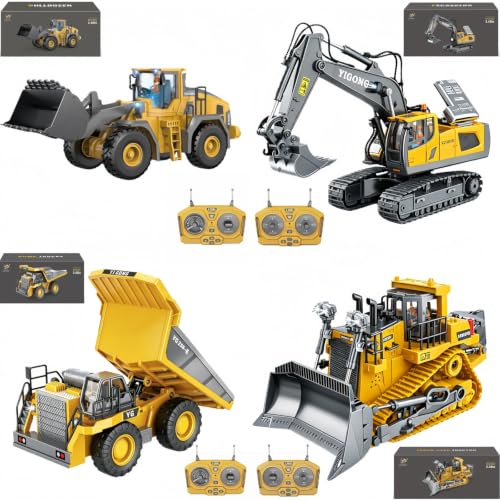
RC Remote Control Construction Equipment: The Complete Guide
From hydraulic excavators to heavy-duty bulldozers, discover the world of remote control construction vehicles. Compare features, understand tiers, and find the right model for your collection or job site play.
Explore Buying Guide🏗️ Why RC Construction Equipment? Remote control construction vehicles offer a unique blend of engineering realism and interactive play. Whether you're a hobbyist collector, a parent seeking an engaging outdoor toy, or someone fascinated by heavy machinery, these models deliver hours of immersive entertainment. From entry-level starter sets to professional-grade replicas, the range is impressive. This guide breaks down everything you need to know before choosing your next machine.
Understanding RC Construction Equipment Categories
The world of remote control construction equipment spans a wide variety of machine types, each designed to replicate a specific function found on real construction sites. Understanding these categories helps you match your purchase to your interests, whether you prefer digging, hauling, or lifting.
- RC Excavators: The most popular category, featuring articulated arms, rotating cabs, and various bucket types. These models simulate digging and trenching with impressive realism. Some high-end tier versions include fully metal hydraulic systems.
- RC Bulldozers: Built for pushing and grading, these tracked vehicles often feature realistic blade movement and durable undercarriages suitable for rough terrain.
- RC Loaders: Front-end loaders and backhoe loaders combine lifting and digging capabilities, making them versatile additions to any collection.
- RC Dump Trucks: These models focus on hauling, with functional beds that tilt to deposit materials. They pair perfectly with excavators and loaders for a complete construction site experience.
- RC Cranes: Tower cranes and mobile cranes offer lifting challenges, often with extendable booms and hook mechanisms for precise control.
For hobbyists interested in other types of remote control vehicles, explore our guides on RC remote control construction equipment and radio controlled cars to broaden your collection.
Key Features to Evaluate Before You Choose
Not all RC construction vehicles are created equal. The features you prioritize will depend on your experience level, intended use, and the type of terrain you plan to tackle. Here are the critical factors to consider:
- Control System: Entry-level models often use simple forward/reverse and left/right controls. Mid-range and high-end tier vehicles may feature multi-channel transmitters with independent control of tracks, arm, bucket, and rotation. Professional-grade models can include programmable functions.
- Build Materials: Plastic construction is common in starter tier models, while mid-tier and premium options increasingly incorporate metal components for gears, tracks, and hydraulic cylinders. Heavy-duty metal construction ensures durability on rough surfaces.
- Scale: Common scales include 1:14, 1:16, and 1:20. Larger scales offer greater detail and stability but require more storage space. Smaller scales are more portable and suitable for indoor use.
- Terrain Capability: If you plan to operate outdoors on dirt, sand, or gravel, look for models with reinforced tracks, weather-resistant coatings, and sufficient ground clearance. Indoor use may prioritize precision and smooth controls over ruggedness.
- Battery Life and Charging: Longer run times and quick-charge capabilities enhance the play experience. Consider models with swappable batteries for extended sessions.
Understanding these features will help you navigate the market with confidence. For those interested in the broader spectrum of radio control models, our radio control models guide provides additional context.
RC Construction Equipment Tiers: Entry-Level to Professional-Grade
To help you make an informed decision, we've categorized RC construction equipment into distinct tiers based on their features, build quality, and intended audience. This classification system uses universal descriptors that remain relevant regardless of market fluctuations.
| Tier | Best For | Typical Features |
|---|---|---|
| Starter Tier | Beginners, young enthusiasts, indoor play | Simplified controls, plastic construction, basic arm movement, shorter run times |
| Mid-Tier | Intermediate hobbyists, outdoor use on moderate terrain | Multi-channel controls, reinforced plastic or partial metal build, articulated arm, improved battery life |
| High-End Tier | Serious hobbyists, outdoor enthusiasts, collectors | Metal gears and tracks, hydraulic or screw-drive systems, realistic detailing, extended run times |
| Professional-Grade | Dedicated collectors, demonstration use, large-scale projects | Fully metal construction, advanced hydraulics, programmable controls, commercial-grade durability |
When comparing tiers, it's important to note that mid-range models typically offer smoother mechanism operation than entry-level options, while high-end tier vehicles provide the most realistic movement and longevity. The professional-grade segment is reserved for those who demand the utmost in realism and durability.
Excavators vs. Bulldozers vs. Loaders: Which Machine Suits You?
Each type of RC construction vehicle offers a distinct play pattern and skill requirement. Here's a quick comparison to help you decide:
RC Excavators
Ideal for digging, trenching, and material handling. Features rotating cabs and articulated arms. Best for those who enjoy precision control and realistic earth-moving tasks.
RC Bulldozers
Perfect for pushing and grading. Tracked undercarriages provide excellent traction. Suited for users who prefer straightforward, powerful movement over intricate manipulation.
RC Loaders
Versatile machines for lifting and transporting. Backhoe loaders combine digging and loading. Great for those who want a single vehicle that can handle multiple tasks.
RC Dump Trucks
Essential for hauling materials. Functional beds tilt to deposit loads. Often paired with excavators and loaders for a complete construction site scenario.
For those interested in other types of construction-related RC models, consider exploring our RC excavator hydraulic fully metal 1:14 guide for a deep dive into high-end excavator options.
Buying Guide: How to Choose the Right RC Construction Equipment
Selecting the right RC construction vehicle involves balancing your budget, experience level, and intended use. Here's a step-by-step approach to making a confident decision:
- Define Your Purpose: Are you buying for a child, for yourself as a hobbyist, or for a collection? Children typically benefit from starter tier models with simplified controls, while adults may appreciate the realism and durability of mid-tier and high-end tier options.
- Assess Your Terrain: Indoor play allows for smaller scales and plastic builds. Outdoor use on dirt, sand, or gravel demands weather-resistant coatings and reinforced tracks.
- Consider Expansion and Compatibility: If you plan to build a complete construction site scene, look for models that are compatible in scale and style with other vehicles you own or plan to purchase.
- Read Reviews and Watch Demonstrations: User reviews and video demonstrations provide invaluable insight into real-world performance, durability, and ease of use.
- Check for Spare Parts Availability: For long-term enjoyment, ensure that the manufacturer or retailer offers replacement parts such as tracks, gears, and batteries.
For related reading, our ready to run RTR electric RC cars guide offers parallel insights into the world of ready-to-use remote control vehicles that may inform your construction equipment purchase.
Maintenance and Care for Longevity
Proper maintenance ensures your RC construction equipment remains in optimal condition for years. Follow these essential care practices:
- Clean After Every Use: Remove dirt, dust, and debris from tracks, gears, and hydraulic components. Use a soft brush and compressed air for hard-to-reach areas.
- Lubricate Moving Parts: Apply appropriate lubricants to metal gears and joints as recommended by the manufacturer. Avoid over-lubricating plastic components.
- Store Properly: Keep your vehicle in a dry, dust-free environment. Remove batteries during extended storage to prevent leakage.
- Inspect for Wear: Regularly check tracks, tires, and hydraulic lines for signs of wear. Replace worn parts promptly to avoid further damage.
- Follow Battery Guidelines: Use the correct charger and avoid overcharging. Store batteries at moderate temperatures.
Frequently Asked Questions
What is the best RC remote control construction equipment for beginners?
Entry-level starter tier models with simplified controls and durable plastic construction are ideal for beginners. Look for vehicles that offer forward/reverse and basic arm or bucket movement without complex hydraulic systems. These provide an accessible introduction to the hobby.
Are RC construction vehicles suitable for outdoor use?
Yes, many RC construction vehicles are designed for outdoor play. Mid-range and high-end tier models often feature weather-resistant coatings and reinforced tracks suitable for dirt, sand, and gravel. Always check the manufacturer's guidelines for surface recommendations.
What scale are most RC construction models?
Common scales for RC construction equipment include 1:14, 1:16, and 1:20. Larger scales like 1:14 offer more detail and stability, while smaller scales are easier to store and transport.
How long do RC construction vehicles typically run on a single charge?
Run times vary by model and battery capacity. Starter tier models often provide 15-25 minutes, while mid-tier and high-end tier vehicles can run for 30-45 minutes or more. Swappable batteries extend play sessions significantly.
Can I use RC construction equipment indoors?
Yes, especially smaller scale models with smooth controls. However, indoor use is best suited for hard floors and low-pile carpets. Avoid using tracked vehicles on delicate surfaces that may be scratched.