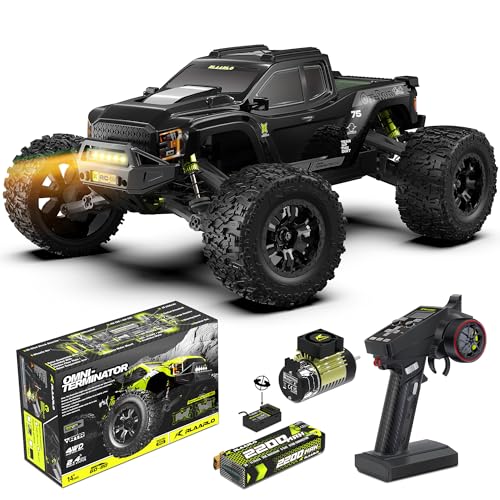
Radio Control Cars: The Complete Buyer's Guide
From backyard bashers to hobby-grade racers, radio control cars deliver adrenaline for every age and skill level. This guide breaks down the categories, specs, and features that matter.
Explore Top RC Car Picks🏎️ Why RC Cars Are Worth It: Radio control cars sit at the intersection of play and engineering. They build hand-eye coordination, introduce basic physics concepts (torque, traction, gearing), and offer a satisfying progression curve — from a first slow-speed crawler to a high-performance off-road buggy. The right RC car grows with the driver, rewarding skill development at every stage.
The Core Decision: Toy-Grade vs. Hobby-Grade
Before choosing a specific model, understand the two broad classes of radio control cars. This distinction affects durability, upgradability, and the overall ownership experience more than any other factor.
Toy-grade RC cars
Toy-grade models are designed for casual play. They're typically ready to run out of the box, use integrated rechargeable batteries, and have limited or no upgrade paths. They're an excellent entry point for young children or for occasional backyard use.
- Best for: Ages 3-8, casual driveway play, first-time RC experience
- Strengths: Simple controls, durable plastic bodies, minimal maintenance
- Limitations: Lower top speeds, limited replacement parts, sealed electronics
Hobby-grade RC cars
Hobby-grade models are engineered for performance and longevity. They use standardized components (motors, ESCs, servos, batteries) that can be replaced or upgraded. They reward careful driving but require more maintenance and a steeper learning curve.
- Best for: Ages 8+, enthusiasts, racing, long-term investment
- Strengths: Higher speeds, upgradeable parts, durable mechanical components
- Limitations: Higher initial outlay, more setup knowledge required, more maintenance
For a deeper dive into ready-to-run electric models, our guide to ready-to-run electric RC cars covers the RTR category in detail.
Scale and Size: Finding the Right Fit
RC cars are classified by scale — the ratio of the model to a real vehicle. Scale affects handling, where you can drive it, and how it feels on the controller.
- 1/24 and 1/28 scale (micro): Ideal for indoor driving and small spaces. These are best for young children and apartment dwellers. They're lightweight and forgiving.
- 1/16 and 1/18 scale: A versatile middle ground. Big enough for outdoor driving on smooth surfaces, small enough for indoor use on rainy days.
- 1/10 scale: The most common hobby scale. Big enough for real outdoor driving, with the widest selection of upgrade parts and community support. Requires a reasonable backyard or driveway.
- 1/8 scale and larger: Serious performance territory. These are heavy, fast, and demand open space. Best for dedicated hobbyists with racing venues or large properties.
Power Options: Electric vs. Nitro
Electric RC cars dominate the modern market for good reasons — they're quieter, cleaner, and easier to maintain. Nitro cars remain a niche for enthusiasts who enjoy the mechanical complexity.
Electric RC cars (recommended for most buyers)
- Brushed motors: Simple, durable, and efficient at moderate speeds. Standard in toy-grade and entry-level hobby models.
- Brushless motors: Higher efficiency, longer lifespan, and higher top speeds. Standard in mid-tier and top-tier hobby models.
- Battery types: NiMH batteries are the standard for entry-level models; LiPo batteries offer higher energy density and are common in performance models (require specific chargers and safety precautions).
Nitro RC cars (for experienced hobbyists)
- Use small internal combustion engines that run on a fuel blend. Require more tuning, break-in procedures, and regular maintenance.
- Offer longer run times than most electric models and produce a characteristic engine sound.
- Best considered only after gaining experience with electric models.
Terrain and Driving Surface
Where you plan to drive has a massive impact on the right RC car for you. The two main categories are on-road and off-road.
On-road RC cars
- Low ground clearance, slick tires, and stiff suspension for maximum speed and handling on smooth surfaces (pavement, indoor tracks).
- Best for racing and precision driving. Not suited to grass or gravel.
Off-road RC cars
- Higher ground clearance, knobby tires, and softer suspension for handling rough terrain.
- Subcategories include buggies (fast, agile), trucks and monster trucks (rugged, high-clearance), and crawlers (slow, ultra-capable on rocks).
- The most versatile choice for backyard driving — the terrain most families will use.
Quality Tiers for Radio Control Cars
Radio control cars span a wide range of build quality and performance. The table below maps the three most common tiers to their characteristics and best-use scenarios. No specific figures are provided — use this as a relative comparison framework to match a model to your needs.
| Tier | Typical Characteristics | Best For |
|---|---|---|
| Essential tier | Toy-grade plastic construction, sealed electronics, integrated rechargeable battery, limited or no upgrades | Younger children, casual driveway play, first RC experience |
| Balanced tier | Hobby-grade entry to mid-range, replaceable parts, brushed or entry brushless motor, standard battery connectors | Enthusiasts who want a foundation they can maintain and grow with |
| Top-tier | Hobby-grade performance, brushless motor, upgraded suspension, metal chassis components, extensive upgrade ecosystem | Serious hobbyists, racers, and buyers who want a long-term investment |
For most families, the balanced tier offers the best combination of performance, durability, and upgradeability. Top-tier makes sense when the hobby is being pursued seriously and the car will be driven frequently on varied terrain.
Battery and Charging Basics
Battery choice dramatically affects run time, performance, and maintenance. Here's what you need to know before choosing a model.
- Run time: Toy-grade models typically run for 15-30 minutes per charge. Hobby-grade models can run longer with larger batteries, but that depends on driving style and motor type.
- Charging time: Standard NiMH chargers can take several hours. LiPo balance chargers are faster but require more careful handling.
- Battery safety: LiPo batteries must never be over-discharged, punctured, or charged unattended. Follow manufacturer instructions and storage guidelines carefully.
- Buy a spare: Most RC hobbyists buy at least one extra battery so they can swap and continue driving. For entry-level models, a spare integrated battery is a worthy upgrade.
For the care and maintenance practices that apply to all RC gear, see our toy maintenance guide.
Age Recommendations
The right age for an RC car depends on the model's speed, complexity, and durability. Here's a general framework.
- Ages 3-5: Toy-grade micro RC cars with very low speeds and simple two-button controls. Focus is on cause-and-effect understanding rather than actual driving precision. Consider fun outdoor toys for 3-year-olds for related play ideas.
- Ages 6-8: Toy-grade or entry hobby-grade 1/24 to 1/16 scale models. Low to moderate speeds, durable plastic construction, and simple controls. See our guide to drivable toy cars for 8-year-olds for related options.
- Ages 9-12: Entry to mid-range hobby-grade models. 1/16 to 1/10 scale, capable of higher speeds and more varied terrain. Children can begin learning basic maintenance. Check drivable toy cars for 12-year-olds for more mature options.
- Ages 13+ and adults: Full hobby-grade territory. All scales and speed classes are on the table, along with racing and advanced upgrade paths.
Frequently Asked Questions
What's the best RC car for a beginner?
For most beginners, a 1/16 or 1/18 scale off-road buggy from the balanced tier is ideal. These models are fast enough to be exciting, durable enough to survive mistakes, and simple enough to learn on without frustration. A toy-grade model works well for very young children who are just starting.
How fast do RC cars go?
Speeds vary dramatically by class. Toy-grade models typically top out at walking-to-jogging pace. Hobby-grade brushed models can reach running speed, while top-tier brushless models can achieve highway speeds. Beginners should prioritize control and durability over maximum speed.
Are RC cars waterproof?
Some models are rated as water-resistant for wet grass or light splashing; very few are fully submersible. Always check the manufacturer's rating. Even water-resistant models require careful drying and maintenance after use in wet conditions.
How long do RC car batteries last?
Battery lifespan depends on type, usage, and care. NiMH batteries typically last 1-2 years with regular use. LiPo batteries can last 2-3 years if properly stored and maintained. Buying a spare battery is a good practice for any RC hobbyist.
Can I upgrade a toy-grade RC car?
Generally no. Toy-grade models use sealed, proprietary electronics and don't support standard upgrades. If upgradeability matters, start with a balanced-tier hobby-grade model from the beginning.
Ready to Find Your Perfect RC Car?
Browse our curated selection of radio control cars below. Each pick is chosen for durable construction, age-appropriate performance, and long-term value.
See Recommended RC Cars🔗 Keep Exploring: For related vehicle play, see ride-on toys for 6-10 year-olds, ride-on cars for 10-12 year-olds, and HO scale cars and trucks. For flying RC fun, check our guide to RC planes that can land on water.