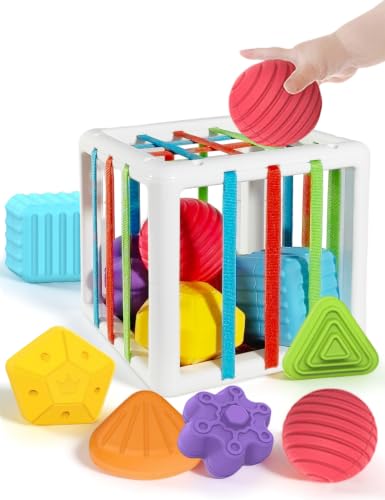
Ideas for First Birthday Gifts: A Complete Toy Guide for One-Year-Olds
Turning one is a milestone worth celebrating with a gift that grows with the child. This guide walks you through the developmental needs of a one-year-old, the toy types that best support them, and the practical checks that separate a thoughtful gift from a forgotten one.
Explore Top Toy CategoriesWhy this guide matters: A first birthday gift is rarely just a toy. It is a small investment in a child's next stage of development. At twelve months, babies are pulling to stand, testing cause-and-effect, and exploring everything with their hands and mouths. The right gift meets them exactly there.
Whether you are a parent, grandparent, or friend searching for ideas for first birthday gifts, the goal is the same: choose something safe, durable, and genuinely engaging for a one-year-old. This guide focuses on those three qualities rather than on trends or novelty.
What a One-Year-Old Is Actually Doing
Before comparing toy categories, it helps to understand the developmental window. Most one-year-olds are in a rapid phase of motor and cognitive growth. They are likely crawling or cruising, beginning to stand independently, and experimenting with cause-and-effect — pressing a button to hear a sound, dropping an object to watch it fall, filling and dumping containers.
Their grip is maturing from a full-hand grasp toward a pincer grasp, which opens up stacking, sorting, and simple placement activities. Language is emerging through babbling and first words, so toys that invite naming, imitation, and back-and-forth interaction have real value.
This is also a period when mouthing is still common, which makes material safety and part size non-negotiable. Toys that support gross motor development and early hand control tend to be the most enduring gifts, because they remain relevant for months rather than weeks.
Top Toy Categories for a First Birthday
The categories below are the workhorses of the one-year-old toy shelf. Each one targets a specific skill, and together they cover the motor, cognitive, and sensory needs of this age. The quality descriptors used here are relative tiers — entry-level, mid-range, and premium — reflecting build quality and material choices rather than any specific figure.
Stacking & Nesting Toys
Stacking cups, rings, and nesting boxes teach size sequencing, hand-eye coordination, and cause-and-effect. They are among the most reliable first birthday gifts because they scale with ability: a child can bang them together long before they can stack them neatly.
Look for rounded edges, a stable base, and materials that survive repeated drops. Entry-level sets are often lightweight plastic; mid-range wooden sets offer more weight and a more satisfying feel.
Push & Pull Toys
Push walkers and pull-along animals encourage cruising and early walking while giving a child a sense of control over their environment. A sturdy push walker with adjustable resistance can support the transition from cruising to independent steps.
Check wheel stability and handle height. A mid-range wooden pull toy with a smooth finish is a durable option that often stays in use well past the first birthday.
Soft Blocks & First Building Sets
Large soft blocks and chunky wooden cubes introduce the idea of construction without the frustration of small pieces. They support grasping, stacking, and knocking down — the earliest form of building play.
Fabric blocks with textured surfaces add sensory value. Wooden cubes with rounded corners offer more stability as the child's stacking improves. Both are strong candidates for a first birthday gift.
Simple Shape Sorters
A shape sorter with a few large, easy-to-grasp shapes is a classic first birthday gift. It builds problem-solving and fine motor control without demanding precision. Start with a two-shape sorter and graduate to more complex versions later.
Look for a design where the shapes are large enough to be safe and the lid stays secure during play. Wooden sorters with smooth edges are a durable mid-range choice.
Board Books & First Picture Books
Books are often overlooked as birthday gifts, but they are among the most developmentally valuable items you can give a one-year-old. Chunky board books with high-contrast images and simple text support language, naming, and joint attention.
Choose books with rounded corners and thick pages that survive mouthing and grabbing. A small set of first-word books is a practical, lasting gift.
Interactive Activity Panels
Activity cubes and interactive play panels combine cause-and-effect elements — switches, dials, beads, and doors — in one unit. They keep a one-year-old engaged because there is always another feature to discover.
Premium wooden activity cubes with solid construction and non-toxic finishes are a long-term investment. Check that all moving parts are securely attached and sized safely for the age group.
Quick Comparison by Skill Focus
| Toy Category | Primary Skill | Best For | Tier Guidance |
|---|---|---|---|
| Stacking & Nesting Toys | Fine motor, size sequencing | Babies who enjoy dumping and filling | Entry-level to mid-range |
| Push & Pull Toys | Gross motor, balance | Cruisers preparing to walk | Mid-range for stability |
| Soft Blocks & First Builders | Grasping, early construction | Children new to stacking | Essential tier |
| Shape Sorters | Problem-solving, hand control | Babies ready for simple matching | Mid-range |
| Board Books | Language, joint attention | Every one-year-old | Essential tier |
| Activity Panels | Cause-and-effect, exploration | Curious, hands-on babies | Premium for longevity |
Safety Checklist Before You Buy
First birthday gift safety essentials
- Confirm the toy is labeled for ages 12 months and up.
- Check for small detachable parts that could pose a choking hazard.
- Look for non-toxic, child-safe finishes on painted or wooden toys.
- Ensure edges and corners are rounded and seams are smooth.
- Verify that fabric toys are machine washable or surface-washable.
- Avoid long cords, loops, or straps that could pose a strangulation risk.
- Test moving parts for secure attachment and pinch points.
How to Choose Between Ideas for First Birthday Gifts
Once you understand the categories, the decision narrows to a few practical questions. First, consider the child's current stage: a confident cruiser will get more from a push walker than a baby who is still mostly crawling. Second, consider the household: a compact living space may favor stacking toys and books over larger activity centers.
Third, think about longevity. The strongest first birthday gifts remain useful for six to twelve months. Open-ended toys — blocks, stacking cups, board books — tend to outperform single-purpose electronic toys in this respect. They invite repeated play and adapt as the child's abilities grow.
Finally, consider the parents. A gift that is easy to clean, easy to store, and does not require batteries is often appreciated more than a flashy alternative. If you are shopping for a child who already has a full toy shelf, books and consumable art supplies are thoughtful alternatives that still fit the first-birthday theme.
For families building a broader toy collection, it helps to cross-reference with a guide to the highest-rated toys for 1-year-olds so that gifts complement rather than duplicate what is already in the home. If the child is nearing two, the next stage of play is covered in guides to interactive toys for 1–2-year-olds.
Practical Gifting Notes
A first birthday gift does not need to be large to be meaningful. A well-chosen board book, a set of stacking cups, or a single durable wooden toy can be more useful than a bulky playset. If you are unsure of the child's preferences, choose a category that is universally relevant at this age — stacking, books, or a simple push toy.
Include a gift receipt when possible. Parents often need to exchange duplicate items or adjust for storage space. If you are giving a toy with batteries, consider including a set of the correct batteries so the gift is immediately usable.
For families who prefer experience-based gifts, a contribution to a children's museum membership or a music class can be a thoughtful alternative. If you are set on a physical toy, the categories above remain the most reliable starting point.
Frequently Asked Questions
What are the best toys for a first birthday?
The best first birthday toys support the developmental milestones of a one-year-old: grasping, stacking, pushing, and cause-and-effect discovery. Stacking cups, push-and-pull toys, soft blocks, simple shape sorters, and board books are consistently strong choices. Look for toys that are durable, easy to clean, and free of small parts.
How do I choose a safe first birthday gift?
Prioritize toys labeled for ages 12 months and up, avoid small detachable parts that could pose a choking hazard, and check for non-toxic finishes and rounded edges. Fabric toys should be machine washable, and plastic toys should be free of sharp seams. Always follow the manufacturer's age guidance on the packaging.
Should a first birthday gift be educational or just fun?
For a one-year-old, the two are the same thing. Play is how babies learn. A toy that invites stacking, filling, dumping, or cause-and-effect exploration is both entertaining and developmentally rich. The key is choosing open-ended toys that let the child lead the play.
Ready to Choose a First Birthday Gift?
Browse our curated selection of first birthday toys below. Each category above is represented, and every option is chosen for safety, durability, and genuine play value for a one-year-old.
View Recommended Toys