Baby Play Mat: The Complete Guide to Choosing the Best Mat for Your Little One
Discover how a high-quality baby play mat supports tummy time, sensory development, and safe floor play. Our expert guide covers materials, safety, thickness, and everything you need before you decide.
🧸 Why a Baby Play Mat Matters: A play mat is one of the first big purchases for new parents, and for good reason. It provides a clean, cushioned, and stimulating surface for tummy time, rolling, sitting, and eventually crawling. The right mat protects your baby from hard floors, supports motor skill development, and gives you peace of mind during supervised floor play. This guide walks you through the key factors — material safety, thickness, size, portability, and developmental benefits — so you can choose with confidence. When you're ready to explore, you can browse our baby play mat selections and compare options.
What Is a Baby Play Mat and Why Does It Matter?
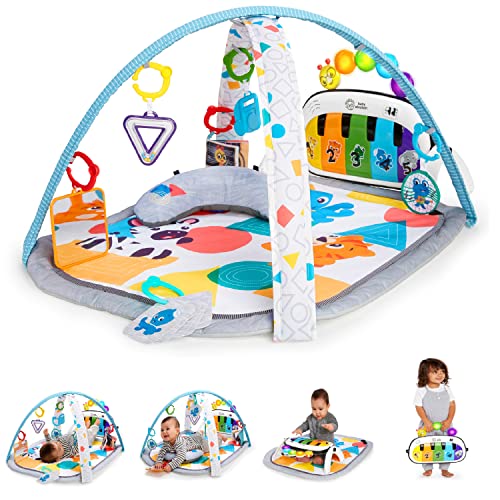
A baby play mat is a padded surface designed specifically for infants and toddlers to lie, roll, sit, and play on. Unlike a standard rug or blanket, a play mat is engineered to cushion falls, resist moisture, and often include sensory features like textured patterns, mirrors, or hanging toys. It creates a defined, hygienic play zone that can be set up in a living room, nursery, or any room where your baby spends time.
The benefits go far beyond comfort. Pediatricians and child development specialists consistently recommend daily tummy time from birth, and a play mat makes this easier and safer. The firm yet cushioned surface encourages head lifting, neck strengthening, and eventually crawling. Many mats also feature high-contrast visuals and crinkle textures that stimulate visual and auditory senses during the critical first year. If you're also setting up a full activity station, our activity gym for baby guide pairs perfectly with a play mat. For broader developmental recommendations, see our baby toys collection.
Key Factors to Consider Before You Choose
1. Material Safety Comes First
The material your baby lies on matters. Since infants spend significant time on their tummies and often mouth or drool on surfaces, choose a mat made from non-toxic, certified materials. Look for:
- Food-grade EVA foam — durable, easy to clean, and free from BPA and phthalates when properly certified.
- TPU (thermoplastic polyurethane) — a premium, flexible material often used in high-end mats; typically free from harmful chemicals.
- Organic cotton or bamboo fabric — soft, breathable, and ideal for newborns and sensitive skin, though these fabric-top mats usually require machine washing.
- Certifications — check for safety labels such as CPSIA compliance, OEKO-TEX, or equivalent regional safety standards on the packaging.
If you want to dig deeper into non-toxic options, our non-toxic toy guide covers the broader principles of safe materials for babies. For age-specific considerations, see age-appropriate toys for a 2-month-old.
2. Thickness and Firmness
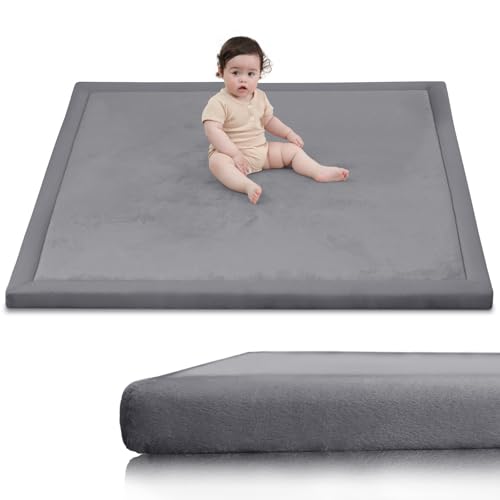
Thickness is a balance between cushioning and stability. A mat that is too soft makes it hard for a baby to push up during tummy time; a mat that is too thin offers little protection on hard floors.
- Entry-level thin mats (around 0.3–0.5 inch) — best for carpeted floors or older babies who are already mobile.
- Mid-range mats (around 0.5–0.8 inch) — a balanced choice for most families, offering fall protection without compromising stability.
- Premium thick mats (around 1 inch or more) — ideal for hardwood, tile, or concrete floors and for families who want extra fall protection during the sitting and standing stages.
Firmness is equally important. A mat should feel supportive, not spongy. If your hand sinks deeply into the surface, it may be too soft for tummy time.
3. Size and Layout of Your Space
Play mats come in a range of sizes, from small square pads for newborns to large interlocking tile sets that can cover an entire playroom floor. Consider the space where the mat will live:
- Small mats suit compact apartments or travel use.
- Medium rectangular mats offer enough room for tummy time and early rolling.
- Large interlocking tile mats are ideal for dedicated playrooms and grow with your child through the toddler years.
Measure your intended space before you buy, and remember that a mat will need clearance around it for safety and easy supervision.
4. Portability and Storage
If you plan to move the mat between rooms or take it to grandparents' houses, look for foldable or roll-up designs. One-piece foam mats fold accordion-style, while fabric mats roll into a compact bundle. Interlocking tile mats are modular and easy to pack down, though they take more time to assemble. For families who travel frequently, our airplane travel toys for 2-year-olds guide includes tips on portable play surfaces.
5. Cleaning and Maintenance
Babies are messy. Spit-up, drool, and snack spills are inevitable, so a mat that wipes clean quickly is a practical winner. Waterproof foam and TPU mats usually require only a damp cloth and mild soap. Fabric mats are often machine washable but need full drying before reuse. Avoid mats with deep seams or textured grooves that trap debris unless they are easy to remove and wash.
Comparing Baby Play Mat Tiers at a Glance
| Tier | Best For | Material Highlights | Key Considerations |
|---|---|---|---|
| Starter Tier | Newborns, tummy time, compact spaces | Basic foam or cotton fabric top; simple patterns | Lightweight and easy to store; verify safety certifications and check thickness for hard floors |
| Mid-Range | Daily use from birth through crawling | Food-grade EVA foam or TPU; reversible designs; textured surfaces | Balanced thickness and firmness; often includes sensory features like crinkle or mirrors |
| High-End Tier | Dedicated playrooms, long-term use, multiple children | Premium TPU or organic fabric; large interlocking tiles; water-resistant coating | Thicker cushioning and larger coverage; modular designs that grow with the child |
| Top-Tier / Professional-Grade | Childcare settings, large play areas, intensive daily use | Commercial-grade foam or reinforced TPU; heavy-duty seams; extensive safety testing | Maximum durability and coverage; designed for frequent cleaning and heavy foot traffic |
Tier descriptors reflect relative market positioning and feature sets, not absolute figures. Choose the tier that matches your space, usage intensity, and developmental stage.
How a Play Mat Supports Your Baby's Development
Physical Development
Daily tummy time on a firm, cushioned mat strengthens neck, shoulder, and core muscles — the foundation for rolling, sitting, and crawling. The textured surfaces of many mats also encourage reaching and grasping, which refines fine motor skills.
Sensory Stimulation
High-contrast patterns, crinkle flaps, and varied textures on premium mats provide visual and tactile stimulation that supports early brain development. These features are especially valuable during the first six months when babies are rapidly building sensory pathways.
Safe Exploration
A defined, padded play zone gives babies the freedom to explore movement without the risk of hard-floor bumps. For parents, it creates a predictable, hygienic space that is easy to supervise.
Language and Social Play
When you join your baby on the mat, face-to-face interaction — singing, talking, and playing peekaboo — becomes natural. These early social exchanges are crucial for language development and bonding.
Choosing a Play Mat by Age and Stage
0–3 months: Focus on a firm, flat surface with high-contrast visuals. A smaller mat is sufficient, and easy cleaning is a priority. See our 2-month-old toy guide for complementary sensory ideas.
3–6 months: As rolling begins, ensure the mat has adequate edge cushioning and enough space for movement. Textured surfaces and crinkle features become more engaging.
6–12 months: Crawling and sitting require a larger, thicker mat. Interlocking tile mats are popular at this stage. Our 9–12 month toy guide covers additional floor-play recommendations.
12–24 months: Toddlers need durable, easy-to-clean mats that can handle active play. A larger mat or a play mat paired with a ball pit for kids creates an engaging play zone.
Baby Play Mat Safety Checklist
- Verify the mat is free from BPA, phthalates, lead, and heavy metals.
- Check for safety certifications appropriate to your region (CPSIA, OEKO-TEX, etc.).
- Ensure the mat lies flat with no curling edges that could trap fingers or create tripping hazards.
- Confirm the surface is non-slip, especially on hardwood or tile floors.
- Inspect seams and edges regularly for wear and tear.
- Always supervise your baby during floor play, regardless of mat thickness.
- Follow the manufacturer's age and weight guidelines.
For a comprehensive overview of toy safety principles, see our toy safety guide and choking hazard prevention resources.
Frequently Asked Questions About Baby Play Mats
What thickness should a baby play mat be?
A thickness of 0.5 to 1 inch is generally recommended for infants learning to roll and sit. Thicker mats work well on hard floors, while thinner mats suit carpeted areas. The key is to balance cushioning with enough firmness for stable tummy time.
Are foam play mats safe for babies?
Yes, when they are made from non-toxic, certified materials such as food-grade EVA foam or TPU. Look for mats that are free from BPA, phthalates, and heavy metals, and check for safety certifications on the packaging. Always allow new foam mats to air out for a few days before use.
When can a baby start using a play mat?
Babies can use a play mat from birth for supervised tummy time and sensory exploration. From around two months, many infants begin to benefit from the visual contrast and textured surfaces of a play mat.
How do I clean a baby play mat?
Most foam and waterproof mats can be wiped clean with a damp cloth and mild soap. Fabric mats are usually machine washable on a gentle cycle. Always dry the mat completely before use to prevent mold and mildew.
Can I use a play mat on carpet?
Yes. On carpet, a thinner mat is usually sufficient because the carpet already provides cushioning. However, make sure the mat has a non-slip backing so it doesn't slide or bunch up during play.
How long does a baby play mat last?
With proper care, a quality play mat can last from birth through the toddler years and beyond. Foam and TPU mats are typically the most durable, while fabric mats may show wear sooner if washed frequently. Inspect the mat regularly for cracks, peeling, or worn edges.
Ready to Find the Perfect Play Mat?
You now have the full picture — safety, materials, thickness, size, and developmental benefits. Explore our curated selection of baby play mats to find the one that fits your space and your baby's stage.
Explore Baby Play Mats