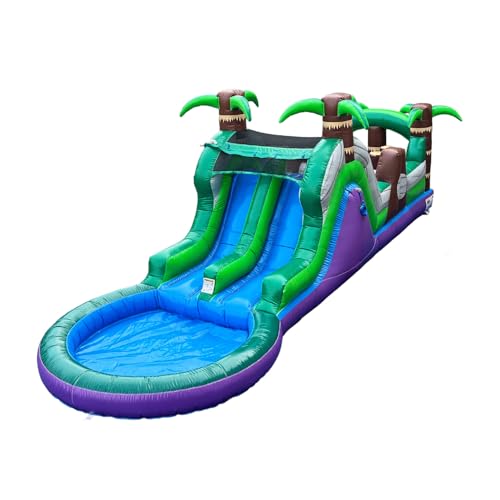
Wholesale Commercial Inflatable Water Slides: The Complete Buyer's Guide
Everything rental operators, event planners, and water park developers need to know before sourcing commercial-grade inflatable water slides — from reinforced materials and safety compliance to blower requirements and long-term fleet durability.
Explore Commercial-Grade OptionsResearching before you commit: buying commercial inflatable water slides at wholesale volume is a serious capital decision. Whether you are launching a party rental business, expanding an existing fleet, or outfitting a seasonal water park, the difference between a profitable long-term asset and a costly mistake comes down to construction quality, safety certification, and matching the right slide format to your venue. This guide walks you through each decision point so you can buy with confidence.
What Separates Commercial-Grade Inflatable Water Slides from Consumer Units
Consumer inflatables are designed for occasional backyard use. Commercial inflatable water slides are engineered for continuous daily operation under heavy foot traffic, repeated wet-and-dry cycles, and transport between venues. That engineering difference shows up in every layer of the product:
- Reinforced PVC and ripstop vinyl: commercial slides typically use heavier-gauge, UV-resistant PVC with reinforced stress zones at entry points, landing zones, and anchor corners.
- Double-stitched and heat-welded seams: seams are the first failure point on any inflatable. Commercial construction uses heat welding combined with multi-row stitching on high-stress areas.
- Continuous-duty blowers: commercial blowers are rated to run for hours without overheating, unlike consumer blowers that require cooldown intervals.
- Reinforced anchor points and tie-downs: commercial units include more anchor points, often with metal D-rings, to meet wind-load safety guidance.
- Replaceable wear components: splash pools, slide beds, and entry mats on well-designed commercial units can often be repaired or replaced without discarding the entire slide.
If you are comparing formats and want to understand how slide layouts differ from combined bounce-and-slide products, our overview of a water slide bounce house explains the design trade-offs. For operators specifically considering rental fleet additions, the guide on wholesale commercial water slides for sale covers sourcing channels in more depth.
Material Thickness & Denier
Heavier PVC and higher-denier ripstop vinyl resist punctures, UV fading, and abrasion from wet clothing and pool decks.
Seam Engineering
Heat-welded seams with double stitching at stress points dramatically extend service life compared to single-stitch construction.
Blower Redundancy
Continuous-duty blowers with accessible replacement parts keep your fleet running through peak season without downtime.
Anchor & Wind Rating
Documented anchor points and wind-load guidance are essential for outdoor events and insurance compliance.
Storage & Transport
Deflated pack size, included carry bags, and weight distribution affect how many units fit in your vehicle or trailer.
Warranty & Support
A documented warranty and responsive spare-part availability matter more than any single specification on the spec sheet.
Comparing Commercial Inflatable Water Slide Tiers
Commercial inflatable water slides are generally grouped into three market tiers. Understanding where each tier sits helps you match construction quality to your intended usage intensity — without over- or under-specifying your fleet.
| Tier | Best For | Typical Construction | Usage Intensity |
|---|---|---|---|
| Entry-Level | New rental operators testing demand | Mid-gauge PVC, single blower, standard anchor set | Weekend events and light seasonal use |
| Mid-Range | Established rental fleets and event companies | Heavier PVC, reinforced seams, one to two continuous-duty blowers | Frequent weekly operation through peak season |
| Premium / Commercial-Grade | High-volume rentals and water park installations | Heavy-gauge reinforced PVC, heat-welded seams, multi-blower setup, metal anchors | Daily commercial operation with full safety documentation |
Mid-range models usually offer smoother slide surfaces and more consistent blower performance than entry-level units, while premium commercial-grade slides add the redundancy and documentation that insurers and venue operators look for. For larger scale installations, many buyers also evaluate multi-feature formats such as the big splash triple water slides and pool water park configuration, which combines several slide lanes with a shared splash pool.
Safety Standards and Compliance Checklist
Safety is the single most important factor in any commercial inflatable purchase. Before placing a wholesale order, confirm that the manufacturer can provide documentation for the following:
Verify These Before You Buy
- Compliance with recognized inflatable safety standards such as ASTM F2374 (US) or EN 14960 (EU).
- Flame-retardant material certification for all vinyl and PVC surfaces.
- Documented anchor point count and wind-load guidance for outdoor installation.
- Weight capacity per user and maximum simultaneous user count on the slide.
- Blower electrical ratings, plug type, and recommended circuit requirements.
- Clearly defined age and height recommendations for each slide model.
- A written warranty covering seams, materials, and blowers.
- Availability of replacement parts and repair kits for wear components.
Operators running rental businesses should also review their insurance requirements early in the sourcing process — many insurers request the compliance documentation listed above before covering inflatable water slide operations. Related rental formats such as a water slide obstacle course bounce house often carry additional setup and supervision requirements that should be clarified with both the manufacturer and your insurer.
Site Planning, Power, and Water Requirements
Commercial inflatable water slides demand more from a site than a backyard unit. Plan for the following before your first installation:
- Footprint and safety buffer: add at least 5 to 10 feet of clear space on all sides of the inflated footprint, and confirm overhead clearance for tall slide towers.
- Power supply: each continuous-duty blower typically needs a dedicated circuit. For off-grid events, size a generator that can handle the combined blower load plus startup surge.
- Water supply and drainage: commercial slides with splash pools require a refill plan and a drainage strategy that avoids pooling and slip hazards.
- Surface stability: level ground is essential. Grass, turf, and padded surfaces are preferable to hard surfaces near entry and exit points.
- Supervision plan: commercial slides require trained attendants to manage rider flow, enforce height and age rules, and monitor the blower and anchor points throughout the event.
If your venue pairs inflatable slides with other attraction formats, our guide to water slides and bounce houses for sale covers how to build a mixed fleet that serves different event types. Operators who also rent standalone bounce products often cross-reference the water bouncy houses for rent guide for comparison.
How to Evaluate a Wholesale Supplier
Wholesale sourcing is about more than the product itself — it is about the reliability of the partner behind it. When vetting suppliers, prioritize these factors:
- Manufacturing transparency: ask for factory information, production capacity, and whether they manufacture in-house or resell.
- Certification portfolio: request safety certificates and test reports, and verify they reference the standard by name.
- Reference customers: ask for contacts at existing rental businesses or parks who use their products at scale.
- Spare parts availability: confirm that blowers, entry mats, and repair kits are stocked and shippable on a predictable timeline.
- Order documentation: wholesale orders should include a detailed packing list, model numbers, blower specifications, and warranty terms.
Buyers exploring adjacent commercial formats may also want to review water slides for above ground swimming pools for residential-adjacent installations, or water slide rentals to understand how the rental market positions these products to end customers.
Frequently Asked Questions
What makes an inflatable water slide commercial-grade?
Commercial-grade inflatable water slides are built with heavier reinforced PVC or ripstop vinyl, double-stitched and heat-welded seams, commercial blowers, and reinforced anchor points. They are engineered for continuous daily use and must meet recognized inflatable safety standards such as ASTM F2374 or EN 14960.
How many blowers does a commercial inflatable water slide need?
Most mid-range and high-end commercial slides use one to three continuous-duty blowers rated for constant operation. Larger multi-lane or obstacle-course units may require multiple blowers. Always confirm the manufacturer's specified blower count and that each unit is rated for continuous commercial operation.
What space and power requirements should I plan for?
Plan for the inflated footprint plus a safety buffer of at least 5 to 10 feet on all sides, and clear overhead space. Commercial blowers typically draw dedicated circuits; confirm the amperage per blower and whether you need a generator for off-grid rental events.
How do I verify safety compliance before buying?
Request test reports, certificates of compliance, and the manufacturer's quality documentation. Look for references to ASTM F2374 (US) or EN 14960 (EU), flame-retardant material certification, and a documented warranty. Ask for the anchor and wind-rating guidance.
Are inflatable water slides suitable for rental businesses?
Yes. Commercial-grade slides are purpose-built for rental fleets. Prioritize durable construction, replaceable wear parts, compact deflated storage, and a manufacturer with spare-part availability and responsive support. Many operators also explore related rental formats such as a water slide bounce house rental or a water slide with slip and slide rental setup.