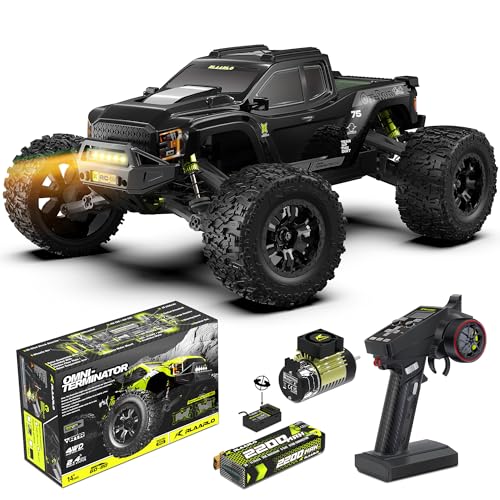
Truck RC Cars: The Ultimate Guide to Remote Control Trucks for Kids
Everything you need to know before choosing a remote control truck — from scale and terrain capability to durability and age suitability. Expert insights for confident buying decisions.
See Top RecommendationsWhy truck RC cars are a favorite among young drivers: Remote control trucks combine the thrill of speed with rugged off-road capability. Unlike sleek racing cars that struggle on grass or gravel, RC trucks are built to handle rough terrain — making them ideal for backyard adventures, park outings, and driveway fun. Whether you're shopping for a first-time driver or upgrading an experienced young hobbyist, understanding the key differences between truck types will help you choose a model that delivers lasting enjoyment and real developmental value.
This guide walks you through the essential factors: scale, drive system, suspension, battery type, and durability. You'll learn how the transmitter and receiver affect control range, why gross motor skill development matters for younger drivers, and how to match truck complexity to your child's age and experience level. By the end, you'll have a clear picture of which truck RC car fits your needs — without the guesswork.
Key Features That Define a Great Truck RC Car
Not all remote control trucks are created equal. The difference between a frustrating experience and hours of outdoor fun often comes down to a handful of core features. Here's what to look for:
- Essential tier Durable chassis and body shell: Entry-level trucks typically use ABS plastic bodies, while mid-range and high-end models employ polycarbonate shells with reinforced bumpers. A solid build resists cracks from minor collisions — critical for younger drivers still mastering control.
- Essential tier Proportional steering and throttle: This means the truck responds gradually to input rather than full-speed-or-nothing. Proportional control is far more intuitive and helps develop fine motor skills as children learn to modulate their inputs.
- Mid-range Independent suspension: Four-wheel independent suspension absorbs bumps and keeps all tires grounded on uneven terrain. Trucks without it tend to bounce and lose traction on grass or dirt. Look for oil-filled shock absorbers on mid-tier and above.
- Mid-range All-wheel drive (AWD) or four-wheel drive (4WD): Delivers power to all four wheels for superior traction on loose surfaces. Two-wheel-drive (2WD) models are simpler and lighter, but AWD/4WD trucks climb hills and handle sand far better.
- High-end tier Water-resistant electronics: Splash-resistant ESCs and sealed receivers let you drive through damp grass or shallow puddles. Not fully waterproof, but far more forgiving than unprotected electronics.
- High-end tier Replaceable battery packs: Trucks with swappable battery packs let you keep a spare charged and ready. This is a hallmark of hobby-grade models and a major convenience factor for longer play sessions.
- Essential tier 2.4 GHz radio system: Modern trucks use 2.4 GHz transmitters, which resist interference and allow multiple trucks to run simultaneously without signal crossover. Older AM/FM systems are prone to glitches.
- Mid-range Speed and torque balance: A truck with high top speed but low torque will struggle on hills. The best all-around trucks balance both — enough speed for excitement, enough torque for climbing and off-road traction.
Understanding Scale and Terrain Capability
Truck RC cars come in several scales, each suited to different environments and age groups. Scale refers to the size relative to a full-size vehicle — a 1:16 scale truck is smaller than a 1:10 scale model. Larger scales generally offer better stability and off-road capability, while smaller scales suit indoor use and younger children with smaller hands.
| Scale | Typical Size | Best For | Tier Placement |
|---|---|---|---|
| 1:24 – 1:18 | Palm-sized to small | Indoor play, younger children (5–7) | Entry-level |
| 1:16 – 1:14 | Medium | Driveway and short grass, ages 6–9 | Essential tier |
| 1:12 – 1:10 | Large | Off-road, grass, dirt, ages 8+ | Mid-range |
| 1:8 – 1:6 | Extra large | Serious off-road hobbyists, teens and adults | High-end tier |
For most families shopping for a child aged 6 to 10, a 1:16 or 1:12 scale truck strikes the best balance. It's large enough to handle moderate terrain without being unwieldy or intimidating. If your child is younger or will primarily drive indoors, a 1:24 scale model is more manageable. For teens ready to explore serious off-road driving, a 1:10 hobby-grade truck offers far greater upgradeability and performance.
2WD vs 4WD: Which Drive System Suits Your Needs?
The drive system determines how power reaches the wheels — and it's one of the most consequential decisions when choosing a truck RC car.
- 2WD (two-wheel drive): Power goes to the rear wheels only. These trucks are lighter, simpler mechanically, and easier to maintain. They're ideal for smooth surfaces and light off-road use. Beginners often find 2WD trucks more predictable because the rear-wheel-drive layout behaves consistently under acceleration. If your child is just starting out and will drive mostly on pavement or short grass, a 2WD truck is a sensible entry-level choice.
- 4WD (four-wheel drive): Power goes to all four wheels, providing superior traction on loose surfaces like sand, mud, and gravel. 4WD trucks climb hills more confidently and maintain control on slippery terrain. They're heavier and more mechanically complex, which places them in the mid-range and high-end tiers. For families with access to parks, trails, or uneven backyard terrain, 4WD is well worth considering.
If your child is around 7 years old and new to RC driving, a 2WD truck with proportional controls is an excellent starting point. Older kids (8–9 years) who've demonstrated good control and want to tackle rougher ground will appreciate the added capability of 4WD.
Battery Type and Runtime: What to Expect
Runtime and battery type directly affect how long play sessions last — and how much waiting around happens between them.
- Essential tier NiMH battery packs: Common in entry-level and mid-range trucks. They're robust, less sensitive to charging habits, and deliver respectable runtime. The trade-off is longer charge times (often 2–4 hours). Many entry-level trucks include two NiMH packs so one can charge while the other is in use.
- Mid-range Li-ion battery packs: Lighter and with higher energy density than NiMH. Li-ion packs are increasingly common in mid-tier trucks because they reduce weight and extend runtime. They do require more careful charging and storage habits.
- High-end tier LiPo battery packs: The standard for hobby-grade performance. LiPo batteries deliver high burst power for rapid acceleration and long runtimes. They require dedicated chargers, proper storage voltage, and more attention — making them unsuitable for very young children without adult supervision.
Practical tip: Regardless of battery chemistry, buy at least one spare battery pack if your child will use the truck regularly. A second pack transforms a 15-minute session into a 30–40 minute adventure. Also consider whether the truck uses a proprietary connector or a standard one — standard connectors make it easier to source replacement packs later.
Durability, Maintenance, and Long-Term Enjoyment
A truck RC car is an investment in outdoor fun. Choosing a model with accessible spare parts and a robust design extends its useful life significantly.
- Parts availability: Before committing to any model, check whether replacement parts (tires, suspension arms, gears, body shells) are readily available. Hobby-grade brands typically have extensive parts support; some entry-level brands do not. A truck with no parts support becomes a static display the moment something breaks.
- Modular design: Trucks designed with modular assemblies — separate gearboxes, easily removable wheels, bolt-on suspension arms — are far easier to repair. Look for models where common wear items can be replaced with basic tools.
- Weather resistance: If your child will drive on damp grass or through puddles, prioritize models with splash-resistant electronics. Avoid fully submerged driving unless the manufacturer explicitly rates the truck as waterproof.
- Cleaning and storage: After off-road sessions, brush off dirt from the chassis and suspension. Store the truck with the battery removed and at a moderate temperature. Following these habits prevents corrosion and extends electronic lifespan.
For families looking to get the most from their purchase, exploring toys within a sensible tier often reveals mid-range trucks with excellent parts support — a smarter long-term choice than an entry-level model with no upgrade path.
Age Suitability: Matching the Truck to Your Child
Age recommendations on truck RC cars are not arbitrary — they reflect mechanical complexity, speed capability, and safety considerations. Here's a practical breakdown:
- Ages 5–6: Choose a 1:24 or 1:18 scale truck with a simple 2.4 GHz controller, proportional steering, and modest top speed. These models are lightweight and less likely to cause damage or injury. Adult supervision is still recommended.
- Ages 7–8: A 1:16 scale 2WD truck with proportional throttle and a durable bumper is a great fit. At this age, children can manage moderate speed and begin learning basic maintenance like cleaning and battery swapping.
- Ages 9–12: A 1:12 or 1:10 scale 4WD truck opens up serious off-road fun. Kids in this range can handle higher speeds and more complex controls. This is also a good age to introduce basic hobby-grade maintenance — tire changes, suspension checks, and battery care.
- Teens and beyond: Hobby-grade 1:10 and 1:8 scale trucks with LiPo compatibility, upgradeable motors, and extensive parts ecosystems offer a genuine entry into the RC hobby. These are excellent toys for teens who enjoy tinkering and outdoor driving.
Ready to Choose Your Truck RC Car?
Explore our curated selection of remote control trucks — organized by tier and terrain capability — to find the perfect match for your young driver.
View Top RecommendationsRelated Guides to Explore
Deepen your research with these related toy guides and buying resources:
Frequently Asked Questions About Truck RC Cars
What scale truck RC car is best for a beginner?
For most beginners aged 6–9, a 1:16 or 1:14 scale truck offers the ideal balance of manageable size, durable construction, and enough off-road capability to be fun without being overwhelming. Smaller 1:24 scale models suit indoor use and younger drivers, while 1:10 scale trucks are better suited to experienced drivers with access to open terrain.
How long does a truck RC car battery last per charge?
Runtime varies by battery capacity and driving style. Entry-level NiMH packs typically deliver 12–20 minutes of continuous driving, while mid-range Li-ion packs can reach 20–30 minutes. Hobby-grade LiPo packs offer longer runtimes but require more careful handling. Buying a spare battery pack is the single best way to extend play sessions.
Can truck RC cars drive on grass?
Yes — but with caveats. Short, dry grass is manageable for 1:16 scale and larger trucks with 4WD and adequate ground clearance. Tall or wet grass strains motors and drains batteries faster. For regular grass driving, prioritize a 4WD model with independent suspension and tires with aggressive tread.
Are truck RC cars waterproof?
Most are not fully waterproof. Many mid-range and high-end models feature water-resistant electronics that handle damp grass and light splashes, but full submersion will damage unprotected components. Always check the manufacturer's water-resistance rating before driving near puddles or wet conditions.
What's the difference between toy-grade and hobby-grade RC trucks?
Toy-grade trucks are simpler, sealed units with limited or no replaceable parts. Hobby-grade trucks feature modular construction, replaceable components, upgradeable motors and ESCs, and extensive parts support. Toy-grade suits casual younger drivers; hobby-grade suits older kids and teens ready to maintain and upgrade their vehicle.
How do I maintain a truck RC car for long-term use?
After each off-road session, brush dirt from the chassis and suspension. Check for loose screws and worn tires. Remove the battery before storage and store it at a moderate temperature. Periodically inspect the drivetrain for debris. Following these basic habits dramatically extends the truck's lifespan and keeps it running smoothly.