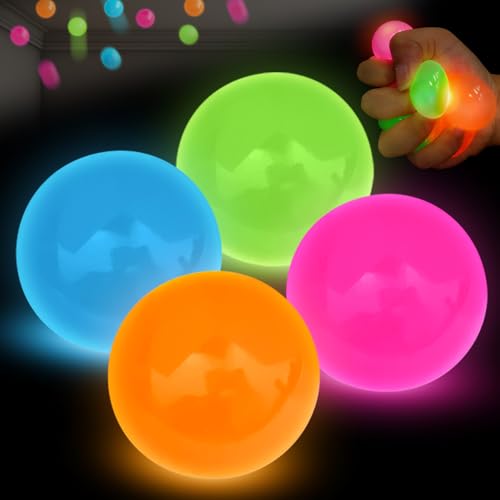
What Are Sticky Balls That Stick to the Ceiling?
Sticky balls that stick to the ceiling are soft, elastic toys made from a pliable, adhesive-friendly material — most commonly a specialized TPR (thermoplastic rubber) or silicone blend. Unlike ordinary bouncy balls, these toys are engineered so that, when thrown upward, they momentarily flatten against a smooth surface and cling there for a few seconds before peeling off and falling back down. That brief moment of "stick and drop" is the entire appeal: it turns a simple throw into a satisfying, slightly magical physics experiment that kids and adults alike find irresistible.
These toys occupy a fascinating niche in the broader world of sensory squeeze toys, blending tactile feedback with active, whole-body play. Many parents first encounter them at birthday parties, school prize boxes, or as part of a mixed party-favor set. Once a child discovers that the ball clings to a ceiling — even for a heartbeat — the toy usually becomes an instant favorite. The appeal isn't limited to children, either. Adults often repurpose them as lighthearted stress-relief toys, flicking them at office walls or ceilings during a break.
Quick definition: A ceiling sticky ball is a soft, stretchy, high-grip rubber sphere designed to adhere briefly to smooth, non-porous surfaces. The best models leave no residue when they detach — an important quality to look for when comparing options.
It's worth distinguishing these from sticky toys that stick to the wall. Ceiling variants tend to be lighter, with a slightly more tacky surface and a rounder shape optimized for a clean upward throw. Wall versions often come in flatter or figure-eight shapes. The underlying material is similar, but the ideal weight and grip differ because a ceiling throw demands a stronger initial adhesion to overcome a longer fall and a higher impact point.
How Do Sticky Balls Stick to the Ceiling?
The "magic" comes down to three interacting factors: material tackiness, surface texture, and kinetic energy. When you throw a sticky ball upward, it compresses on impact. A high-grip rubber compound momentarily increases its contact area with the ceiling, creating a light suction-like bond. If the ceiling is smooth and the ball is clean, the grip holds just long enough to be visible. Gravity and the ball's own elastic memory then peel it away, and down it falls.
The Three Variables That Control Stick Time
- Material quality: Entry-level sticky balls often use a firmer compound that grips poorly and leaves smudges. Mid-range and top-tier options use softer, more elastic rubber blends that adhere reliably without residue.
- Ceiling surface: Smooth, painted drywall and standard plaster ceilings work best. Textured "popcorn" ceilings, acoustic tiles, and rough concrete dramatically reduce adhesion — sometimes to zero.
- Cleanliness: Dust, lint, and oil from hands quickly coat the ball's surface. A quick rinse and air-dry restores most of the grip. This is the single most common reason a once-grippy ball stops sticking.
A Realistic Expectation
No sticky ball sticks to the ceiling for minutes at a time. A good model holds for roughly one to five seconds depending on throw strength and surface. Advertised claims of "30-second stick" are almost always measured under ideal lab conditions with a perfectly clean ball and glass-like surface. If you're researching before buying, focus on user reviews that mention reliable short adhesion rather than extreme stick-time promises. This honest framing will save you disappointment and help you judge which products are genuinely well-made.
Understanding the mechanism also helps you troubleshoot. If the ball won't stick at all, the surface is likely too textured, the ball is dirty, or the material has degraded from heat exposure. If it sticks but leaves a mark, the compound is probably an entry-level formula that prioritizes adhesion over clean release — a trade-off common in starter-tier sets.
Types of Ceiling Sticky Balls: Features to Compare
Once you understand the basics, the next step is comparing the formats available. There is no single "best" sticky ball — the right choice depends on who will use it and how. Below is a comparison by tier rather than by any numeric figure, so the guidance stays useful over time.
| Type | Tier | Best For | Key Traits |
|---|---|---|---|
| Classic ceiling sticky ball set | Starter Tier | Party favors, first-time users, bulk giveaways | Lightweight, basic grip, simple round shape; a solid introduction to the category |
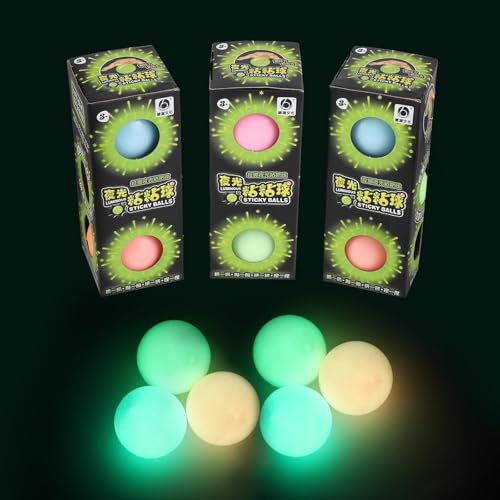
| Glow-in-the-dark sticky balls | Mid-Tier | Bedtime play, sleepovers, dim-room fun | Phosphorescent compound charges under light and glows softly; adds a visual dimension to ceiling play |
| Textured / spiky sticky balls | Mid-Tier | Children who enjoy varied tactile input | Bumpy surface offers extra sensory feedback; grip varies more with surface type |
| Premium high-grip formulation | Premium | Frequent users, collectors of quality toys | Softer compound, more reliable adhesion, cleaner release; usually sold in coordinated color sets |
| Large-format ceiling sticky ball | Top-Tier | Older kids and adults, group play | Bigger diameter for easier catching and a more dramatic visual effect; requires a firmer throw |
What to Look for in Materials
Premium materials matter more here than in most toy categories because the entire experience hinges on the rubber compound. A well-specified set uses a non-toxic, latex-free TPR blend that stays pliable in normal room temperatures. Solid build quality shows in even thickness, no visible seams, and a surface that feels slightly tacky to the touch without being wet or greasy. Feature-rich sets often include a small storage pouch, which keeps dust off the balls between sessions — a small addition that meaningfully extends usable life.
If you're building a sensory play collection more broadly, these balls pair naturally with other tactile favorites. Many parents combine them with tangle toys or stress-relief fidget toys to create a varied "fidget basket" that covers different sensory needs. The ceiling sticky ball adds an active, spatial element that squeeze toys alone can't provide.
Safety and Choosing the Right Set
Because these toys are thrown upward and handled constantly, safety deserves serious attention. Here's a practical checklist before you commit to a purchase:
- Age suitability: Most ceiling sticky balls are designed for ages six and up. Small balls present a choking hazard for younger children, and the throwing motion is better suited to school-age kids.
- Material certification: Look for non-toxic, phthalate-free, and latex-free labeling. Reputable manufacturers state these clearly on the packaging or product page.
- Residue behavior: Read reviews specifically for mentions of marks left on ceilings or walls. A quality ball should peel away cleanly; a starter-tier ball might leave a faint oil spot that requires wiping.
- Supervision: Even for older children, ceiling play is best in an open room away from ceiling fans, light fixtures, and fragile decor.
- Inspection over time: Check for tears or hardening. A degraded ball can crumble into small pieces, which reintroduces choking risk and creates mess.
Buying tip: If the primary user is a younger child, consider whether a broader set of sensory squeeze toys might be a better fit before investing in a ceiling-specific set. Ceiling sticky balls shine brightest for kids who are old enough to throw deliberately and understand the "no aiming at people" rule.
Matching the Set to the User
A starter-tier multipack is the sensible choice for party favors or a first taste of the toy. If the recipient becomes a genuine enthusiast, upgrading to a premium high-grip formulation pays off in reliability and cleanliness. For families, a mid-tier glow-in-the-dark set often delivers the most delight per session because the visual payoff extends play into the evening. This tiered approach keeps the decision grounded in use case rather than guesswork.
Cleaning and Care: Keep the Grip Alive
The most common complaint about ceiling sticky balls is that they "stop working." In nearly every case, the fix is cleaning. Here's a simple maintenance routine that preserves adhesion:
- Rinse with lukewarm water. Avoid hot water, which can degrade the rubber compound over time.
- Use a drop of mild dish soap if the ball feels oily. Work it in gently with your fingers.
- Rinse thoroughly and pat dry with a lint-free cloth.
- Air-dry completely before storage. Storing a damp ball invites mold and weakens the surface.
- Store in a sealed pouch or container away from direct sunlight and heat sources. UV exposure and high temperatures are the two biggest enemies of rubber longevity.
Beyond cleaning, rotate your set. Using the same ball every day accelerates wear; rotating among several balls in a set spreads the load and keeps each one closer to peak performance. If a ball begins to feel stiff or slick despite cleaning, it's reaching the end of its useful life — a natural signal to refresh the set. With reasonable care, a quality set lasts through many months of enthusiastic play, making it a worthwhile investment in everyday fun.
Creative Play Ideas Beyond the Ceiling
While the ceiling is the headline act, these toys are surprisingly versatile. A few ideas to get more value from a single set:
- Target practice: Tape a paper target to a wall or door and score points for hits. This adds structure and friendly competition.
- Relay races: Players throw, retrieve, and pass the ball down a line — great for group play and burning energy.
- Sensory breaks: The tactile squeeze-and-release motion works as a quick reset for kids who need a movement break between tasks.
- Science chat: Use the stick-and-drop moment to talk about adhesion, gravity, and surface texture — a gentle, hands-on STEM conversation.
- Party game: Combine with other small toys to put in Easter eggs or party bags for a themed celebration.
These activities extend the toy's appeal well past the novelty phase. If your household enjoys active indoor play, pairing a sticky ball set with a few soft play equipment pieces creates a safe, cushioned zone for throwing games. The combination turns a single toy into a small home play station.