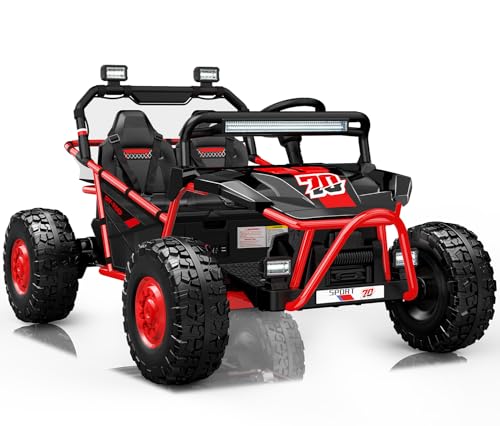
Ride On Cars for 9 Year Olds: The Complete Buyer's Guide
Nine-year-olds have outgrown toddler ride-ons but still crave the thrill of driving. This guide breaks down what actually matters when choosing a ride on car for a 9 year old — power, safety, build quality and long-term enjoyment.
See Recommended ModelsWhy this age group is different: A 9-year-old rider weighs significantly more and pushes the vehicle harder than a preschooler. That means motor strength, battery capacity, chassis rigidity and safety features deserve far more scrutiny than the flashy decals. This guide focuses on what holds up under real-world use by older kids.
What to Expect From a Ride On Car for a 9 Year Old
By age nine, most children want speed, independence and a vehicle that feels genuinely capable rather than a scaled-down baby toy. Ride-on manufacturers have responded with larger frames, higher-output motors and features once reserved for teen models. The categories below help you frame your research before comparing individual models.
It also helps to understand how this age bracket overlaps with neighbouring ones. If your child is on the younger side of nine, a ride on car for 8 year olds may still fit comfortably. If they are tall or approaching ten, you may want to cross-reference ride on cars for 10-12 year olds to avoid outgrowing the vehicle within a season.
Ride-On Tiers: Choosing the Right Level for Your Rider
Rather than getting lost in specs, it helps to classify ride-on cars into three broad tiers. This framework keeps comparisons consistent and makes it easier to match a model to your child's riding style and your expectations for durability.
The Essential Tier
Simpler drivetrains, lighter frames and fewer electronic extras. A solid fit for calm, supervised neighbourhood riding where the vehicle stays on smooth pavement.
The Balanced Tier
Stronger motors, better suspension and more refined controls. This tier usually delivers the best mix of capability and long-term reliability for a nine-year-old's daily use.
The High-End Tier
Heavy-duty construction, upgraded batteries and richer feature sets. A worthwhile investment for families who want the vehicle to serve multiple children over several years.
Key Features That Matter for 9-Year-Old Riders
- Motor output and drivetrain: A single small motor struggles with an older child's weight. Look for dual-motor setups or higher-torque single motors that maintain speed on slight inclines.
- Battery capacity: Nine-year-olds tend to ride longer sessions. A higher-capacity battery pack means fewer interruptions and a longer usable lifespan before replacement is needed.
- Chassis and suspension: Reinforced frames and independent suspension absorb bumps and protect the drivetrain from the heavier loads older riders place on it.
- Seat and ergonomics: A wider, deeper seat and adjustable pedal reach keep a growing child comfortable. Check the weight rating carefully — it should comfortably exceed your child's current weight.
- Parental remote control: Even at nine, many families value a remote override for safety near driveways and roads. See our guide to ride on cars with parental remote control for how this feature works.
- Safety systems: Seat belts, soft-start acceleration, speed limiters and non-slip tyres are all meaningful for older riders who want to go faster.
- Realistic details: Working lights, engine sounds and functional doors add engagement without compromising safety — a frequent request from this age group.
Ride-On Categories at a Glance
| Tier | Category | Best For | Typical Characteristics |
|---|---|---|---|
| Entry-Level | Compact electric ride-on | Smooth pavement, casual use | Single motor, basic battery, lightweight frame |
| Mid-Range | Utility / SUV-style ride-on | Daily neighbourhood driving | Dual motor option, suspension, speed limiter |
| Mid-Range | Sport-style ride-on | Older kids wanting more speed | Higher top speed, sport tyres, reinforced chassis |
| Premium | Two-seater electric ride-on | Siblings, longer trips | Heavy-duty build, larger battery, upgraded suspension |
| Premium | 24V-class ride-on | Serious riders, rough terrain | High-torque motors, robust electronics, premium materials |
Power, Battery and Real-World Range
The single biggest complaint from parents of older riders is a vehicle that feels sluggish once a heavier child sits down. Nine-year-olds want to feel acceleration, and a motor that is sized for a four-year-old will disappoint immediately. When reviewing specifications, pay attention to motor count and battery voltage rather than relying on marketing language.
Battery health also matters over time. Even a well-built vehicle will eventually need a replacement pack, so choosing a model with a widely available battery type saves headaches later. Our overview of replacement 12V batteries for ride-on cars explains what to check before you commit to a model.
For families considering a larger, more powerful class of vehicle, the 24V ride-on toys for 10 year olds guide is a useful benchmark for what the next step up looks like in practice.
Safety Checklist Before You Buy
- Weight rating: Confirm the maximum rider weight comfortably exceeds your child's weight, ideally with a healthy margin for growth.
- Speed control: Choose models with a speed limiter or low/high gear selection so you can match speed to the environment.
- Soft-start technology: Prevents sudden lurches that can unseat a rider or startle younger siblings.
- Stability: Wider wheelbases and lower centre-of-gravity designs reduce rollover risk during turns.
- Braking: Reliable braking — whether electronic or mechanical — is non-negotiable for older, faster riders.
- Assembly quality: Follow the manual precisely; loose steering or wheel components are the most common source of accidents.
Supervision tip: Even capable nine-year-olds should ride in driveways, parks or closed paths — never near live traffic. Establish clear boundaries before the first ride and reinforce them consistently.
Matching the Vehicle to Your Terrain
Smooth pavement rewards efficiency and speed, while grass, gravel and packed dirt demand more torque and better suspension. If your child will mostly ride on the street or a paved driveway, a lighter mid-range model performs well and is easier to store. If your property has uneven ground, prioritise reinforced chassis construction, larger wheels and higher-torque motors.
For families exploring the wider category of electric vehicles for this age group, our guide to ride on electric cars for 8 year olds covers additional terrain considerations that carry over well to nine-year-old riders.
How to Choose: A Practical Step-by-Step Approach
- Measure your space: Confirm where the vehicle will be stored and how wide the turning area is before ordering.
- Set your tier: Decide whether an entry-level, mid-range or premium model matches your expectations for longevity.
- Check the weight and height limits: A nine-year-old grows quickly; leave headroom in both dimensions.
- Decide on remote control: If the vehicle will be used near roads or with younger siblings present, a parental remote adds a meaningful safety layer.
- Review the battery ecosystem: Confirm replacement batteries are available and reasonably easy to source.
- Plan assembly and maintenance: Read the manual, tighten fasteners after the first few rides, and store the battery according to the manufacturer's guidance.
Related Ride-On Guides
Exploring neighbouring age brackets and vehicle styles helps you compare accurately. These guides cover the most common adjacent questions parents ask:
- Ride on cars for 7 year olds — a useful baseline for younger siblings.
- Ride on cars for 8-10 year olds — the broadest overlapping bracket.
- Two-seater ride-on toys for 8-10 year olds — for siblings who ride together.
- Ride on vehicles for 10 year olds — what comes next as your child grows.
- Remote control ride-on cars — how parental control systems work.
- All ride-on toys — the full category overview.
- Two-seater ride-ons with remote control — a popular family configuration.
Frequently Asked Questions
Is a 9 year old too old for a ride on car?
Not at all. Nine is actually a sweet spot for larger electric ride-ons. Children at this age have the coordination to steer confidently and the patience to follow safety rules, while still enjoying imaginative driving play. The key is choosing a model with a weight rating and motor setup suited to an older rider rather than a preschooler.
What weight rating should I look for?
Check the manufacturer's stated maximum rider weight and aim for a comfortable margin above your child's current weight. A nine-year-old typically continues growing for several years, so a higher rating extends the useful life of the vehicle and reduces strain on the drivetrain.
Do ride-on cars for 9 year olds need parental remote control?
It is optional but often wise. A remote override lets you stop or steer the vehicle if your child loses control near a driveway or road. Many mid-range and premium models for this age group include it as standard. See our guide to two-seater ride-on cars with remote for how this works in family use.
How long does a ride-on car battery last?
Runtime depends on battery capacity, rider weight and terrain. Older children draw more power, so expect shorter sessions than a toddler would get from the same pack. Proper charging habits and storing the battery away from extreme temperatures significantly extend its usable life.
Can a 9 year old ride on grass or gravel?
Yes, but only with the right model. Standard pavement-oriented ride-ons struggle on loose surfaces. Look for reinforced chassis construction, larger wheels and higher-torque motors if your child will ride off-pavement regularly.
Ready to Compare Models?
Browse our curated selection of ride-on cars suited to older kids and check current availability.
Explore Recommended Ride-Ons