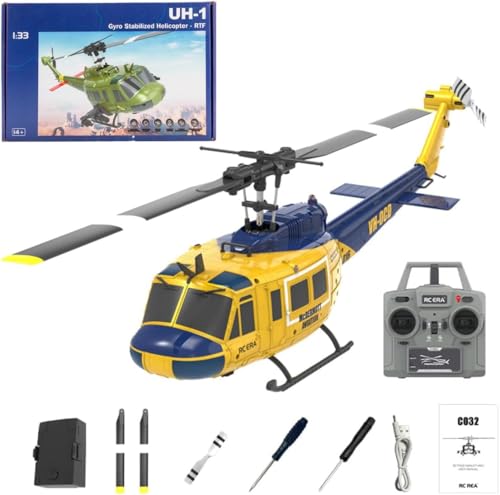
Remote Control Helicopter with Camera: The Complete Buyer's Guide
A remote control helicopter with camera combines the thrill of flight with the joy of capturing aerial views. Whether you are buying your first camera-equipped RC helicopter or upgrading to a more advanced model, understanding the key features, performance tiers, and practical considerations will help you make a confident decision. This guide walks you through everything you need to know — from camera specifications and flight stability to battery life and safety — so you can choose a model that matches your experience level and intended use.
Why Choose a Remote Control Helicopter with Camera?
Camera-equipped RC helicopters open up a world of possibilities that go far beyond simple flying. They let you:
- Capture aerial photos and videos for family memories, real estate previews, or creative projects.
- Develop piloting skills with visual feedback from the onboard camera.
- Explore FPV (first-person view) flying when paired with a compatible smartphone or headset.
- Enjoy outdoor adventures by documenting hikes, parks, and scenic landscapes from above.
Compared to camera drones, RC helicopters offer a distinctive flying experience with mechanical cyclic and collective controls that many hobbyists find more engaging. If you are exploring the broader category of radio-controlled aircraft, our remote control toys hub is a great starting point. For pilots who prefer a different flight profile, consider remote control helicopters for adults or the more advanced adult camera helicopter models.
Key Features to Evaluate
1. Camera Resolution and Recording
The camera is the centerpiece of these models. Entry-level helicopters typically record at 480p or 720p, which is fine for casual snapshots and short clips. Mid-range models step up to 1080p Full HD, while premium and high-end tiers offer 2K or 4K recording with electronic image stabilization. If aerial photography is your primary goal, prioritize a model with at least 1080p and a wider field of view.
2. Flight Stabilization and Control
Modern RC helicopters use gyroscopes and accelerometers to keep the aircraft stable. Look for features such as:
- Auto-hover — keeps the helicopter at a fixed altitude for steadier filming.
- Headless mode — simplifies orientation for beginners.
- One-key takeoff and landing — reduces the learning curve.
- GPS-assisted positioning — available on premium tiers for precise hovering and return-to-home functionality.
3. Battery Life and Charging
Flight time varies significantly by tier. Entry-level models usually deliver 6–10 minutes per charge, mid-range models reach 12–18 minutes, and high-end tier helicopters can fly for 20–25 minutes. Consider buying extra batteries if you plan longer sessions, and always follow the manufacturer's charging guidelines for safety.
4. Range and Transmission
Control range typically spans 50–100 meters for starter tiers and up to 300 meters or more for premium models. Camera signal transmission quality also improves with higher tiers, reducing lag and dropouts during FPV flight.
5. Durability and Build Quality
Look for reinforced rotor blades, shock-absorbing landing gear, and impact-resistant body shells. Models with replaceable parts are a smart long-term investment, especially for beginners who may experience occasional crashes.
Performance Tiers at a Glance
To help you compare without focusing on numbers, here is how camera RC helicopters generally position themselves in the market:
| Tier | Best For | Camera Quality | Flight Time | Key Features |
|---|---|---|---|---|
| Entry-level / Starter tier | Beginners, casual indoor play, kids and teens | 480p–720p | 6–10 minutes | Auto-hover, headless mode, basic stabilization |
| Mid-range / Mid-tier | Hobbyists, outdoor casual filming | 1080p Full HD | 12–18 minutes | One-key takeoff, altitude hold, wider FOV camera |
| Premium / High-end tier | Enthusiasts, aerial photography | 2K–4K with stabilization | 18–25 minutes | GPS, return-to-home, FPV streaming, brushless motors |
| Professional-grade | Serious aerial imaging, commercial use | 4K+ with gimbal | 25+ minutes | Advanced GPS, waypoint navigation, high-end transmission |
How to Choose the Right Model for You
Your decision should be guided by three factors: experience level, intended use, and environment.
For Beginners and Kids
Choose a starter-tier model with auto-hover and headless mode. These features make learning to fly far less frustrating. Indoor-friendly models with rotor guards are also a smart choice for younger pilots. If you are shopping for younger children, our guides on ride-on toys for 5-year-olds and ride-on toys for 8-year-olds can help you understand age-appropriate expectations for powered toys.
For Hobbyists and Outdoor Filming
A mid-range or premium tier model with 1080p or higher recording and GPS stabilization is ideal. These helicopters handle light wind better and produce smoother footage. If you enjoy outdoor RC activities, you may also like our coverage of remote control monster trucks for outside and rock crawler 4x4 RC trucks for ground-based adventures.
For Advanced Aerial Enthusiasts
Premium and professional-grade models offer brushless motors, advanced GPS, and higher-resolution cameras. These are long-term investments that reward careful practice and responsible flying. Explore our broader adult RC helicopter section for advanced options.
Practical Tips for First Flights
- Read the manual thoroughly — each model has unique controls and calibration steps.
- Start in a large open area free of trees, power lines, and people.
- Calibrate the gyroscope on a level surface before takeoff.
- Practice hovering before attempting forward flight or camera recording.
- Monitor battery levels and land before the battery is fully depleted to avoid uncontrolled descent.
- Use propeller guards during early practice sessions.
Maintenance and Care
To extend the life of your camera helicopter:
- Inspect rotor blades for cracks or chips before each flight.
- Clean the camera lens with a soft microfiber cloth.
- Store batteries at partial charge if not used for extended periods.
- Keep the helicopter away from moisture and extreme temperatures.
- Replace worn gears and motors proactively.
Safety Considerations
Camera-equipped RC helicopters are not toys in the traditional sense, especially at mid-range and premium tiers. Always supervise children, respect privacy laws when recording, and never fly near people or restricted airspace. Our toy safety guide offers broader guidance on safe play practices.
Frequently Asked Questions
What should I look for in a remote control helicopter with camera?
Focus on camera resolution, flight stabilization features (auto-hover, headless mode), battery life, control range, and build durability. Match these to your experience level and intended use.
Are camera-equipped RC helicopters suitable for beginners?
Yes. Starter-tier models include beginner-friendly features like auto-hover and one-key takeoff. Practice in open spaces and follow the manual closely.
How long can a camera RC helicopter fly?
Flight times vary by tier and battery capacity. Entry-level models typically fly 6–10 minutes, mid-range models 12–18 minutes, and premium models 18–25 minutes per charge.
Can I stream video from the helicopter to my phone?
Many mid-range and premium models support Wi-Fi or FPV streaming to a smartphone app. Check the product specifications for compatibility.
Do I need to register my camera helicopter?
Registration requirements vary by country and aircraft weight. Check with your local aviation authority before flying.