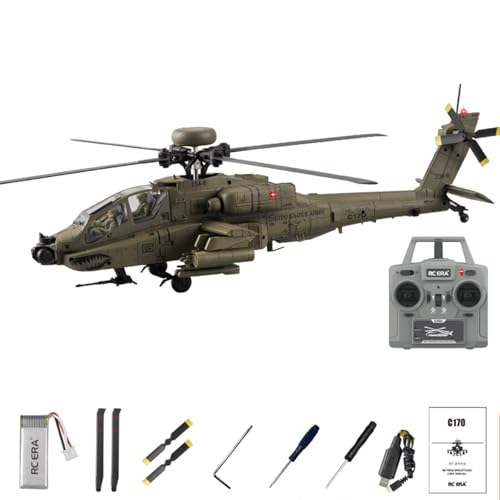
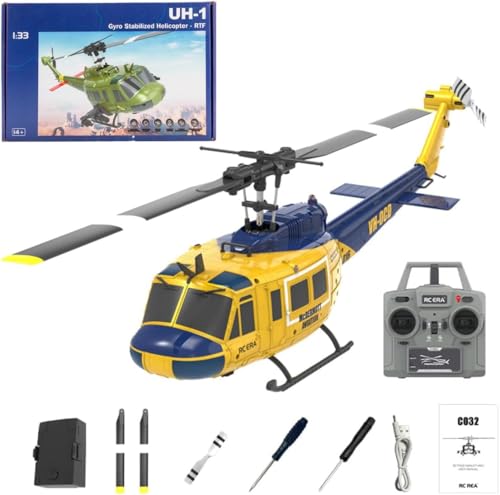
Remote Control Helicopter for Adults: The Complete Flight Guide
From stable indoor flyers to advanced collective-pitch machines, discover how to choose a remote control helicopter that matches your skill level, flying style, and long-term ambitions as a hobby pilot.
Explore Top ModelsWhy this guide matters: A remote control helicopter for adults is not a simple toy purchase. It is an entry point into a rewarding hobby that rewards patience, practice, and informed choices. Whether you are a complete beginner looking for a stable indoor flyer or an experienced pilot seeking a scale model with collective pitch mechanics, this guide walks you through every decision point so you can buy with confidence.
Understanding the Adult RC Helicopter Landscape
The market for adult remote control helicopters has evolved dramatically. What was once a niche hobby dominated by complex nitro-powered machines is now a diverse ecosystem spanning ultra-stable coaxial trainers, responsive fixed-pitch flyers, and high-performance collective-pitch models that mimic real helicopter physics. Before you explore specific models, it helps to understand the three broad tiers that define this category.
Starter Tier
Coaxial rotor systems with self-centering controls. Ideal for indoor flying and learning orientation without risking immediate crashes. These models are forgiving and build foundational confidence.
Balanced Tier
Fixed-pitch single-rotor helicopters with gyro stabilization. Faster and more responsive than coaxial trainers, these bridge the gap between casual indoor flying and outdoor sport flying.
Top-Tier
Collective-pitch 3D-capable machines with advanced flight controllers. These demand real skill and offer the full spectrum of aerobatic potential, including inverted flight and precise hovering.
If you are also considering ground-based hobby vehicles, the same tier logic applies to remote control cars for adults, where entry-level brushed systems differ significantly from brushless competition platforms. Similarly, if your interests lean toward fixed-wing aircraft, understanding ready-to-fly RC planes can complement your helicopter journey.
Key Features That Define a Quality Adult RC Helicopter
Not all remote control helicopters are created equal. The features below separate models that grow with you from those that end up collecting dust after a week. Pay attention to these specifications when comparing options.
Rotor System and Flight Mechanics
The rotor configuration is the single most important factor in how a helicopter flies. Coaxial systems use two stacked rotors spinning in opposite directions, which cancels torque and makes the helicopter inherently stable. Single-rotor fixed-pitch systems introduce torque effects that require tail rotor compensation, teaching you real helicopter control. Collective-pitch systems add the ability to change blade angle mid-flight, enabling aerobatics and precise altitude control.
Gyro Stabilization and Flight Controllers
Modern adult RC helicopters almost universally include a heading-lock gyro that automatically counteracts unwanted yaw. Higher-tier models add accelerometers and barometric sensors that assist with altitude hold and self-leveling. For beginners, a model with a reliable self-leveling mode dramatically reduces the learning curve. Advanced pilots often prefer the ability to disable stabilization entirely for raw control feel.
Battery Life and Charging Logistics
Flight times for adult hobby helicopters typically range from six to fifteen minutes depending on the model, flying style, and battery capacity. Many kits include multiple batteries so you can rotate through them during a session. Lithium-polymer batteries are standard, and you should always follow the manufacturer's charging guidelines for safety and longevity. If you are also flying ground vehicles, the charging principles for 6-volt battery chargers for toy cars offer a useful comparison point for understanding battery care.
Transmitter Quality and Control Resolution
The included transmitter can make or break your experience. Entry-level models often ship with basic four-channel controllers, while mid-range and top-tier kits include programmable transmitters with adjustable stick tension, expo curves, and model memory. A quality transmitter with smooth gimbals translates to smoother inputs and faster skill progression.
Build Materials and Durability
Adult helicopters are built from a mix of carbon fiber, aluminum, and high-grade plastics. Carbon fiber frames offer an excellent strength-to-weight ratio, while aluminum components add durability at the cost of weight. Plastic components are common on entry-level models and can be surprisingly resilient when paired with flexible rotor blades designed to absorb impact.
Tier Comparison: Matching the Helicopter to Your Experience
Use the table below to align your current skill level with the tier that makes the most sense for your first or next purchase. Remember that the descriptors reflect relative market positioning, not absolute capability.
| Tier | Best For | Rotor System | Typical Flight Envelope |
|---|---|---|---|
| Entry-Level | Absolute beginners, indoor flyers, casual hobbyists | Coaxial | Calm indoor spaces, gentle outdoor flying in near-zero wind |
| Mid-Range | Pilots who have mastered basic orientation and want more response | Single-rotor fixed-pitch | Outdoor sport flying, light wind tolerance, moderate aerobatics |
| Premium | Experienced pilots seeking scale detail and advanced flight characteristics | Collective-pitch | Precision hovering, scale flight, mild 3D maneuvers |
| Top-Tier | Serious hobbyists and 3D pilots | Collective-pitch with advanced FBL | Full 3D aerobatics, inverted flight, high-wind capability |
Building a Learning Path That Sticks
The most successful adult RC helicopter pilots treat the hobby as a progression rather than a single purchase. Here is a practical roadmap that experienced flyers recommend.
- Start with a simulator. Before your first real flight, spend time with an RC flight simulator. This builds transmitter familiarity and orientation skills without the risk of damaging your helicopter.
- Master the entry-level coaxial trainer. Learn to hover tail-in, then side-on, then nose-in. Each orientation milestone builds critical spatial awareness.
- Transition to fixed-pitch. Once you can confidently hover and perform gentle circuits, a fixed-pitch model introduces torque management and faster response.
- Consider collective-pitch when ready. Only move to collective-pitch when you can fly figure-eights and maintain altitude without conscious effort. At that point, the additional control axis becomes an asset rather than a distraction.
This progression mirrors the approach used in other adult hobby categories. For example, pilots who also enjoy off-road vehicles often start with a 1/10 scale RC rock crawler before moving to faster trucks, and boat enthusiasts begin with stable remote control boats for adults before tackling high-speed craft.
Choosing Your First Adult RC Helicopter
When you are ready to commit to your first purchase, evaluate these factors in order of priority.
Space Available for Flying
If you plan to fly primarily indoors, a coaxial entry-level model is the safest bet. It is stable, quiet, and gentle on furniture. If you have access to a large outdoor space with calm conditions, a mid-range fixed-pitch model opens up a more dynamic flight envelope.
Parts Availability and Repairability
Adult helicopters require maintenance. Before committing to a model, verify that replacement blades, motors, batteries, and landing gear are readily available. A model with a strong parts ecosystem will keep you flying for years, while an orphaned model becomes a shelf decoration after the first hard landing.
Community and Support
Look for models with an active online community. Forums and social media groups are invaluable for troubleshooting, upgrade advice, and flight tips. The same principle applies to other hobby categories; for instance, owners of second-hand nitro RC cars often rely on community knowledge to source parts and tune engines.
Camera and FPV Capability
Some adult helicopters include built-in cameras for aerial photography or first-person-view flying. If this interests you, look for models with stable camera mounts and reliable video transmission. The remote control helicopter with camera category offers options that blend flight training with aerial imaging.
Safety and Responsible Flying
Adult RC helicopters are not toys, and responsible operation protects both you and those around you. Follow these guidelines every time you fly.
- Pre-flight checks: Inspect blades for cracks, verify all screws are tight, and confirm battery connectors are secure before every flight.
- Fly in designated areas: Avoid flying near airports, crowded public spaces, or protected wildlife areas. Many regions have specific regulations for RC aircraft.
- Respect battery safety: Never charge a lithium-polymer battery unattended, and store batteries at the recommended storage voltage.
- Maintain line of sight: Always keep your helicopter visible during flight. FPV flying should be conducted with a spotter who maintains visual contact.
- Know your limits: If wind conditions exceed your comfort level or the model's capability, postpone the flight. A grounded helicopter is better than a damaged one.
Maintenance Habits That Extend Your Helicopter's Life
Consistent maintenance keeps your helicopter flying smoothly and reduces the likelihood of mid-flight failures. Develop a routine that covers the following areas.
After every flight session: Wipe down the rotor blades, check for loose fasteners, and inspect the landing gear for stress marks. Allow the motor to cool before charging batteries for the next session.
Every ten flights: Inspect the swashplate and linkages for wear. Lubricate moving parts according to the manufacturer's recommendations. Check the transmitter batteries and antenna condition.
Seasonal storage: If you take a break from flying, discharge lithium-polymer batteries to storage voltage and store the helicopter in a dry, dust-free environment. This is especially important for hobbyists who also maintain gas-powered RC boats or other seasonal equipment.
Frequently Asked Questions
How long does it take to learn to fly an adult RC helicopter?
With a simulator and a stable entry-level model, most beginners can hover confidently within a few weeks of regular practice. Transitioning to forward flight and figure-eights typically takes a few months. Collective-pitch mastery is a longer journey measured in seasons of consistent flying.
Can I fly an adult RC helicopter indoors?
Entry-level coaxial models are well-suited to indoor flying in rooms with adequate ceiling height and few fragile objects. Mid-range and top-tier models require significantly more space and are best flown outdoors in calm conditions.
What is the difference between fixed-pitch and collective-pitch?
Fixed-pitch helicopters have blades set at a fixed angle, so altitude is controlled purely by rotor speed. Collective-pitch helicopters allow the pilot to change blade angle in flight, enabling faster altitude changes, autorotation, and aerobatic maneuvers. Collective-pitch models demand more skill but offer greater flight capability.
How important is a flight simulator for beginners?
A simulator is one of the most valuable investments a new pilot can make. It allows you to practice orientation and control inputs without the risk of damaging your helicopter. Many experienced pilots credit simulator time as the key factor in their rapid progression.
Are spare parts easy to find for adult RC helicopters?
Parts availability varies by brand and model. Before purchasing, check that blades, motors, batteries, and landing gear are available from the manufacturer or reputable retailers. Models from established hobby brands typically have the strongest parts support.
Can adults fly RC helicopters without prior experience?
Absolutely. The entry-level coaxial models are specifically designed for pilots with no prior experience. With patience, simulator practice, and a commitment to learning orientation first, adults of any age can become capable RC helicopter pilots.
Final Thoughts
A remote control helicopter for adults is more than a pastime; it is a skill-building hobby that rewards discipline and curiosity. By choosing a model that matches your current experience level, committing to a learning progression, and maintaining your equipment, you set yourself up for years of enjoyable flying. Whether you are drawn to the calm precision of scale flight or the adrenaline of 3D aerobatics, the right helicopter is out there waiting for you.
If your interests expand beyond helicopters, the same principles of tiered purchasing and skill progression apply across the hobby spectrum, from remote control excavators for adults to RC semi trucks and trailers. Start where you are, fly within your limits, and enjoy the journey.