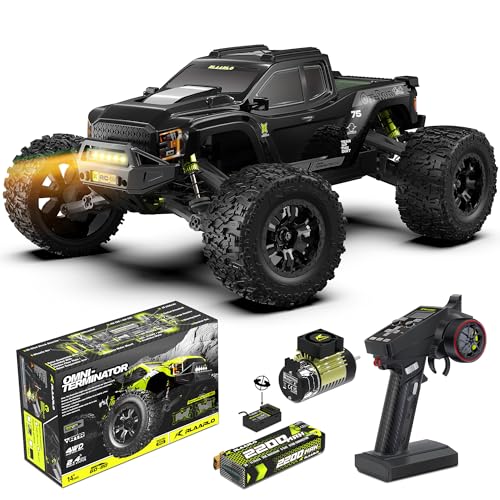
RC Cars for Adults: The Complete Guide to Hobby-Grade Remote Control Vehicles
Whether you're chasing speed on a dirt track, crawling over rocks, or drifting on smooth pavement, this guide covers the categories, specs, and buying considerations that matter most to adult RC enthusiasts.
Explore Top Picks🏎️ Why This Guide Matters: RC cars for adults are a different class of machine from the toy-grade vehicles sold in department stores. Hobby-grade RC cars use modular electronics, replaceable parts, and high-performance power systems that reward careful selection. This guide walks you through the categories, key specifications, and buying considerations that matter most — so you can invest in a model that delivers real performance and long-term satisfaction.
What Sets Adult RC Cars Apart from Toys
Hobby-grade RC cars differ from toy-grade models in nearly every meaningful way. Where a toy-grade car might have sealed electronics, a plastic chassis, and a non-replaceable battery, an adult RC car has modular components, a metal or reinforced composite chassis, and a standardized battery system. Every part — from the motor and speed controller to the tires and suspension arms — can be removed, replaced, or upgraded.
This modularity is what makes the hobby rewarding. An adult RC car can be tuned for different conditions, upgraded as skills improve, and repaired rather than discarded when something breaks. That's why a well-chosen hobby-grade model is a long-term investment rather than a disposable item. If you're exploring the ready-to-run segment first, our guide to ready-to-run electric RC cars covers the easiest entry points.
Performance is the other differentiator. Brushless motors, high-discharge LiPo batteries, and precision servos give hobby-grade cars acceleration, top speed, and responsiveness that toy-grade models simply can't match. For adults who want real driving engagement, the jump to hobby-grade is the moment the hobby truly begins.
The Main Categories of RC Cars for Adults
Adult RC cars fall into distinct categories, each designed for a specific driving style and terrain. Understanding the differences is the most important step in choosing the right model.
Buggies & Short-Course Trucks
Built for speed and jumping on dirt, gravel, and prepared tracks. Buggies are lightweight and agile; short-course trucks are more stable and forgiving. These are the most popular adult categories and offer the widest range of upgrade paths. Brushless versions deliver serious performance for experienced drivers.
Rock Crawlers & Trail Trucks
Designed for slow, technical driving over rocks, roots, and uneven terrain. Crawlers prioritize torque, suspension articulation, and low gearing over raw speed. They're excellent for adults who enjoy precision and patience. Long run times and minimal maintenance make them a low-friction entry into the hobby.
Drift Cars & On-Road Touring Cars
Built for smooth surfaces and precision handling. Drift cars use low-grip tires and tuned suspension to slide controllably; touring cars are set up for grip racing on prepared surfaces. These categories appeal to adults who enjoy technical driving and fine-tuning.
Monster Trucks & Bashers
Oversized tires, high ground clearance, and rugged drivetrains make monster trucks ideal for bashing — the practice of driving aggressively over rough terrain and jumps. They're durable, forgiving, and well-suited to adults who want low-stress fun without delicate setup.
Indoor & Micro RC Cars
1/24 and 1/18 scale models are perfect for indoor use, tabletop drifting, and small spaces. They're a great way to practice precision driving and to introduce the hobby to others. Many micro models are surprisingly capable despite their compact size.
Kit Builds & Competition Chassis
For adults who want to build from scratch, kit cars offer the deepest engagement. You assemble the vehicle, choose your own electronics, and tune every aspect of setup. Kit builds are a natural next step for enthusiasts who want full control over performance.
If your interest leans toward outdoor RC driving in general, our guide to fun outdoor toys for 10 year olds and cool outdoor toys for 10 year olds cover related categories — useful if you're also shopping for younger family members. For families with mixed ages, our fun outdoor toys for 9 year olds and fun outdoor toys for 8 year olds guides offer age-appropriate suggestions.
Category Comparison by Tier and Best Use
The table below organizes the main adult RC car categories by market tier and ideal use case. Tiers reflect relative positioning within the category and remain stable over time.
| Category | Tier | Best For | Key Consideration |
|---|---|---|---|
| Buggies | Mid-Tier | Speed and jumping on dirt | Parts availability; brushless option |
| Short-Course Trucks | Mid-Tier | Stability and forgiving handling | Suspension durability; tire options |
| Rock Crawlers | High-End Tier | Technical trail driving | Torque; suspension articulation |
| Drift Cars | Premium | Precision sliding and tuning | Low-grip tires; steering angle |
| Touring Cars | High-End Tier | Grip racing on smooth surfaces | Chassis stiffness; setup precision |
| Monster Trucks | Mid-Tier | Bashing and rough terrain | Ground clearance; drivetrain strength |
| Micro & Indoor | Essential Tier | Indoor and small-space driving | Scale; battery type; space needed |
| Kit Builds | High-End Tier | Full customization and skill growth | Electronics selection; build time |
When comparing categories, focus on where and how you'll actually drive rather than chasing the highest tier. A mid-tier crawler used regularly on local trails will deliver more enjoyment than a premium drift car that sits on a shelf. If you already know you want the simplest possible start, our ready-to-run electric RC cars guide covers the segment in more detail.
How to Choose Your First or Next RC Car
Choosing an RC car is a matter of matching the vehicle to your driving environment, your experience level, and your long-term goals. The following checklist helps you evaluate options systematically.
Driving Environment Checklist
- Identify where you'll drive most often — dirt, gravel, pavement, grass, or indoor floors.
- Match the category to the terrain: crawlers for rocks and roots, buggies for dirt, drift cars for smooth pavement.
- Consider how much space you have; larger scale models need more open area.
- Check for local clubs, tracks, or groups — community support improves the experience.
- Think about noise; brushless models can be loud, which matters if you drive near homes.
Specification Checklist
- Confirm the motor type — brushed for simplicity, brushless for performance and durability.
- Check the battery system — LiPo offers more power but requires proper handling and charging practices.
- Verify parts availability and upgrade support for the model you're considering.
- Look for metal or reinforced composite drivetrain components in the category you choose.
- Prefer models with clear documentation and active community support.
If you're shopping for an adult enthusiast with wider interests, our guides to ride-on vehicles for 10 year olds and ride-on cars for 10-12 year olds cover larger vehicle categories that share some enthusiast appeal. For track-oriented radio control, RC planes that can land on water offers an adjacent perspective for hobbyists who enjoy radio-controlled models across categories.
Think of the car as a platform rather than a single purchase. Hobby-grade models hold their value better because they can be tuned, upgraded, and repaired rather than replaced. A well-chosen mid-tier brushless buggy or high-end crawler that stays in use for years is typically a more efficient long-term investment than a series of entry-level models.
Ready to Explore Your Options?
Browse our curated selection of RC cars for adults — filtered for performance, durability, and enthusiast appeal.
View Recommended ModelsMaintenance and Long-Term Care
Hobby-grade RC cars reward owners who take care of them. Regular maintenance keeps performance consistent and extends the lifespan of every component.
After each run, clean dust and debris from the chassis, suspension, and drivetrain. Inspect tires for wear and check suspension components for bends or cracks. Tighten screws and fasteners periodically — vibration loosens hardware over time. Lubricate bearings according to the manufacturer's guidance, and store LiPo batteries at storage voltage rather than full charge or full discharge.
For broader care principles that apply across toy and hobby categories, our toy maintenance guide covers cleaning, inspection, and storage practices that translate well to RC equipment. Keeping a small kit of spare parts — tires, bearings, suspension arms — reduces downtime when something does break.
Frequently Asked Questions
What type of RC car is best for adults?
The best RC car for adults depends on how you plan to use it. For speed and jumping, a brushless buggy or short-course truck is ideal. For technical terrain and slow, controlled driving, a rock crawler is the better choice. For smooth surfaces and precision handling, a drift car or on-road touring car suits best. Hobby-grade models from established brands offer the durability and upgradeability adults typically want.
What does ready-to-run mean for RC cars?
Ready-to-run (RTR) means the RC car arrives fully assembled with the motor, electronic speed controller, servo, radio transmitter, and receiver already installed. In most cases, you only need to add batteries and charge them before driving. RTR models are the easiest entry point for adults new to the hobby, while kit builds offer more customization for experienced enthusiasts.
Are brushless RC cars better than brushed for adults?
Brushless motors generally offer more power, higher efficiency, longer lifespan, and less maintenance than brushed motors. For adults who want speed, durability, and fewer replacement parts over time, brushless systems are usually the stronger long-term investment. Brushed systems remain a solid starting point for casual use and lower-speed applications like crawling.
What scale of RC car should an adult choose?
1/10 scale is the most popular size for adults because it balances performance, parts availability, and ease of transport. 1/8 scale models are larger and often faster, suited to open areas. 1/16 and 1/18 scale models are compact and great for indoor or small-space use. 1/24 scale is ideal for tabletop and indoor drifting.
How long does an RC car battery last per run?
Run time varies widely by battery capacity, motor type, and driving style. A typical hobby-grade RC car using a LiPo battery delivers roughly 15 to 30 minutes of continuous driving. Crawlers often achieve longer run times due to lower speed and power draw. Carrying a spare battery is a common practice for extended sessions.
What maintenance do adult RC cars require?
Regular maintenance includes cleaning dust and debris after runs, inspecting tires and suspension components for wear, checking screws and fasteners for tightness, and storing LiPo batteries at proper storage voltage. Periodically lubricating bearings and inspecting the drivetrain helps extend the vehicle's lifespan and keeps performance consistent.