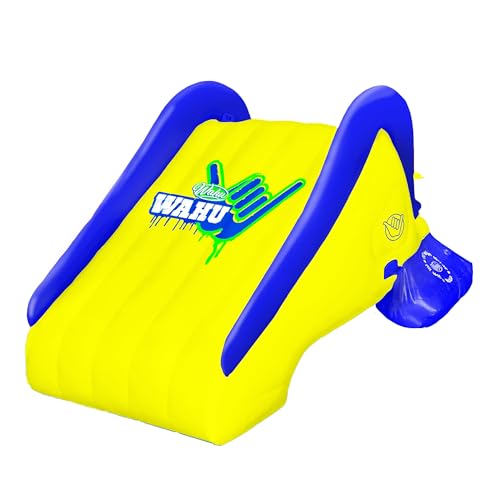
🌊 Why a pool slide? A pool slide turns an ordinary swimming pool into a destination for laughter, exercise, and unforgettable summer memories. Whether you have an above-ground pool or an in-ground oasis, the right slide adds a thrilling dimension to water play. This guide walks you through every consideration — safety, materials, installation, and maintenance — so you can make a confident, well-informed choice for your family.
Types of Pool Slides: Find Your Perfect Fit
Pool slides come in several designs, each suited to different pool setups and age groups. Understanding the distinctions helps you match a slide to your backyard, your children's abilities, and your long-term plans.
Inflatable Pool Slides
Lightweight, portable, and easy to set up, inflatable slides are a great starter option. They typically feature reinforced PVC chambers and attach to the pool deck or float freely. Best for temporary use and younger children under close supervision. Look for models with ground anchors and non-slip climbing surfaces.
Molded Plastic Slides
Durable and weather-resistant, molded plastic slides offer a more permanent solution. They feature smooth sliding surfaces, deep water entries, and sturdy mounting systems. Ideal for families who want a reliable, low-maintenance slide that stays in place season after season. Available in curved and straight designs.
Fiberglass & Composite Slides
These high-end slides deliver commercial-grade durability and a smooth, fast ride. Fiberglass construction resists fading and cracking, while composite materials offer excellent structural integrity. Often chosen for in-ground pools and families seeking a long-term investment in backyard entertainment.
Above-Ground Pool Slides
Specifically engineered for above-ground pools, these slides feature adjustable heights and secure deck-mounting brackets. They are designed to accommodate the unique wall height and structure of above-ground pools, ensuring safe and stable operation without compromising the pool's integrity.
Pool Slide Comparison: Which Tier Suits You?
Use this comparison to weigh the strengths of each slide category. Remember that the best choice depends on your pool type, available space, and how often the slide will be used.
| Slide Type | Best For | Durability | Installation Effort | Portability |
|---|---|---|---|---|
| Inflatable Slides | Temporary fun, travel, younger kids | Moderate (UV-sensitive) | Minimal — inflate and anchor | High — deflates for storage |
| Molded Plastic Slides | Seasonal backyard use, above-ground pools | High — weather-resistant | Moderate — requires assembly | Low — semi-permanent |
| Fiberglass & Composite | In-ground pools, long-term installations | Very high — commercial-grade | Substantial — professional install recommended | None — permanent fixture |
| Above-Ground Specific | Above-ground pools with limited deck space | High — engineered for the application | Moderate — mounting hardware included | Low — seasonal removal possible |
Pool Slide Safety: Non-Negotiable Essentials
Safety is the foundation of every enjoyable pool experience. Before you install any slide, review these critical guidelines and always prioritize supervision and proper usage.
- Check water depth: Ensure the water at the slide's exit meets the manufacturer's minimum depth requirement — typically 3 to 4 feet for most residential slides.
- Verify age and weight limits: Never allow children below the recommended age or weight to use the slide. One rider at a time prevents collisions.
- Inspect hardware regularly: Tighten bolts, check anchors, and look for cracks or sharp edges before each use. Replace worn components immediately.
- Establish a slide rule: Riders should slide feet-first, sitting upright, and exit the landing zone quickly to keep the path clear.
- Supervise at all times: An adult should actively watch children using the slide, especially younger swimmers and non-swimmers.
- Use on level ground: Install the slide on a stable, level surface. Unstable footing is a leading cause of tip-overs and injuries.
How to Install a Pool Slide Safely: Step by Step
Installation quality directly affects safety and performance. Follow these steps, and always defer to the manufacturer's instructions for your specific model.
- Choose the right location: Select a flat, stable area beside the pool with adequate clearance for the slide's footprint and a safe landing zone in the water.
- Prepare the base: Clear debris and level the ground. For rigid slides, a concrete pad or reinforced decking may be required for proper anchoring.
- Assemble the slide: Follow the instruction manual carefully. Use the included hardware and tighten all bolts and connections securely.
- Secure the slide: Anchor inflatable slides with ground stakes or sandbags. Mount rigid slides to the deck using the provided brackets and fasteners.
- Check water depth and clearance: Verify that the water depth at the exit meets the manufacturer's requirement and that there are no obstacles in the landing area.
- Test before use: Inspect the slide for stability, smooth sliding surfaces, and secure handrails. Do a supervised test run before letting children use it.
- Review safety rules with users: Explain proper sliding posture, one-at-a-time rules, and the importance of exiting the landing zone promptly.
Keeping Your Pool Slide in Top Condition
Regular maintenance extends the life of your slide and ensures it remains safe for every splash. A few simple habits go a long way.
Frequently Asked Questions About Pool Slides
What is the safest pool slide for kids?
The safest pool slides feature sturdy, non-slip steps, high side rails, a gentle slope, and a stable base. Inflatable slides with reinforced chambers and ground anchors are excellent starter options, while molded plastic slides with deep water entries are ideal for permanent setups. Always match the slide to your child's age and weight, and ensure proper installation according to manufacturer guidelines.
Can a pool slide be used with an above-ground pool?
Yes, many pool slides are designed specifically for above-ground pools. These models typically feature adjustable heights and secure mounting systems that attach to the pool deck or frame. It is important to choose a slide rated for your pool's wall height and to follow the installation instructions carefully to ensure stability and safety.
How do I install a pool slide safely?
Proper installation involves placing the slide on a level, stable surface, securing it with anchors or mounting hardware, and ensuring the water depth at the slide's exit meets the manufacturer's requirements. Always follow the included instructions, check for proper clearance, and regularly inspect the slide for wear or damage before each use.
What age is appropriate for a pool slide?
Most pool slides are designed for children aged 3 and up, but this varies by model. Entry-level inflatable slides often suit toddlers with adult supervision, while mid-range and premium molded slides are typically rated for ages 5 to 12. Always check the manufacturer's age and weight recommendations and ensure children are supervised at all times.
How do I maintain a pool slide?
Regular maintenance includes rinsing the slide with fresh water after each use, checking for cracks or sharp edges, tightening bolts and anchors, and applying a UV protectant to plastic surfaces. For inflatable slides, ensure they are fully dry before storage and inspect seams and valves for leaks. Store slides in a cool, dry place away from direct sunlight when not in use.
🔗 Explore More Pool & Toy Guides
Ready to Make a Splash?
Browse our curated selection of pool slides and water toys to find the perfect addition to your backyard oasis.
View Recommended Pool Slides