Playhouses for Kids: Where Imagination Finds a Home
A playhouse is more than a toy — it's a private world, a creative studio, and a social hub all at once. This guide helps you choose the right model for your child's age, space, and play style.
Explore Top Playhouse Picks🏠 Why Playhouses Matter: Open-ended play inside a dedicated structure builds language skills, social negotiation, and emotional regulation. Children naturally create stories, assign roles, and solve problems when they have a "home base" of their own. The right playhouse grows with your child — a toddler's hide-and-seek nook becomes a preschooler's pretend café and later a school-age kid's secret clubhouse.
What to Consider Before Choosing a Playhouse
Playhouses vary widely in size, material, and intended use. Before browsing models, work through these decision points — they'll narrow your options dramatically.
- Indoor vs. outdoor placement: Outdoor playhouses need weather-resistant materials and anchoring; indoor models prioritize compact footprints and easy assembly. Some fold-flat designs work in both settings.
- Available space: Measure the intended area and add clearance on all sides. A playhouse that crowds a room or blocks a garden path becomes frustrating. Fold-flat fabric models suit tight spaces best.
- Child's age and stage: Toddlers (1–3) need low entry points, rounded edges, and simple layouts. Preschoolers (3–5) benefit from open fronts and multiple windows for supervision. School-age kids (6+) enjoy taller structures with lofts or secret panels.
- Material durability: Wood offers a classic look and long lifespan but needs occasional treatment. Plastic resists rot and is easy to clean. Fabric pop-up models are lightweight and portable but less durable over time.
- Assembly and maintenance: Some wooden models require multi-hour assembly; pop-up fabric models set up in minutes. Consider how much maintenance you're willing to commit to — wooden playhouses may need re-staining, while plastic models simply need a rinse.
These criteria apply across every category below. For related pretend-play inspiration, see our guide to pretend play toys for 6-year-olds and make-believe toys for 3-year-olds.
Outdoor Playhouses: Wood, Plastic, and Everything Between
Outdoor playhouses anchor backyard play. They invite children outside, encourage fresh-air pretend play, and often become the social center of the garden. The main decision is material.
Wooden outdoor playhouses
Wooden models offer a classic, cottage-like aesthetic and tend to be the most durable over the long term. Look for models with:
- Weather-resistant coating or pre-treatment — protects against rain, UV, and rot. Some models arrive pre-stained; others require annual re-treatment.
- Reinforced corner joints and solid roof panels — prevents sagging and water ingress over seasons.
- Elevated floor or treated base — keeps the interior dry and reduces pest intrusion.
- Safety-tested windows (tempered or acrylic) — essential for supervised play.
Wooden playhouses pair beautifully with other backyard features. Our outdoor play toys for 4-year-olds guide covers complementary equipment like sandboxes and water tables.
Plastic outdoor playhouses
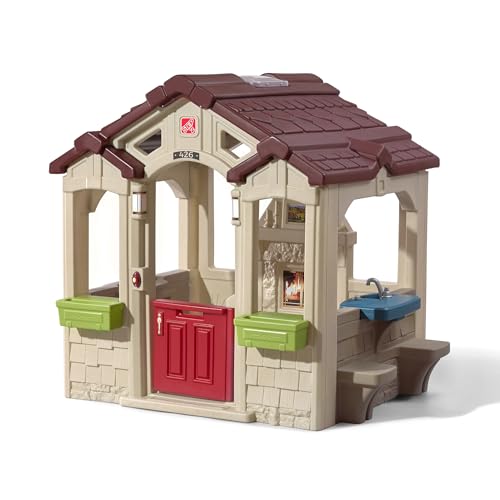
Plastic playhouses are lighter, easier to move, and require almost no maintenance beyond a hose-down. They're an excellent choice for families who want flexibility — the playhouse can shift from lawn to patio to storage in minutes.
- UV-stabilized plastic resists fading and cracking. Check product descriptions for UV resistance.
- Snap-together assembly is common and usually tool-free, though some models need a rubber mallet.
- Molded-in details (windows, mail slots, doorbells) add play value without extra parts to lose.
Fabric pop-up playhouses
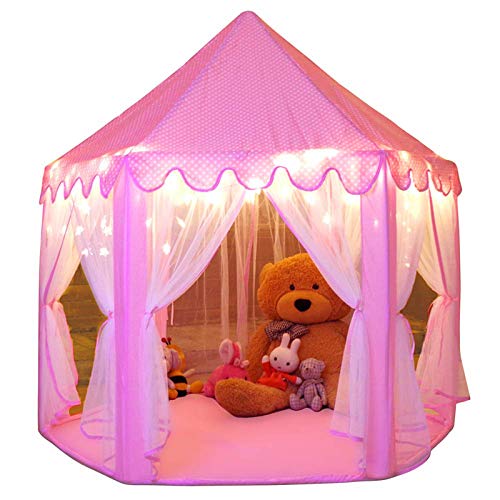
Pop-up fabric playhouses are the most portable option. They set up in seconds, collapse flat, and work equally well indoors and outdoors on dry days. They're ideal for renters, families with limited storage, and travel.
- Look for reinforced seams and a weighted or staked base to prevent tipping in wind.
- Mesh windows improve airflow and allow supervision.
- Fabric models won't survive heavy rain or prolonged sun exposure — store them when not in use.
Indoor Playhouses: Compact Worlds for Rainy Days
Indoor playhouses turn a corner of a bedroom or playroom into a dedicated imaginative zone. The key constraint is footprint — indoor models must fit without dominating the room.
- Fold-flat fabric models are the most space-efficient. A 3-by-3-foot pop-up castle collapses to the size of a folded camping chair.
- Wooden indoor playhouses are heavier and more permanent, but they double as furniture — some feature storage shelves, reading nooks, or chalkboard walls.
- Cardboard playhouses are an entry-level option. They're lightweight and can be decorated by the child, but have a limited lifespan before wear shows.
- Play tents and canopies offer a softer, more open alternative. They work well in shared spaces because they're easy to move and store.
Indoor playhouses pair naturally with quiet-time activities. Our interactive toys for 3-4 year olds guide covers toys that complement pretend-home play.
Age-by-Age Playhouse Guide
Developmental needs shift quickly in early childhood. Match the playhouse design to your child's current stage — and consider how the structure will serve them in the next year or two.
- Toddlers (1–3 years): Low door thresholds, rounded corners, wide windows for visibility, and a simple one-room layout. Pop-up fabric and small plastic models work best. See our fun outdoor toys for 1-year-olds and outdoor play toys for 2-year-olds guides for complementary picks.
- Preschoolers (3–5 years): Open fronts or large windows allow supervision while the child plays inside. Multi-window designs, a small porch, and a mailbox slot add pretend-play value. Our fun outdoor toys for 3-year-olds and award-winning toys for 3-year-olds guides offer related ideas.
- School age (6–10 years): Taller structures with lofts, secret panels, or clubhouse features keep older kids engaged. Consider a model with a chalkboard wall or a convertible design that shifts from playhouse to reading nook. See fun outdoor toys for 6-year-olds for more ideas.
Safety Checklist for Playhouses
Playhouses are safe when chosen and installed thoughtfully. Run through this checklist before purchasing:
- Age labeling: Always follow the manufacturer's age recommendation. Structures designed for 3+ may have small parts unsafe for younger siblings.
- Window materials: Tempered glass or shatter-resistant acrylic — never plain glass.
- Edge finishing: Rounded or sanded edges, especially on wooden models. Check door edges and window frames.
- Anchoring: Outdoor playhouses should be anchored to the ground with stakes or weighted bases. Wind can tip lightweight models.
- Ventilation: Adequate mesh windows or vents prevent overheating in warm weather.
- Supervision line-of-sight: Choose a design with windows or an open front so you can see inside without entering.
- Assembly hardware: Check that all screws and bolts are flush and covered. Re-tighten after the first week of use.
For broader toy safety guidance, see our toy maintenance guide, which covers cleaning, inspection, and storage best practices for all types of play equipment.
Quality Tiers for Playhouses
Playhouses span a wide range of build quality. The table below maps the three most common tiers to their characteristics and best-use scenarios. No specific figures are provided — use this as a relative comparison framework to match a model to your needs.
| Tier | Typical Characteristics | Best For |
|---|---|---|
| Essential tier | Lightweight plastic or fabric, simple assembly, basic features, shorter lifespan | Renters, temporary setups, toddlers testing the waters of pretend play |
| Balanced tier | Reinforced plastic or pre-treated wood, UV-resistant, multi-window design, moderate assembly | Families wanting a durable structure that lasts several years without heavy maintenance |
| Top-tier | Solid wood construction, heavy-duty hardware, weather-resistant coating, loft or convertible features | Long-term backyard investment, families with multiple children, daily outdoor use |
For most families, the balanced tier offers the best combination of durability, play value, and manageable maintenance. Top-tier makes sense when the playhouse will anchor a backyard for a decade or more and be shared by siblings.
Playhouse Accessories That Add Play Value
A playhouse is a canvas. These accessories extend pretend-play possibilities without overwhelming the space:
- Play kitchen sets: A small pretend stove, sink, or refrigerator turns the playhouse into a café or home kitchen.
- Mailbox and letter sets: Add a mounted mailbox and a set of pretend letters for a post-office scenario.
- Garden tools: Child-size watering cans, trowels, and plant pots encourage outdoor pretend gardening alongside the structure.
- Chalkboard panels: A mounted chalkboard wall invites drawing, menu-writing, and signage — great for school-age kids.
- Outdoor lighting: Battery-operated fairy lights or a small solar lantern make the playhouse inviting for evening play.
For more pretend-play accessory ideas, see our pretend play toys for 6-year-olds guide.
Frequently Asked Questions
What age is a playhouse suitable for?
Most playhouses are designed for ages 2 and up. Toddler-friendly models feature low entry points and rounded edges. Always check the manufacturer's age label — some structures include small parts unsuitable for children under 3.
Wood or plastic: which is better for an outdoor playhouse?
Wood offers a classic look and long-term durability but needs periodic treatment. Plastic resists rot, requires minimal maintenance, and is easier to move. The right choice depends on your climate, maintenance preferences, and whether the playhouse will stay in one spot permanently.
How much space does a playhouse need?
A compact pop-up playhouse needs about 3 by 3 feet of floor space. Wooden and plastic outdoor models typically need 5 by 5 feet plus clearance. Measure your intended area and add at least 2 feet of clearance on all sides for safe entry and exit.
Can a playhouse stay outside year-round?
Wooden and plastic outdoor playhouses can typically stay outside year-round if properly anchored and maintained. Fabric pop-up models should be brought inside during rain or heavy weather. In freezing climates, check whether the manufacturer recommends winter storage.
How do I secure a playhouse against wind?
Use ground stakes through the base flanges, or place sandbags on the floor inside. For lightweight plastic models, anchoring is essential — an unanchored playhouse can tip in moderate wind. Follow the manufacturer's anchoring instructions.
Ready to Find the Perfect Playhouse?
Browse our curated selection of playhouses below. Each pick is chosen for durable construction, age-appropriate design, and high pretend-play value.
See Recommended Playhouses🔗 Keep Exploring: For more outdoor pretend-play inspiration, see outdoor play toys for 4-year-olds, outdoor play sets for 8-year-olds, and good outdoor toys for 3-year-olds. Planning a rainy day? Check our games to play in the rain outside guide.