Outdoor Climbing Toys for 8 Year Olds: A Complete Parent's Guide
Active eight-year-olds crave challenge, height, and adventure. This guide breaks down the best outdoor climbing toys for 8 year olds, covering safety, durability, and skill-building so you can choose with confidence.
Why this guide matters: At eight years old, children are refining coordination, testing limits, and seeking more demanding physical play. The right climbing structure fuels that development while keeping risk manageable. Below you'll find a full breakdown of climbing toy categories, what to inspect before buying, and how to match a set to your child's ability and your yard.
Why Outdoor Climbing Toys Suit 8 Year Olds
Eight-year-olds are in a sweet spot for climbing play. They have enough strength and coordination to tackle ladders, walls, and ropes, yet they still benefit from structures designed with clear handholds and predictable footing. Climbing develops gross motor skills, grip strength, spatial awareness, and balance — all while giving kids a screen-free outlet for energy.
Beyond the physical benefits, climbing encourages problem-solving and measured risk-taking. Children learn to plan a route, judge a height, and decide when to ask for help. That blend of challenge and independence is exactly what makes quality outdoor climbing toys such a worthwhile long-term investment for this age group.
Key Types of Climbing Toys for 8 Year Olds
Climbing structures vary widely in scale and complexity. Understanding the main categories helps you narrow down options that fit your yard, your child's skill level, and your supervision style.
Climbing Domes & Geodesic Frames
Dome-style climbers offer multiple entry points and encourage creative route-finding. Mid-range and premium domes often use rust-proof finishes and reinforced joints, making them a solid choice for frequent use.
Wooden Climbing Frames
Classic A-frame and triangle climbers deliver a timeless challenge. High-end tier wooden frames with premium materials and weather-resistant coating tend to hold up well across seasons.
Climbing Walls & Panels
Freestanding or wall-mounted climbing panels with colorful holds build grip strength and route-planning skills. Look for adjustable hold spacing so the challenge can grow with your child.
Playsets with Climbing Elements
Combination outdoor playsets blend climbing walls, ladders, and slides into one structure. They offer the most variety but require more yard space and careful anchoring.
Rope & Net Climbers
Rope ladders and net climbers add a wobbly, dynamic challenge that strengthens core stability. They pair well with existing swing sets or standalone frames.
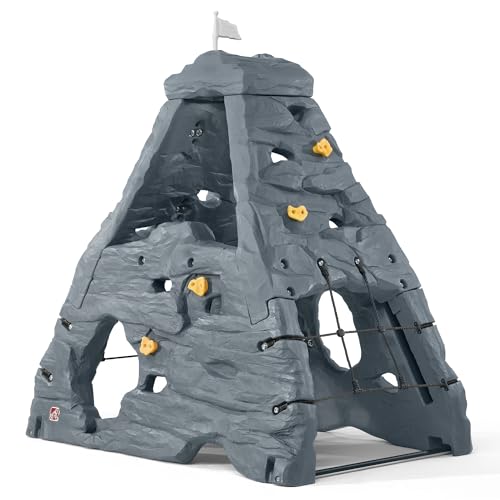
Boulder-Style Climbing Toys
Molded boulder shapes with built-in holds create a natural climbing experience. Durable construction and non-slip surfaces are essential for this category.
What to Look For Before Buying
Eight-year-olds play hard, so durability and safety design matter more than ever. Use the following checklist as a buying framework.
1. Construction & Materials
Prioritize heavy-duty, reinforced frames with a rust-proof finish on metal parts and a weather-resistant coating on wood. Solid build quality reduces wobble and extends the structure's usable life across multiple seasons.
2. Age & Weight Guidance
Always confirm the manufacturer's age and weight recommendations. A structure labeled for ages 5–10 is a better fit for an eight-year-old than one capped at age six. Check weight capacity per user, not just total capacity.
3. Safety Zones & Anchoring
Most climbing structures require a clearance zone of several feet on all sides. Ground anchors or weighted bases are essential for taller frames. Verify the setup instructions before committing to a location in your yard.
4. Surfaces & Handholds
Non-slip rungs, textured holds, and rounded edges reduce the chance of scrapes and slips. For climbing walls, adjustable hold placement lets you tune difficulty as your child's skills grow.
5. Footprint & Yard Fit
Measure your available space first. Compact entry-level climbers suit smaller yards, while mid-range and premium combination sets need a larger flat area. Factor in the safety clearance zone, not just the structure's dimensions.
Practical tip: Place climbing toys on a shock-absorbing surface such as rubber mulch, wood chips, or a dedicated play mat. Grass alone offers limited fall protection, especially under taller frames.
Comparing Tiers: Entry-Level vs. Mid-Range vs. Premium
Outdoor climbing toys fall into broad market tiers. Rather than focusing on figures, compare what each tier typically delivers in build quality and features.
| Tier | Typical Strengths | Best For |
|---|---|---|
| Entry-level | Compact footprint, lighter frames, simpler assembly | Smaller yards and first-time climbing structures |
| Mid-range | Reinforced joints, more climbing surfaces, better weather resistance | Families wanting a balanced tier for regular use |
| Premium | Heavy-duty framing, premium materials, multi-element designs | Larger yards and long-term, high-frequency play |
| High-end tier | Professional-grade hardware, modular expansion options | Families planning to grow the setup over time |
In general, mid-range models tend to offer smoother mechanisms and more stable footing than entry-level options, while premium and high-end tier structures deliver the most robust construction for demanding daily use.
Skills Your Child Builds While Climbing
- Gross motor strength: Climbing engages legs, arms, and core simultaneously.
- Balance and coordination: Uneven surfaces and dynamic ropes train stability.
- Grip strength: Holds and rungs strengthen hand and forearm muscles.
- Spatial awareness: Children judge height, distance, and body position.
- Problem-solving: Route planning and risk assessment build decision-making skills.
- Confidence: Overcoming a challenging climb delivers a genuine sense of achievement.
If your child also enjoys other active outdoor categories, explore our broader collection of outdoor toys for 6 year olds and outdoor ride-on toys for 8 year olds to build a well-rounded backyard play area.
Safety Checklist for Backyard Climbing
Even the most durable structure needs routine care. Run through this checklist before and during each play season.
- Inspect bolts, anchors, and joints for looseness or corrosion.
- Check climbing surfaces for splinters, cracks, or worn grips.
- Clear the safety zone of rocks, roots, and toys.
- Confirm the shock-absorbing surface remains at adequate depth.
- Review the manufacturer's age and weight limits with your child.
- Supervise early sessions and establish clear house rules for climbing height.
Consider the whole yard: A climbing structure pairs well with other active installations. If you're planning a larger backyard project, our guide to outdoor playground equipment for residential use covers layout and safety planning in more depth.
Matching the Toy to Your Child's Personality
Not every eight-year-old approaches climbing the same way. Some are cautious route-planners who prefer stable frames with predictable holds. Others are thrill-seekers drawn to rope nets and taller walls. Observe how your child plays on playground equipment before choosing:
- Cautious climbers: Choose structures with clear handholds and lower heights, then add challenge gradually.
- Confident climbers: Look for multi-surface frames that combine walls, ladders, and nets.
- Social players: Combination playsets with multiple access points support group play and turn-taking.
- Solo adventurers: Dome climbers and boulder-style toys offer open-ended exploration.
A well-chosen climbing toy becomes a hub for outdoor play, drawing in siblings and friends. If you're assembling a fuller backyard setup, our outdoor playset guide covers complementary structures and layout ideas.
Frequently Asked Questions
What should parents look for in outdoor climbing toys for 8 year olds?
Look for sturdy construction, age-appropriate safety labels, weather-resistant materials, and a weight capacity that comfortably supports your child. Reinforced joints and non-slip surfaces are especially important for active eight-year-olds.
How much space is needed for a backyard climbing structure?
Most mid-range and premium climbing structures need a flat area of roughly 8 by 8 feet or more, plus a safety zone of about six feet on all sides. Compact entry-level sets can fit smaller yards, but always check the manufacturer's clearance recommendations.
Are climbing toys safe for 8 year olds to use unsupervised?
Even durable, well-built climbing structures should be used with adult supervision, especially during the first sessions. Regularly inspect bolts, anchors, and surfaces for wear, and follow the manufacturer's age and weight guidance.
What skills do outdoor climbing toys help develop in 8 year olds?
Climbing toys build gross motor skills, balance, coordination, and grip strength. They also encourage problem-solving, risk assessment, and confidence as children plan routes and navigate challenges.
How often should a climbing structure be inspected?
A quick visual check before each play session and a fuller inspection monthly is a practical routine. Tighten hardware, clear debris from the safety zone, and replace any worn grips or ropes promptly.