
Miniature Dollhouse Furniture & Accessories
Your complete guide to building a beautifully detailed dollhouse. Understand scales, compare materials, and furnish every room with confidence before you commit to a miniature collection.
Start the Buying GuideWhy this guide matters: Miniature dollhouse furniture and accessories are not just decorations — they are the difference between a hollow shell and a believable little world. If you are researching before a purchase, this page walks you through scale systems, material choices, room-by-room furnishing, and the accessory details that make a dollhouse feel truly lived in. Everything here is written to help you decide with clarity, not to overwhelm you with jargon.
Explore by Room & Accessory Type
Living Room
Sofas, tables & display pieces
Bedroom
Beds, dressers & textiles
Kitchen & Dining
Cabinets, cookware & tableware
Accessories
Rugs, plants, books & tiny decor
What Makes Miniature Dollhouse Furniture Different?
Miniature dollhouse furniture and accessories are scaled-down replicas of real household items, designed to fit inside a dollhouse and create a convincing domestic scene. Unlike generic toy furniture, miniature pieces are judged on proportion accuracy, material realism, and finishing detail. A well-made miniature chair should look like a chair from across the room — and reward a closer look with visible stitching, wood grain, or working hinges.
The category spans a wide range of quality. Entry-level sets often use molded plastic with painted-on details, while mid-range pieces introduce wood, fabric upholstery, and metal hardware. Premium and high-end tier miniatures are typically handcrafted or artisan-produced, with working drawers, real glass panes, and fabrics woven at scale. Understanding where a piece sits on that spectrum helps you build a collection that feels cohesive rather than mismatched.
- Proportion accuracy: the single most important quality marker in miniatures
- Material realism: wood, fabric, metal, and resin each read differently at scale
- Finishing detail: paint edges, seams, and hardware separate tiers
- Compatibility: furniture and accessories must share a scale system
- Durability: tiny joints and hinges are the first things to fail
- Collectibility: artisan pieces hold appeal for long-term display
Understanding Dollhouse Scales
Scale is the foundation of every miniature collection. If you mix scales, even beautiful furniture will look wrong. The most common system is 1:12 scale, where one inch of miniature equals twelve inches in real life — roughly a one-inch-tall doll representing a six-foot adult. This is the standard for most traditional dollhouses and the safest starting point for beginners.
Other scales serve different purposes. 1:24 scale (half scale) suits smaller display houses and space-conscious collectors. 1:48 scale (quarter scale) is popular for intricate room boxes. 1:6 scale is larger and closer to fashion-doll territory, often used for dioramas and photography. Before buying any furniture or accessory, confirm the scale of your dollhouse and stick to it consistently across every room.
| Scale | Best For | Typical Use |
|---|---|---|
| 1:12 | Traditional dollhouses | Standard collector and play scale |
| 1:24 | Compact display houses | Half-scale room scenes |
| 1:48 | Room boxes & dioramas | Quarter-scale miniature art |
| 1:6 | Large dioramas | Fashion-doll and photography setups |
Materials: What to Look For
Material choice affects realism, longevity, and how a piece interacts with light and photography. Wood remains the gold standard for furniture frames because it accepts stain, holds fine joints, and ages gracefully. Resin allows intricate cast shapes — ornate chair backs, detailed figurines — but can look flat if the finish is poor. Metal is used for hardware, frames, and tiny cookware; high-grade metal pieces resist bending better than thin cast alternatives.
Fabric determines how upholstered pieces read. Woven cotton and linen at scale look convincing; printed synthetic fabrics often betray their scale under close inspection. For accessories, ceramic and glass add believable weight and reflection, while paper and cardstock serve books, artwork, and packaging details. A balanced collection usually mixes materials the same way a real room does: wood frames, fabric softness, metal accents, and glass highlights.
- Durable construction: look for joined wood rather than glued plastic seams
- Premium materials: real fabric upholstery and solid metal hardware
- Reinforced joints: critical on chairs, tables, and working drawers
- Consistent finish: even paint and stain across matching pieces
Furnishing the Living Room
The living room is usually the centerpiece of a dollhouse and the first room visitors inspect. Start with the anchor pieces: a sofa or settee, a coffee table, and a focal display such as a fireplace or cabinet. From there, layer in secondary seating, side tables, and a rug to define the space. Proportion matters most here — a sofa that is too tall for the room will make the ceiling feel low and the whole scene cramped.
For collectors building a formal living room, mid-range and premium tier pieces offer upholstered seating with visible stitching and wood frames with turned legs. If you are furnishing a smaller or casual room, entry-level and essential tier sets can work well as long as the silhouette is accurate. You can find more focused inspiration in this guide to miniature dollhouse living room furniture, which breaks down seating arrangements and display layouts in detail.
Accessories complete the room: framed artwork, a tiny clock, books on a side table, and a plant in the corner. These small additions are what make a living room feel occupied rather than staged.
Furnishing the Bedroom
Bedrooms reward attention to textiles. A bed frame sets the style, but the bedding — quilt, pillows, throw — determines whether the room feels cozy or clinical. Choose a bed sized correctly for the room, then add a nightstand, dresser, and wardrobe as space allows. Working drawers and doors are a hallmark of higher tiers and add a layer of interactivity that display-only pieces lack.
Lighting accessories matter in bedrooms more than in any other room. A tiny bedside lamp, a mirror above the dresser, and soft-colored textiles create warmth. Keep the palette coordinated across the bed, curtains, and rug so the room reads as a single design rather than a collection of unrelated items.
Kitchen and Dining Areas
Kitchens are the most accessory-dense rooms in any dollhouse, and that density is exactly what makes them convincing. Cabinets and counters form the structure; cookware, dishware, and food miniatures bring it to life. Pay attention to counter height relative to the doll figures and to the visual weight of upper cabinets — oversized cabinetry can dominate a small kitchen.
Dining areas benefit from symmetry. A table with matching chairs, a centerpiece, and a sideboard create a balanced composition. Ceramic and glass accessories shine here: tiny plates, cups, and serving dishes catch light and add realism that painted plastic cannot match. If you are building a kitchen from scratch, prioritize the cabinet run and counter first, then add accessories gradually so the room does not feel cluttered.
Accessories: The Details That Sell the Scene
Accessories are where miniature scenes become stories. Rugs anchor furniture groupings, plants soften hard edges, books and artwork suggest personality, and tiny everyday objects — a teacup, a pair of spectacles, a folded newspaper — imply that someone lives there. The best accessory collections are curated rather than crowded: a few well-chosen pieces read better than a shelf packed with unrelated items.
When selecting accessories, match the tier of your furniture. Premium furniture paired with entry-level accessories creates a visible mismatch, while balanced tier pairings look intentional. If you plan to expand over time, buy accessories in coordinated sets so future additions blend naturally. For collectors sourcing in larger quantities, there are dedicated options for miniature dollhouse accessories wholesale that help maintain consistency across multiple rooms or houses.
- Rugs and textiles: define zones and add color without occupying space
- Plants and florals: soften corners and add organic shapes
- Books and artwork: suggest personality and period
- Tabletop objects: cups, bowls, and candles for lived-in detail
- Lighting fixtures: lamps and chandeliers add atmosphere
Comparing Quality Tiers
Miniature furniture and accessories are best compared by tier rather than by any single specification. The table below summarizes how the main tiers differ in construction, detail, and intended use. Use it to align your expectations with the type of collection you are building.
| Tier | Construction | Best For |
|---|---|---|
| Entry-level | Molded plastic, painted details, simple joints | First dollhouses and casual play |
| Mid-range | Wood frames, fabric upholstery, metal hardware | Display collections and growing setups |
| Premium | Hand-finished wood, working parts, quality fabrics | Detailed realism and long-term display |
| Luxury / artisan | Handcrafted, one-of-a-kind, exhibition grade | Collector showcases and heirloom houses |
Mid-range pieces usually offer the most balanced experience: they are detailed enough to photograph well and durable enough for regular handling, without the fragility that sometimes accompanies artisan work. Entry-level sets remain a solid choice for children's play houses, where durability matters more than fine detail. Premium and luxury tiers are worthwhile investments for collectors who treat the dollhouse as a long-term display piece.
A Practical Buying Checklist
Before committing to a purchase, run through this checklist to avoid the most common miniature-collecting mistakes:
- Confirm the scale of your dollhouse and verify every item matches it.
- Measure the room — width, depth, and ceiling height — before buying large furniture.
- Check the material list for wood, fabric, and metal content rather than accepting generic descriptions.
- Review joint construction on seating and tables; these are the weakest points.
- Plan accessories last so they complement the furniture rather than compete with it.
- Buy in coordinated sets when possible to keep finishes consistent across rooms.
- Consider future expansion — choose a tier you can keep adding to over time.
Following these steps keeps a collection coherent and prevents the frustrating situation of discovering that a beautiful piece does not fit or does not match the rest of the room.
Related Guides on Toy Range
Frequently Asked Questions
What is the most common scale for dollhouse furniture?
1:12 scale is the most common and the standard for traditional dollhouses. It is the safest starting point for beginners because the widest selection of furniture and accessories is produced in this scale.
Can I mix furniture from different scales in one dollhouse?
No. Mixing scales breaks the illusion of proportion and makes even high-quality pieces look wrong. Choose one scale for the entire house and verify every purchase against it.
Which materials are best for miniature furniture?
Wood is the best choice for frames and structural pieces, fabric for upholstery, and metal for hardware. Resin works well for ornate cast details, while ceramic and glass are excellent for accessories.
Should I buy furniture or accessories first?
Buy furniture first. It establishes the layout, proportion, and style of each room. Accessories should be chosen afterward to complement the furniture rather than compete with it.
Are working drawers and doors worth considering?
Working parts are a hallmark of mid-range and premium tiers. They add realism and interactivity, making them worthwhile for display collections, though simpler fixed pieces are fine for casual play.
Recommended Miniature Dollhouse Furniture & Accessories
⚠️ AFFILIATE DISCLOSURE: This website contains affiliate links. As an Amazon Associate, we earn from qualifying purchases. If you make a purchase through these links, we may receive a small commission at no additional cost to you. Read our full affiliate policy.

Dollhouse Furniture Set, 38 Pcs Miniature Doll House Accessories with Dogs and Cat ,Kitchen Bedroom Living Room Bathroom Furniture, Toy for Kids Ages 3+ Boys Girls, Great Gift Idea
Check price on Amazon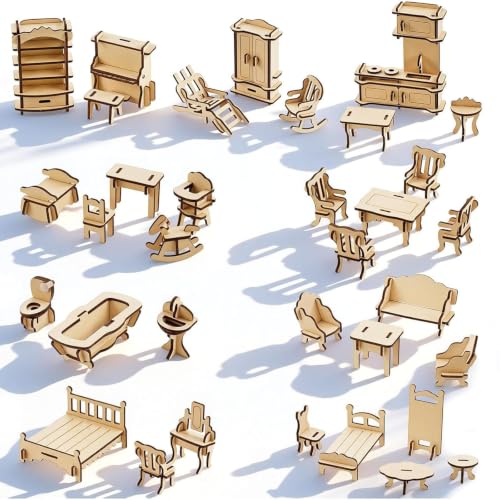
LOVEINUSA 34PCS Wooden Dollhouse Furniture Set, 1:20 Scale | Miniature Furniture for Kitchen, Living Room, Bathroom. STEM Classroom Educational Toy for DIY Crafts and Creative Building
Check price on Amazon
36Pcs Dollhouse Furniture Set,Miniature 1:12 Scale Dolls House Accessories with Cat,Dog,Kitchen, Dining Room, Living Room,Bedroom for Playhouse Toy(Beige)
Check price on Amazon
Toyssa Wooden Dollhouse Furniture Set, 36PCS Miniature Doll House Accessories with Colorful 5 Room & 4 Flexible Family Dolls, Pretend Play Toys Birthday Gift for Toddlers 3 4 5 6 Years Old
Check price on Amazon
Dollhouse Furniture Set-38 Pcs, Miniature Doll House Accessories with Dogs and Cat ,Kitchen Bedroom Living Room Bathroom Furniture, Great Gift Idea
Check price on Amazon
iLAND Miniature Dollhouse Accessories Vintage of Carpet for Dollhouse Furniture on 1/12 Scale and 3” - 12” Dolls, Woven Dollhouse Rugs 6” x 3.8”(2pcs Brilliance)
Check price on Amazon