
Gas Powered RC Planes Ready to Fly: The Complete Buyer's Guide
Everything you need to know before choosing a nitro-powered RC aircraft — from engine break-in and fuel systems to airframe selection and first-flight preparation. Built for hobbyists who want the authentic sound and endurance of gas-powered flight.
Explore Top PicksWhy gas powered RC planes? For many hobbyists, the appeal of a nitro engine is undeniable: the distinctive exhaust note, the extended flight times, and the mechanical satisfaction of tuning a real two-stroke engine. But "ready to fly" does not mean "zero preparation." This guide walks you through exactly what to expect, how to choose the right airframe, and which features matter most when you are ready to move beyond electric trainers.
What "Ready to Fly" Really Means for a Gas Powered RC Plane
In the electric RC world, "ready to fly" often means charge-and-fly. With gas powered models, the definition is broader. A typical ready-to-fly nitro plane arrives with the engine, servos, receiver, and pushrods pre-installed at the factory. The wing may be assembled or need minor bolting. What remains is the critical work that determines whether your first flight ends in a smooth landing or a repair bench:
- Engine break-in: Nitro engines require a careful break-in period — usually several tanks of fuel at rich needle settings — before they deliver reliable performance. Skipping this step risks premature wear.
- Fuel system assembly: You will need to connect the fuel tank lines, install the clunk, and verify there are no air leaks. Many RTF kits include a fuel pump and glow starter, but check the box contents carefully.
- Radio setup and range check: Even with pre-installed servos, you must verify control surface directions, set endpoints, and perform a ground range check before the maiden flight.
- Center of gravity (CG) verification: The single most important pre-flight check. A tail-heavy nitro plane is dangerous. Always balance the model per the manual — often requiring small weights in the nose.
Practical Tip: Treat RTF as "Ready to Assemble and Tune"
Budget two to three evenings for assembly, engine break-in, and radio programming before your first flight. Joining a local club or flying with an experienced nitro pilot during the maiden flight dramatically improves your odds of success. Many clubs offer buddy-box training even for gas models.
Understanding Nitro vs. Gasoline Engines in RC Planes
The term "gas powered" is often used loosely in the hobby. Technically, most ready-to-fly models in this category use glow (nitro) engines running on methanol-based fuel. True gasoline engines — running on a petrol-oil mix with spark ignition — appear mostly in larger scale aircraft. Here is how they compare:
| Feature | Glow / Nitro Engine | Gasoline Engine |
|---|---|---|
| Fuel type | Methanol + nitromethane + oil | Petrol + two-stroke oil mix |
| Ignition | Glow plug (requires glow starter) | Spark plug with electronic ignition |
| Typical displacement | 0.40–1.20 cu in (trainers & sport planes) | 20cc–60cc+ (larger scale models) |
| Fuel availability | Hobby shops and online | Petrol stations (mix oil yourself) |
| Maintenance | Moderate — glow plug replacement, needle tuning | Higher initial complexity — ignition system, carb tuning |
| Best for | Entry-level to mid-range sport planes | Mid-tier to premium large-scale aircraft |
For a first gas powered RC plane, a glow engine in the 0.46 to 0.61 displacement range is the sweet spot. Parts are widely available, tuning is well-documented, and the aircraft remain manageable in size for transport and storage.
Choosing the Right Airframe for Your Skill Level
The airframe matters as much as the engine. A high-performance aerobatic plane with a nitro engine is not a trainer — it will punish small mistakes. Here is how to match airframe style to experience:
High-Wing Trainers (Entry-Level)
High-wing designs with flat-bottom airfoils offer natural stability and gentle stall characteristics. These are the classic first nitro planes. Look for models with a 55–65 inch wingspan and a .46–.55 engine. The Entry-Level tier typically includes pre-covered balsa or foam-composite structures that balance durability with repairability.
Low-Wing Sport Planes (Mid-Range)
Once you are comfortable with takeoffs, landings, and basic aerobatics, a low-wing sport plane introduces faster roll rates and more precise handling. The Mid-Range tier often features built-up balsa construction, larger fuel tanks, and improved hardware (ball links, heavier pushrods). These models reward smooth throttle management and proper engine tuning.
Scale and Warbird Models (Premium)
Scale warbirds and aerobatic planes in the Premium tier demand solid nitro experience. They typically carry higher wing loading, retractable landing gear, and more powerful engines. Their flight characteristics are less forgiving, but the visual and acoustic payoff is unmatched. These are long-term investments for dedicated hobbyists.
Fuel System Essentials: Tanks, Lines, and Plumbing
A reliable fuel system is the difference between a smooth flight and a dead-stick emergency. Key components to inspect on any ready-to-fly gas plane:
- Fuel tank: Most trainers use a 6–10 oz clunk tank. Verify the clunk moves freely and the stopper is tight. Replace silicone fuel lines annually — they harden and crack over time.
- Fuel filter: An inline filter between the tank and carburetor prevents debris from blocking the needle valve. Clean it after every few flying sessions.
- Fuel pump: Manual or electric pumps are essential for filling and defueling. Never store fuel in the tank between sessions — methanol attracts moisture.
- Vent line routing: Ensure the vent line exits the fuselage where fuel overflow will not soak the airframe. A properly routed vent also prevents siphoning.
Engine Break-In and Tuning: The Make-or-Break Phase
Nitro engines are mechanical devices that need gentle initial running to seat the piston ring and establish reliable compression. A rushed break-in leads to poor idle, overheating, and short engine life. Follow these principles:
- Rich needle settings: Run the first two to three tanks at 2–3 turns open from the peak. The engine should run noticeably rich — lots of smoke and a burbling exhaust note. This keeps temperatures down during break-in.
- Vary throttle: Do not run at a constant RPM. Cycle between low, mid, and high throttle to help the ring seat evenly. Avoid sustained full throttle until break-in is complete.
- Ground running first: Complete break-in on a test stand or with the plane securely restrained. Monitor cylinder head temperature — it should be hot to the touch but not sizzling.
- Peak tuning after break-in: Once broken in, lean the high-speed needle gradually until the engine reaches peak RPM, then richen it slightly (about 1/8 turn) for safety margin. A slightly rich high-speed setting protects the engine in flight.
- Idle adjustment: Set a reliable, slightly rich idle that does not load up during taxi. A consistent idle is essential for safe landings.
Safety Reminder: Glow Plugs and Starters
Always use a glow starter with a charged battery — a weak glow plug causes hard starting and erratic idle. Keep your hands clear of the propeller arc at all times, and use a chicken stick or electric starter rather than flipping by hand. Nitro engines can kick back unexpectedly.
Radio Gear and Servos: What to Verify Before Flight
Even pre-installed radio gear deserves a careful inspection. A servo that buzzes at neutral or a receiver antenna routed alongside the ignition wiring can cause a crash:
- Servo torque: For a .46–.61 trainer, standard servos (around 40–50 oz-in) are usually sufficient. Premium models with larger control surfaces may need higher-torque servos — check the manual.
- Servo direction and endpoints: Confirm every control surface moves in the correct direction and that endpoints do not bind the servo. Binding servos draw excessive current and can fail in flight.
- Receiver placement: Keep the receiver and antenna away from the engine, metal pushrods, and any ignition wiring. Vibration isolation foam is recommended.
- Battery capacity: Nitro planes typically use a 4.8V or 6V NiMH receiver pack, or a LiFe pack with a regulator. Verify capacity and charge state before every flying session — a dead receiver battery means total loss of control.
Field Equipment You Will Need (Beyond the Plane)
A ready-to-fly gas plane is only part of the setup. Budget for these field essentials:
- Fuel and fuel pump: Enough fuel for several flights plus a container for transport.
- Glow starter and charger: A spare glow plug is cheap insurance.
- Electric starter: Hand-flipping is possible but a starter reduces fatigue and improves safety.
- Field box or tool kit: Screwdrivers, pliers, spare props, glow plugs, and fuel line.
- Prop wrench and balancer: Balanced props reduce vibration and protect the engine bearings.
- Wing bolts and assembly tools: For models that require field assembly of the wing.
Top Gas Powered RC Planes Ready to Fly
⚠️ AFFILIATE DISCLOSURE: This website contains affiliate links. As an Amazon Associate, we earn from qualifying purchases. If you make a purchase through these links, we may receive a small commission at no additional cost to you. Read our full affiliate policy.

LEAMBE 4 Channel RC Plane - Ready to Fly Aerobatic Aircraft, Easy Control for Beginners, F4U Corsair RC Airplane Best Gift for Adults
Check price on Amazon
LEAMBE 4 Channel RC Plane, Ready to Fly Aerobatic Aircraft, Easy Control for Beginners, P51 Mustang RC Airplane Best Gift for Adults
Check price on Amazon
LEAMBE RC Plane 4 Channel Remote Control Airplane - Ready to Fly P-40 Warhawk RC Airplane for Beginners Adult with Xpilot Stabilization System & One Key Aerobatic
Check price on Amazon
LEAMBE 4 Channel RC Plane, Ready to Fly Aerobatic Aircraft, Easy Control for Beginners, P51 Mustang RC Airplane for Adults Blue-Red
Check price on Amazon
HAWK'S WORK 2CH F-22 RC Glider, Easy Fly RC Plane for Kids & Beginners | 2.4GHz anti-interference, stable flight, crash-resistant foam, RTF for kid beginners, Ready to fly out of box
Check price on Amazon
LEAMBE Brushless 4 Channel RC Plane, Ready to Fly Aerobatic Aircraft, Easy Control for Beginners, P51 Mustang RC Airplane for Adults Red
Check price on Amazon
LEAMBE 4 Channel RC Plane, Ready to Fly Aerobatic Aircraft, Easy Control for Beginners, P51 Mustang RC Airplane for Adults Blue
Check price on Amazon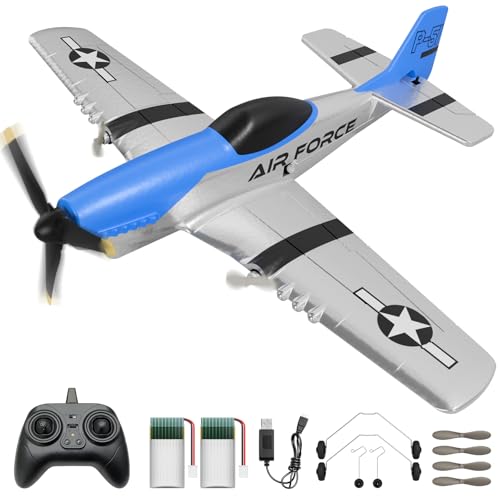
AIGIMU 3CH P-51 RC Airplane with 6-Axis Gyro for Beginners, Ready to Fly | Dual motors, 2 speed modes, hand-launch or glide takeoff, 40+ min runtime, 500 ft range, 2.4GHz control, durable EPP foam
Check price on AmazonContinue Exploring RC Aircraft and Outdoor Hobbies
If you are considering other nitro-powered models, our related guides cover the full spectrum of gas-powered hobby vehicles:
- For turbine-style performance, explore gas powered RC jet planes for high-speed enthusiasts.
- Prefer water? Our guide to the gas powered remote control boat covers hull types and engine options.
- For land-based nitro fun, see gas powered remote control cars for adults and gas powered remote control trucks.
- If you are shopping for younger hobbyists, browse gas powered ride-on toys for 5 year olds.
- For outdoor family fun, check out our fun outdoor toys for 8 year olds and fun summer toys for 10 year olds.
Frequently Asked Questions
What does "ready to fly" mean for a gas powered RC plane?
Ready to fly (RTF) means the model arrives largely assembled with the engine, radio transmitter, receiver, and servos pre-installed. You typically only need to fuel it, charge the transmitter and receiver batteries, and perform a range check before the first flight. However, some final assembly and tuning of the nitro engine are still required.
Are gas powered RC planes harder to fly than electric ones?
Yes, generally they are. Nitro engines require break-in procedures, needle valve tuning, and a reliable starting process. They also produce vibration and require more maintenance. Electric planes are simpler to operate. For this reason, a gas powered RC plane is usually recommended after you have mastered basic flight with an electric trainer.
What fuel do gas powered RC planes use?
Most glow-powered RC planes use a methanol-based fuel blended with nitromethane and lubricating oil. The nitromethane percentage (often 5% to 15%) affects performance. True gasoline engines (using a petrol-oil mix) exist for larger scale models but are less common in the ready-to-fly trainer category.
How long can a gas powered RC plane fly on one tank?
Flight duration depends on tank size, engine displacement, and throttle management. A typical trainer with a 6-8 oz tank might fly for 8-12 minutes. Larger models with bigger tanks can stay aloft for 15-20 minutes. It is always safer to land with fuel remaining rather than risk a dead-stick landing.
Final Advice: Your First Nitro Flight
Gas powered RC planes ready to fly offer a gateway into the mechanical, sensory side of the hobby that electric models cannot replicate. The sound of a tuned two-stroke at full throttle, the smell of nitro fuel, and the satisfaction of a smooth landing after a perfect engine run make the extra preparation worthwhile.
Take your time. Break in the engine properly. Join a club if you can. And always treat the propeller with respect. With patience, a nitro trainer can deliver hundreds of rewarding flights — and become the foundation of a lifelong hobby.