
Electronic Speed Control RC Car: The Complete Guide to ESC Performance
Unlock the full potential of your remote control car. Understand how an electronic speed control works, choose the right ESC for your setup, and learn tuning secrets that transform your driving experience.
🧠 Why the ESC Matters: The electronic speed control is the unsung hero of your RC car. It governs how power flows from the battery to the motor, delivering the throttle response, braking feel, and top-end speed you experience behind the controller. Whether you are running a drift remote control car or a high-speed basher, understanding your ESC is the key to unlocking better performance, reliability, and driving satisfaction. This guide breaks down everything you need to know before your next upgrade or tune-up.
What Is an Electronic Speed Control?
An electronic speed control (ESC) is an electronic circuit that varies the speed of an electric motor. In an RC car, it sits between the battery and the motor, acting as the intermediary that translates your throttle inputs into precise motor commands. Unlike a simple on/off switch, an ESC uses pulse-width modulation (PWM) to deliver a smooth, adjustable power curve. This allows for gradual acceleration, controlled braking, and smooth reverse operation—all essential for competitive driving and casual bashing alike.
Modern ESCs are sophisticated devices. Many include built-in BECs (battery eliminator circuits) that power your receiver and servo, thermal protection that prevents overheating, and programmable profiles that let you tailor punch, drag brake, and timing to your driving style. For anyone serious about drag RC cars or driftable RC cars, the ESC is often the first component to upgrade after the motor itself.
Brushed vs. Brushless ESC: Which One Do You Need?
The type of ESC you choose must match your motor. Brushed and brushless systems are not interchangeable, and using the wrong ESC can damage your electronics.
Brushed ESC
Brushed ESCs are designed for motors with physical brushes and a commutator. They are simpler, often more budget-friendly in the entry-level tier, and commonly found in ready-to-run (RTR) kits and electric ride-on toys for 3-year-olds. A brushed ESC typically offers forward, reverse, and brake functions with limited programmability. They are ideal for casual drivers, young enthusiasts, and anyone learning the basics of RC electronics.
Brushless ESC
Brushless ESCs drive motors that use electronic commutation instead of physical brushes. This design eliminates brush wear, improves efficiency, and delivers significantly more power for a given size. Brushless systems are the standard for performance-oriented builds, including electric RC cars for adults fast 100 mph and competition-grade racers. A brushless ESC requires a compatible brushless motor and often supports advanced tuning via a programming card or smartphone app.
Key Specifications to Check Before You Choose
Choosing the right ESC involves more than just matching the motor type. Here are the critical specifications to evaluate:
- Current Rating (Amps): The ESC's continuous and peak current ratings must exceed your motor's maximum current draw. A motor that pulls 60 amps under load requires an ESC rated for at least 60 amps continuous, preferably higher for a safety margin.
- Voltage Compatibility: Ensure the ESC supports the cell count of your battery pack. Common configurations range from 2S to 6S LiPo. Using a higher voltage than the ESC is rated for will cause immediate damage.
- BEC Output: The built-in BEC powers your receiver and steering servo. Check the BEC's voltage and current output to ensure it meets the demands of your servo, especially in high-torque applications.
- Waterproofing: If you drive in wet conditions or on beach terrain, choose an ESC with a waterproof or water-resistant rating.
- Programmability: Higher-tier ESCs offer adjustable parameters such as punch, drag brake, timing, and throttle curves. These features allow you to fine-tune the driving feel to your preferences and track conditions.
- Cooling: ESCs generate heat during operation. Look for models with integrated heatsinks and cooling fans, particularly for high-current applications.
ESC Tiers: Entry-Level to Professional-Grade
To help you navigate the market, we categorize ESCs into universal tiers based on their features, build quality, and intended use. This classification is relative and does not reflect any specific currency or market valuation.
| Tier | Best For | Typical Characteristics |
|---|---|---|
| Entry-Level | Beginners, casual bashing, RTR kits | Brushed motor compatibility, basic forward/reverse/brake, limited programming, often waterproof, simple wiring |
| Mid-Range | Enthusiasts, hobbyists, light racing | Brushed or brushless options, higher current ratings, programmable profiles, improved cooling, better BEC output |
| High-End Tier | Serious racers, speed runners, advanced bashers | Brushless only, high current handling, advanced tuning (timing, punch, drag brake), data logging, robust thermal management |
| Professional-Grade | Competition racing, record attempts, commercial use | Flagship features, maximum current capacity, precision manufacturing, extensive programmability, telemetry support, premium materials |
When upgrading, consider that a mid-range ESC often provides the best balance of features and reliability for most hobbyists. Professional-grade units are worthwhile for competitive racers who need every ounce of performance and durability. If you are exploring high-speed applications, our guide to the fastest RC car in the world offers valuable insights into the electronics that make extreme speed possible.
Tuning Your ESC for Optimal Performance
Once you have the right ESC installed, tuning is what separates a good drive from a great one. Here are the key parameters you can adjust on most programmable ESCs:
Punch / Throttle Curve
Punch controls how aggressively the ESC delivers power when you squeeze the throttle. Higher punch values provide instant acceleration, which is ideal for drag racing and short-course competition. Lower punch values smooth out the power delivery, making the car easier to control on loose surfaces or for beginners.
Drag Brake
Drag brake applies a small amount of braking when you release the throttle, simulating engine braking. This is particularly useful in drift remote control car setups, where maintaining chassis stability during corner entry is critical. A higher drag brake setting helps rotate the car, while a lower setting allows for more free rolling.
Timing
Motor timing affects the phase angle between the rotor and stator in a brushless motor. Advancing the timing increases top-end speed at the expense of low-end torque and efficiency. Retarding the timing improves low-end response and reduces heat. Most bashers and casual drivers can leave timing at the default setting, while racers may fine-tune it for specific track conditions.
Brake Strength
Brake strength determines how forcefully the ESC applies the brakes. For heavy vehicles or high-speed applications, stronger brakes are necessary to slow the car effectively. For lighter cars or slippery surfaces, reducing brake strength prevents wheel lockup and loss of control.
Maintenance Tips for Long ESC Life
An ESC is an investment, and proper care extends its lifespan significantly. Follow these maintenance practices:
- Keep It Clean: Dust, dirt, and moisture are the enemies of electronics. After every run, especially in dusty or wet conditions, clean the ESC with compressed air and a soft brush. If your ESC is not waterproof, avoid wet environments entirely.
- Ensure Proper Airflow: ESCs generate heat, and overheating is a leading cause of failure. Mount the ESC in a location with good airflow and ensure the cooling fan (if equipped) is functioning correctly. Never block the heatsink vents.
- Check Connections: Inspect the battery and motor connectors regularly for signs of corrosion, melting, or loose fit. Replace damaged connectors immediately. Poor connections increase resistance, which generates heat and reduces performance.
- Respect Ratings: Never exceed the ESC's voltage or current ratings. Overvolting or overloading the ESC can cause catastrophic failure, including fire. Always match your battery and motor to the ESC's specifications.
- Store Properly: When not in use, store your RC car in a dry, dust-free environment. If your ESC is not waterproof, consider removing it during long periods of storage or applying a protective conformal coating.
For those who enjoy building and modifying their vehicles, pairing a quality ESC with electronics kits and other components opens up a world of customization. Whether you are building a scale crawler, a drift missile, or a speed runner, the ESC is the foundation of your car's electronic ecosystem.
📚 Explore More RC and Toy Guides
Frequently Asked Questions
An electronic speed control regulates the amount of power delivered from the battery to the motor, allowing precise throttle control, forward and reverse operation, and braking. It is essentially the brain of your RC car's drivetrain, translating your trigger inputs into smooth motor commands.
A brushed ESC works with motors that have physical brushes and commutators, offering simplicity and lower entry-level compatibility. A brushless ESC drives motors without brushes, delivering higher efficiency, longer lifespan, and more power for performance-oriented setups. The two types are not interchangeable.
Match the ESC to your motor type (brushed or brushless), ensure the current rating exceeds your motor's maximum draw, verify voltage compatibility with your battery, and consider features like waterproofing, programming options, and BEC output for your servo. Higher-tier ESCs offer more tuning flexibility.
Yes, upgrading the ESC is one of the most impactful performance modifications. A higher-tier ESC can handle more current, offer smoother throttle response, support higher voltage batteries, and provide advanced tuning features for improved driving feel. Just ensure compatibility with your motor and battery.
Keep the ESC clean and dry, ensure proper airflow for cooling, check connectors for corrosion, avoid exceeding voltage and current ratings, and periodically inspect the cooling fan and heatsink. Proper maintenance extends the lifespan of your ESC and prevents unexpected failures.
Recommended Electronic Speed Controls & RC Car Electronics
⚠️ AFFILIATE DISCLOSURE: This website contains affiliate links. As an Amazon Associate, we earn from qualifying purchases. If you make a purchase through these links, we may receive a small commission at no additional cost to you. Read our full affiliate policy.

HAIBOXING 18859 1:18 Scale All Terrain RC Car, Hobby 4WD Remote Control Car | 2.4GHz Electric RC Vehicle 36 KPH High Speed 4X4 Waterproof Off-Road RC Truck with Two Rechargeable Batteries for RC Driving
Check price on Amazon
1:14 Scale RC Cars for Adults, 60KPH High Speed RC Truggy, 4X4 Off-Road Remote Control Truck, Waterproof Electric Car with 2S Battery, All Terrain RC Vehicle for Snow, Sand, Beach & Rocky Surfaces
Check price on Amazon
Radiolink CL9030 90A 2S-4S RC Brushed ESC Waterproof 5A BEC 5.5V/7.5V | Electronic Speed Controller for RC Crawler Tank Truck Car Boat 1/10 XT60 Plug
Check price on Amazon
1/14 Brushless RC Cars for Adults Fast 50+ mph, RC Trucks 4x4 Offroad Waterproof, Electric Powered High Speed Remote Control Car, Fast Extreme All Terrain RC Truggy with 3S Battery for Snow Sand
Check price on Amazon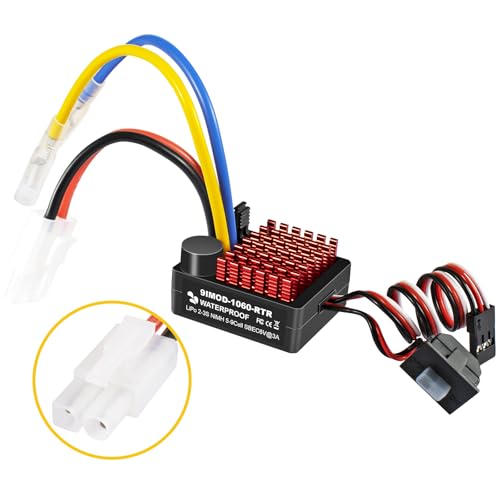
9IMOD WP 1060 2-3s 60A Brushed ESC [Tamiya Plug] Waterproof Brushed Electronic Speed Controller with Switch Mode BEC, RC ESC for 1/10 Scale RC Crawler Car Trucks
Check price on Amazon
AsyPlaer High Speed 30+KM/H Remote Control Car, 1:14 RC Cars for Boys Age 8-12, 2.4 GHz All Terrain RC Truck, Ideal Gifts Off-Road RC Car for Adults Kids with 2 Rechargeable Batteries
Check price on Amazon