Commercial Inflatable Water Park For Sale: A Complete Buyer's Guide
If you are researching a commercial inflatable water park for sale, you already know what you want. What you need now is clarity on materials, safety, layout, and long-term performance so you can choose a park that fits your venue, your audience, and your operating model with confidence.
What a Commercial Inflatable Water Park Actually Is
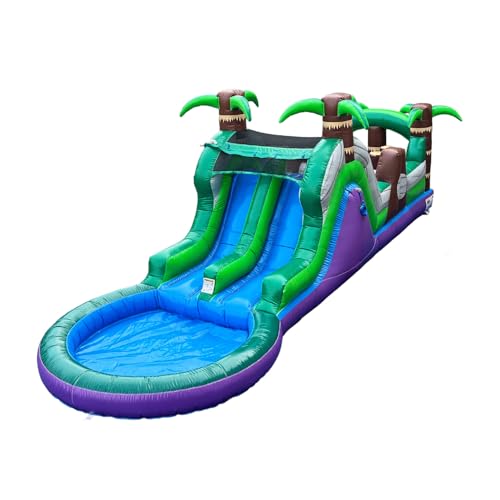
A commercial inflatable water park is a large-format, air-filled attraction designed for repeated public use. It typically combines one or more water slides, a splash pool or landing zone, and sometimes an obstacle or climbing element. Unlike backyard inflatables, commercial units are built with heavier materials, reinforced stitching, and anchoring systems rated for daily operation.
These parks are used in a variety of settings: standalone water play venues, resorts and hotels, campsites, municipal recreation areas, and rental fleets that serve private events. The common thread is that the park must withstand frequent inflation and deflation, exposure to sun and water, and continuous foot traffic from users of different ages and sizes.
Because the category is broad, the first practical step is to decide which operating model you are buying for. A park designed for a fixed venue has different priorities than a park designed to be transported and set up for weekend events. Getting this decision right early narrows the field considerably.
Material and Construction: The Foundation of Every Good Park
The single most reliable indicator of a park's longevity is its construction. Commercial inflatables are generally made from PVC or TPU, with PVC being the more common choice for large water parks due to its balance of durability and repairability. Within PVC, the weight and coating matter: heavier commercial-grade material resists abrasion and UV degradation better than lighter fabric.
What to look for in the build
- Reinforced seams: Double-stitched and heat-welded seams are standard on serious commercial units. Ask how the seams are finished, not just whether they are reinforced.
- UV-resistant coating: A park that sits in the sun all season needs protection against fading and material brittleness.
- Anchor points: Heavy-duty D-rings and reinforced anchor straps are essential. The anchoring system should match the park's size and the wind conditions at your site.
- Blower compatibility: Confirm the required blower specification and whether the blower is included or sold separately.
- Repair kit: A park without a repair kit is a liability. Patch material and adhesive should be included or readily available.
If you are comparing a park against smaller or lighter options, it helps to understand the difference in build philosophy. A commercial inflatable water slide is often the core component of a larger park, and the same material standards apply. For operators who want to start smaller and scale, a commercial inflatable water slide with pool can serve as a standalone attraction before you commit to a full multi-element park.
Safety Features That Matter for Public Use
Safety is not a feature you can retrofit after purchase. It has to be designed into the park and documented by the supplier. When evaluating a commercial inflatable water park for sale, ask for specifics rather than general assurances.
- Age and weight guidance: Clear user limits should be stated by the manufacturer, not left to the operator to guess.
- Fall protection: Slide exits, pool edges, and climbing elements should have raised sides, netting, or padded landing zones.
- Entry and exit design: Safe, controlled entry points reduce congestion and accidents.
- Anchoring and stability: The park should remain stable under load and in moderate wind. Confirm the anchor count and recommended ground conditions.
- Certification and documentation: Reputable suppliers provide compliance documentation for the materials and electrical components (blower, pump) used with the park.
For operators building a broader attraction, it is worth reviewing how safety standards apply across similar commercial units. The principles used in commercial inflatable water slides for adults — reinforced anchoring, controlled entry, and clear user limits — carry directly into full water park design.
Layout and Configuration: Matching the Park to Your Site
A commercial inflatable water park is only as good as its fit with your location. Before comparing individual products, map out your available space and the visitor flow you want to create.
Common configurations
- Single-slide park: One slide with a landing pool. Compact, easier to staff, and a sensible entry point for new operators.
- Multi-slide park: Two or more slides feeding into a shared splash area. Higher throughput but requires more space and supervision.
- Obstacle-style park: Combines climbing, sliding, and splash elements. Appeals to older children and teens, but needs careful safety zoning.
- Modular park: Separate inflatable sections that can be combined or run individually. Flexible for rental fleets and venues with changing layouts.
Space planning should account for more than the park's footprint. You need clearance for anchoring, a safe perimeter, a queue area, and a dry zone for staff and spectators. Ask the supplier for the exact footprint and recommended safety perimeter in writing.
Quality Tiers: How to Frame Your Comparison
Commercial inflatable water parks are not a single market. They range from entry-level units suitable for occasional use to top-tier parks built for high-traffic venues. Using a consistent tier framework makes comparison clearer and helps you avoid over- or under-specifying.
| Tier | Best For | Typical Characteristics |
|---|---|---|
| Entry-level | Occasional events, small venues, first-time operators | Lighter commercial material, simpler layout, fewer elements, basic anchoring |
| Mid-range | Regular rental use, seasonal venues, family attractions | Heavier PVC, reinforced seams, modular sections, better blower and repair kit support |
| Premium | Daily-operation venues, resorts, established water play businesses | High-grade commercial PVC, UV-resistant coating, heavy-duty anchoring, larger layouts |
| Commercial-grade / top-tier | High-traffic parks, municipal facilities, large rental fleets | Maximum durability, documented safety compliance, multi-element design, full support package |
Most first-time buyers are best served by the mid-range tier. Entry-level parks can work for pilot projects, but if you plan to run the attraction regularly, the jump to mid-range usually pays off in reduced downtime and longer service life. Top-tier parks make sense when throughput and safety documentation are non-negotiable.
For buyers who want to start with a smaller commercial unit and scale up, a commercial bounce house with water slide offers a lower-commitment way to test demand before investing in a full park.
Questions to Ask Before You Commit
The right supplier will welcome detailed questions. The wrong one will deflect them. Use this checklist during your evaluation.
- What is the exact material weight and coating? Ask for the specification, not a general description.
- How are the seams constructed? Heat-welded and double-stitched is the standard for commercial use.
- What anchoring is included, and how many anchor points are there? Confirm the recommended ground type.
- Is the blower included, and what specification is required? Blower compatibility is often overlooked.
- What documentation is provided? Material certifications, electrical compliance, and user guidance should be available.
- What does the warranty cover? Focus on seam, material, and blower coverage rather than headline duration.
- Is a repair kit included? If not, confirm how to source patch material.
- What is the setup and takedown time? This matters enormously for rental operators.
If you are also considering a combined attraction, the evaluation criteria for a commercial water slide bounce house for sale overlap heavily with water park assessment — material, seams, anchoring, and documentation remain the deciding factors.
Operational Considerations for Long-Term Performance
Buying the park is the start, not the finish. How you operate and maintain it determines whether it becomes a reliable attraction or a recurring repair project.
Setup and storage
Commercial parks should be set up on a clean, flat surface free of sharp objects. After use, the park must be cleaned, fully dried, and stored out of direct sunlight. Moisture trapped in folded PVC is a common cause of mildew and material damage.
Staffing and supervision
Public water attractions require active supervision. Plan for staff who can manage entry and exit, enforce age and weight limits, and respond to minor incidents. The park's design should make supervision easier, not harder.
Maintenance routine
A simple routine prevents most problems: inspect seams and anchor points before each use, check the blower and valves, clean the slide surfaces, and keep a repair kit on hand. Seasonal deep cleaning and professional inspection extend the park's service life considerably.
Where a Commercial Inflatable Water Park Fits in a Broader Attraction
Many operators pair a water park with complementary attractions to increase dwell time and appeal to a wider age range. Understanding the adjacent categories helps you plan a coherent site rather than a collection of unrelated inflatables.
For younger visitors, a dedicated children's indoor bounce house can run alongside a water attraction for wet-weather or off-season use. Operators building a full recreation destination often also look at commercial playground equipment for sale to create a dry-play zone that complements the water park.
If your venue is seasonal or event-driven, modular water attractions such as a commercial inflatable water slide with pool can be rotated with other inflatables to keep the offering fresh without committing to a single large layout.
Frequently Asked Questions
What should I check first when buying a commercial inflatable water park?
Start with the material and stitching quality. Commercial-grade PVC with reinforced seams and UV-resistant coating is the baseline for a park that will run daily. Then confirm the safety certifications, anchoring system, and whether the supplier provides a blower and repair kit.
How much space does a commercial inflatable water park need?
Space depends on the layout. A compact single-slide park can fit a modest footprint, while multi-element parks with pools, slides, and obstacle sections need a larger flat area plus clearance for anchoring and safe entry and exit zones. Always ask the supplier for the exact footprint and safety perimeter.
Is a commercial inflatable water park suitable for rental businesses?
Yes, many operators run inflatable water parks as rental or event attractions. For rental use, prioritize quick setup, manageable weight, and a design that packs down efficiently. A mid-tier park with modular sections often works better for rental than a very large fixed layout.
What maintenance does a commercial inflatable water park require?
Routine maintenance includes cleaning after each use, drying before storage, checking seams and anchor points, and inspecting the blower and valves. Keeping a repair kit on hand and storing the park out of direct sunlight extends its service life significantly.
For operators who are still exploring the category, comparing a commercial inflatable water slide with pool against a full multi-element park is a useful exercise. The smaller unit clarifies your requirements for space, staffing, and maintenance before you scale up.
Final Checklist Before You Buy
Use this summary to confirm you have covered the essentials. A park that passes all of these checks is far more likely to perform well in real-world operation.
- Operating model defined: fixed venue, seasonal attraction, or rental fleet.
- Site measured, including anchoring clearance and safety perimeter.
- Material specification confirmed in writing.
- Seam construction and UV coating verified.
- Anchoring system matched to site conditions.
- Blower specification and inclusion confirmed.
- Safety documentation and user limits provided by the supplier.
- Repair kit and spare parts availability confirmed.
- Setup and takedown time understood.
- Maintenance routine and staffing plan in place.
With these decisions made, the purchase becomes a straightforward execution step rather than a leap of faith. The right commercial inflatable water park is the one that matches your site, your visitors, and your long-term operating plan — not simply the largest or most feature-heavy option on the market.