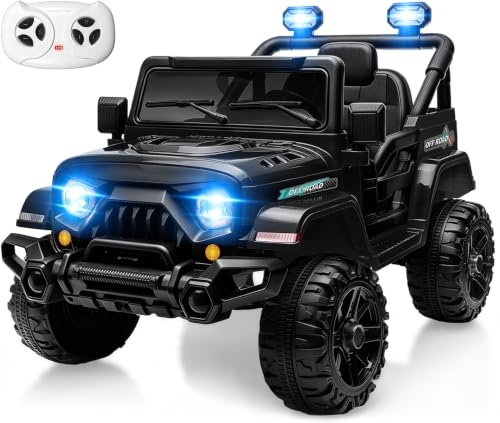
Children's Electric Jeep with Remote Control: The Complete Parent's Guide
Everything you need to know before choosing a ride-on jeep for your child — from parental remote features and battery performance to safety standards, age suitability, and long-term durability.
Jump to Buying GuideA children's electric jeep with remote control is one of the most exciting ride-on toys a child can own. It combines the thrill of driving with the reassurance of parental supervision, making it a popular choice for families with toddlers and young school-age kids. But with so many models on the market, choosing the right one requires understanding the features that genuinely matter.
This guide walks you through everything — how the remote control works, what age range is appropriate, which safety features to prioritize, and how to match a jeep to your child's developmental stage. By the end, you will have a clear picture of which type of ride-on jeep fits your family best.
What Is a Children's Electric Jeep with Remote Control?
A children's electric jeep with remote control is a battery-powered ride-on vehicle styled after a classic off-road jeep. Unlike traditional ride-ons that rely solely on the child's pedal input, these models include a handheld remote that lets a parent or caregiver take over steering and speed when needed.
This dual-control design makes them especially valuable for younger children who may not yet have the coordination to steer safely on their own. The child can practice driving while the parent retains the ability to intervene instantly. As the child grows more confident, the remote can be set aside and manual driving takes over.
Who Are These Jeeps For?
- Toddlers and preschoolers (roughly 3 to 5 years) who are new to ride-on vehicles and need parental guidance.
- Young school-age children (roughly 6 to 8 years) who can drive independently but still benefit from a safety override.
- Families with mixed-age children, where one remote can assist a younger sibling while an older child drives.
If you are exploring the broader category of powered ride-ons, our overview of children's battery-operated ride-on vehicles covers the full landscape of options, from jeeps and cars to trucks and go-karts.
How the Parental Remote Control Works
The remote is the defining feature of this category, and understanding how it functions will help you evaluate different models. Most remotes operate on a 2.4GHz wireless frequency, which provides a stable connection with minimal interference from other household devices.
Typical Remote Functions
- Forward and reverse — the parent can move the jeep in either direction.
- Left and right steering — the remote overrides the steering wheel input.
- Emergency stop — an immediate brake function that halts the jeep.
- Speed selection — some remotes offer multiple speed modes, letting parents limit top speed.
- Override priority — the remote typically takes precedence over the child's pedal and steering input.
On most models, the remote is paired to a single jeep, and some support pairing multiple remotes for shared supervision. Higher-end models may include a digital display on the remote showing battery level and current speed mode.
Why the Remote Matters for Safety
Young children have limited spatial awareness and reaction time. A parental remote lets you stop or redirect the jeep instantly if a child steers toward an obstacle, a slope, or another person. This layer of control is what makes electric jeeps suitable for children as young as three, who would otherwise be too young for independent driving.
Age Suitability & Developmental Fit
Most manufacturers recommend a minimum age of three years for electric jeeps with remote control, though the ideal starting age depends on the child's size and maturity. Here is a practical breakdown:
| Age Range | Driving Mode | What to Look For |
|---|---|---|
| 3 to 4 years | Fully remote-controlled | Low speed limit, seat belt, soft-start, stable base |
| 5 to 6 years | Remote with manual override | Adjustable speed, responsive steering, durable tires |
| 7 to 8 years | Mostly manual driving | Higher speed options, rugged suspension, larger seat |
Weight limits also matter. Most jeeps support a maximum load of around 30 to 40 kg (roughly 66 to 88 lbs), which covers the recommended age range comfortably. Always check the specific model's weight capacity before purchasing.
For families with older children who prefer manual control, a child's electric go-kart or a children's electric car with rubber tires may be a better developmental fit.
Key Features to Compare
Not all electric jeeps are built the same. The following features have the biggest impact on usability, safety, and longevity:
Motor and Battery
- Motor power — measured in watts, typically 6V, 12V, or 24V systems. Higher voltage generally means more torque and better performance on uneven surfaces.
- Battery capacity — determines runtime. Higher-capacity batteries deliver longer driving sessions before recharging.
- Charging time — most models require 8 to 12 hours for a full charge.
Safety Features
- Seat belt — a three-point or lap belt is essential for younger riders.
- Speed limiter — lets you cap top speed for beginners.
- Soft-start and soft-stop — prevents sudden jolts that can startle young children.
- Non-slip pedals and textured tires — improve grip and control.
Comfort and Durability
- Suspension — improves ride quality on grass, gravel, and uneven pavement.
- Tire type — rubber tires offer better traction and longevity than plastic.
- Seat size and padding — ensures comfort during longer play sessions.
- Weather-resistant materials — extends the jeep's lifespan for outdoor use.
If your child is also interested in smaller motorized vehicles, our guide to children's RC cars covers remote-controlled options that complement a ride-on jeep.
Market Tiers: Entry-Level to High-End
Electric jeeps fall into distinct market tiers, each with a different balance of features, build quality, and performance. Understanding these tiers helps you match a jeep to your expectations without over- or under-buying.
| Tier | Typical Characteristics | Best For |
|---|---|---|
| Entry-Level | 6V or basic 12V system, plastic tires, single speed, simple remote | First-time riders, toddlers, occasional use |
| Mid-Range | 12V system, rubber tires, two-speed remote, suspension on some models | Families wanting a balance of features and durability |
| High-End Tier | 24V system, full suspension, multi-speed remote, premium materials, LED lights, audio | Frequent outdoor use, older children, long-term investment |
Entry-level models are a solid starting point for a first ride-on, while mid-range jeeps tend to offer the best balance for most families. High-end tier models are worthwhile investments for households that plan to use the jeep regularly on varied terrain or pass it down between siblings.
Safety Standards & Best Practices
Electric jeeps are generally safe when used as intended, but supervision and proper setup are essential. Keep the following in mind:
Before First Use
- Read the manufacturer's manual and follow all assembly instructions carefully.
- Charge the battery fully before the first ride.
- Test the remote's range and emergency stop function in an open area.
- Confirm the seat belt and speed limiter are working correctly.
During Play
- Always supervise children, especially those under six.
- Keep the jeep on flat, paved, or grassy surfaces — avoid slopes, stairs, and traffic areas.
- Ensure children wear closed-toe shoes and remain seated while driving.
- Keep the remote within reach at all times when a younger child is driving.
Storage and Charging
- Store the jeep in a dry, covered area when not in use.
- Do not leave the battery fully depleted for extended periods.
- Charge the battery in a well-ventilated area, away from flammable materials.
For broader outdoor play equipment that complements a ride-on jeep, explore our resources on children's outdoor play equipment and children's play houses.
Step-by-Step Buying Guide
Use this checklist to narrow down your options and make a confident decision:
- Confirm the age and weight range. Match the jeep to your child's current size, not just their age. A jeep that is too large can be unsafe; one that is too small will be outgrown quickly.
- Decide on the voltage system. 6V models suit toddlers on flat surfaces, 12V models offer more versatility, and 24V models are best for older children and uneven terrain.
- Evaluate the remote. Look for 2.4GHz frequency, emergency stop, and speed-limit controls. A responsive remote is the most important safety feature for younger riders.
- Check the tire and suspension setup. Rubber tires and suspension improve traction, comfort, and durability — especially if the jeep will be used on grass or gravel.
- Verify safety features. Seat belt, soft-start, speed limiter, and non-slip pedals should all be present.
- Consider storage and charging logistics. Measure your storage space and confirm the charging time fits your routine.
- Review the build quality. Look for reinforced frames, weather-resistant coatings, and solid assembly. A durable construction is a long-term investment, especially for families with multiple children.
If you are also considering a simpler first ride-on for a younger toddler, a child's ride-on car or a children's toy car can be a good stepping stone before moving up to a full electric jeep.
Battery Care & Maintenance
Proper maintenance extends the life of your jeep and keeps it running smoothly for years. Follow these practices:
- Charge after each use. Avoid letting the battery sit depleted for long periods.
- Store in a dry place. Moisture is the enemy of electronic components and battery terminals.
- Clean the tires and body regularly. Wipe down with a damp cloth; avoid hosing down electrical parts.
- Inspect the remote and wiring. Check for loose connections or worn cables periodically.
- Follow the manufacturer's charging schedule. Overcharging or undercharging both shorten battery life.
For related maintenance guidance, see our resources on chargers for 6-volt ride-on toys and general toy longevity tips.
Frequently Asked Questions
What age is suitable for a children's electric jeep with remote control?
Most models are designed for ages 3 to 8, with a common sweet spot around 3 to 6 years old. Younger toddlers benefit most from the parental remote, while older kids gradually take over manual driving. Always check the manufacturer's age recommendation and weight limit.
How does the remote control work on a kids electric jeep?
The parental remote typically overrides the child's steering and pedal input, allowing a parent to control forward, reverse, left, and right movement. Most remotes operate on a 2.4GHz frequency for stable, interference-free control and include an emergency stop function.
How long does the battery last on a children's electric jeep?
Battery runtime usually ranges from 45 to 90 minutes of continuous driving depending on battery capacity, terrain, and the child's weight. Premium models with higher-capacity batteries tend to deliver longer sessions, while entry-level models may need more frequent charging.
Are children's electric jeeps safe?
Yes, when used correctly. Look for models with a parental remote, seat belt, speed limiter, and soft-start/soft-stop technology. Always supervise children during play, keep them away from traffic and slopes, and follow the manufacturer's safety guidelines.
Ready to Choose the Right Electric Jeep?
Compare features, tiers, and safety options in our curated selection of ride-on jeeps with parental remote control.
View Recommended Models