Wooden Swing Set with Slide and Climbing Wall: The Complete Backyard Guide
Everything you need to know before choosing a wooden swing set with slide and climbing wall — from frame materials and safety features to assembly planning and long-term care. Research-backed and parent-tested.
Jump to Buying GuideA wooden swing set with slide and climbing wall is one of the most complete outdoor play investments you can make for a growing family. Instead of buying separate pieces — a swing frame, a slide, a climbing structure — a combined wooden playset brings swinging, sliding, and climbing into one compact footprint. That means more play value per square foot of backyard, and fewer individual structures to maintain or store.
But a combined playset is also a bigger commitment than a simple A-frame swing. The frame must support three distinct play zones, the wood needs to withstand years of weather, and the climbing wall introduces safety considerations that a basic swing set never raises. This guide walks you through exactly what matters: frame construction, wood species, slide design, climbing wall safety, age suitability, assembly planning, and long-term care. By the end, you will know precisely which configuration fits your family and your yard.
What This Guide Covers
- Why Choose a Combined Wooden Playset
- Anatomy: Frame, Slide & Climbing Wall
- Wood Species & Construction Quality
- Slide Types & Safety
- Climbing Wall Features & Safety
- Age Suitability & Developmental Benefits
- Market Tiers: Entry-Level to Premium
- Safety Checklist & Installation Tips
- Long-Term Care & Maintenance
- Buying Guide Summary
- Frequently Asked Questions
Why Choose a Combined Wooden Playset?
A dedicated wooden swing set with slide and climbing wall solves a specific problem: most backyards cannot accommodate three separate structures without turning into a cluttered obstacle course. A combined unit consolidates the play experience into a single engineered frame, and that consolidation brings several practical benefits.
- More play value in less space. One footprint delivers three distinct activities, which matters greatly in smaller yards or urban gardens.
- Natural aesthetics. Wood blends into garden landscaping far better than metal or plastic, and many families prefer the warm, natural look in a backyard setting.
- Developmental coverage. Swinging builds core and grip strength, sliding offers sensory and vestibular input, and climbing develops coordination and problem-solving. A combined unit supports gross motor skills across multiple planes of movement.
- Longer usable lifespan. Children use swings, slides, and climbing walls from toddlerhood through the early school years, so a single well-built unit can serve a family for many seasons.
- Fewer anchoring points. A single engineered frame with proper ground anchors is easier to secure safely than three independent structures.
If your yard is generous and your children are at very different ages, separate structures can still make sense. But for most families with children in the 3–10 range, a combined wooden playset is the more efficient and more engaging choice.
Anatomy of a Wooden Swing Set with Slide and Climbing Wall
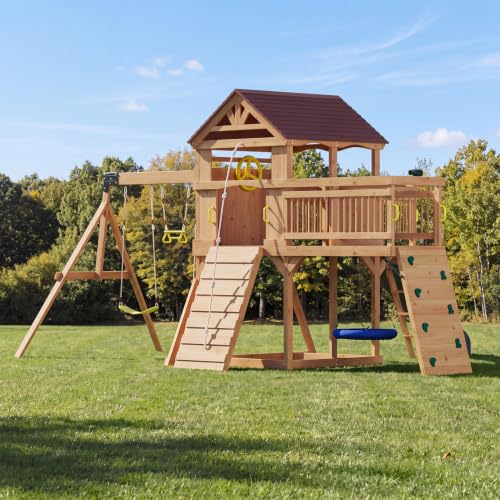
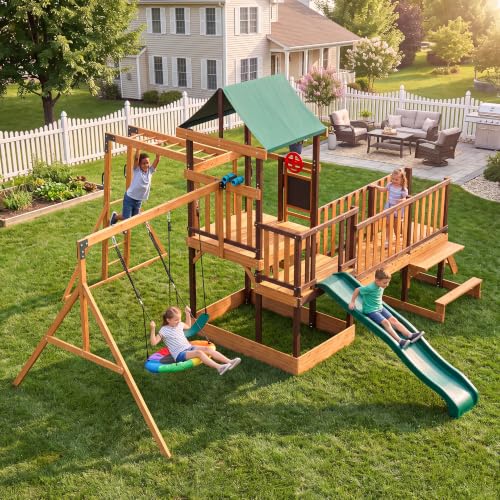
Understanding the main components helps you evaluate quality when comparing models. A typical combined wooden playset consists of five structural zones.
1. The Main Frame (Tower and Legs)
The tower is the central load-bearing structure. Look for 4x4 posts (or equivalent thick timber) at the corners, with cross-bracing on at least two sides. The frame should use through-bolts or heavy-duty hardware rather than screws alone at the primary joints. A well-engineered frame distributes the swing load across the tower, so the swing beam is not relying on a single attachment point.
2. The Swing Beam and A-Frame
The swing beam spans the top of the structure and carries the swing hangers. On combined playsets, the beam is often an extension of the tower or supported by an A-frame leg set. Check that the beam is reinforced at the hanger points and that the A-frame legs have wide, ground-anchored feet. A wobbling swing beam is the most common complaint on lower-quality playsets, and it usually traces back to undersized posts or insufficient bracing.
3. The Slide
Slides on combined wooden playsets are typically high-density polyethylene (HDPE) or blow-molded plastic. HDPE slides are durable, UV-resistant, and smooth. Some premium sets use stainless steel or powder-coated metal slides, which are fast and long-lasting but heat up in direct sun. Slide length usually ranges from about 6 to 10 feet, and the slide entry height determines the overall tower height.
4. The Climbing Wall
The climbing wall is usually mounted on one side of the tower, angled at roughly 30–45 degrees, with molded plastic climbing holds bolted through the wood. Quality walls use holds with rounded edges and deep finger ledges, mounted with recessed hardware so nothing protrudes dangerously. Many models include a climbing rope for additional grip support.
5. The Upper Deck and Guardrails
The deck connects the slide and climbing wall to the tower. Full-perimeter guardrails with vertical slats or mesh are essential for younger children. Check that the gap between rails is small enough to prevent a child from slipping through, and that the deck surface has traction strips or a textured finish.
Quick check: Before buying, confirm that the playset includes ground anchors (auger-style or stake-style), full-perimeter guardrails on the upper deck, and recessed hardware on the climbing wall. These three details separate serious playsets from decorative ones.
Wood Species & Construction Quality
The wood determines how long the playset lasts and how much maintenance it demands. Most wooden playsets use one of four species, each with distinct characteristics.
| Wood Species | Natural Rot Resistance | Maintenance Profile | Best For |
|---|---|---|---|
| Cedar | High — naturally resistant to rot and insects | Low; can be left untreated or lightly sealed | Families wanting low-maintenance, natural aesthetics |
| Redwood | High — excellent natural durability | Low to moderate; periodic sealing extends life | Premium playsets in varied climates |
| Fir / Pine (treated) | Moderate — relies on pressure treatment | Moderate; re-seal every 1–2 seasons | Entry-level and mid-range playsets |
| Hemlock | Moderate — often used with treatment | Moderate; annual inspection recommended | Balanced-tier playsets |
Hardware Matters as Much as Wood
Even the best cedar will fail if the hardware rusts through. Look for galvanized or powder-coated steel hardware, and confirm that bolts — not just screws — are used at structural joints. Swing hangers should be rated for dynamic loads and should pivot freely. On climbing walls, hold bolts should be stainless or coated to prevent corrosion at the wood interface.
Joinery and Bracing
Inspect how the frame is joined. High-quality playsets use through-bolts with washers at load-bearing connections, plus diagonal bracing on the tower legs. Cheaper units rely on screws and brackets, which loosen over time as the wood expands and contracts. If you are buying online, product photos of the joints are often the most revealing quality signal available.
Slide Types & What to Look For
The slide is usually the first feature children gravitate toward, so its design deserves close attention.
Plastic (HDPE) Slides
HDPE slides dominate the combined wooden playset category. They are smooth, UV-stable, and resistant to cracking. A quality HDPE slide has molded side rails at least 4 inches high, a rounded entry lip, and a gradual run-out at the bottom so children decelerate rather than launch. Look for slides with a wavy or straight profile — wavy slides slow descent slightly and add fun, while straight slides are faster.
Metal Slides
Stainless steel and powder-coated metal slides are fast and extremely durable, and they are common on premium playsets. The trade-off is heat: metal slides in direct sun can become uncomfortably hot, so consider placement or shade. Metal slides also require a longer run-out zone at the base.
Slide Safety Details
- Entry height: Slides starting higher than about 5 feet should have a hood or enclosed top section for younger children.
- Run-out zone: Keep at least 6 feet of clear space beyond the slide exit, free of fences, trees, or hard landscaping.
- Side rails: Continuous high side rails along the full length of the slide.
- Surface temperature: Check the slide surface on hot days before children use it, especially with metal slides.
Climbing Wall Features & Safety
The climbing wall is what elevates a swing set from a simple backyard toy into a genuine physical challenge. It is also the component that most deserves careful evaluation.
Angle and Height
Most residential climbing walls are angled between 30 and 45 degrees. A shallower angle is easier for younger or less experienced climbers; a steeper angle adds challenge for older children. Wall height typically ranges from 4 to 7 feet. For children under 6, a lower wall with a gentler angle is the safer starting point.
Climbing Holds
Look for holds with rounded edges and deep, comfortable finger ledges. Holds should be mounted with recessed bolts so nothing protrudes to catch clothing or skin. A good wall has a mix of large jug-style holds and smaller footholds, arranged so that a child can find a route without frustration. Some playsets include adjustable holds, which let you reconfigure difficulty as children grow.
Climbing Rope and Fall Zone
Many climbing walls include a knotted climbing rope anchored at the top. Confirm the rope is properly rated, securely anchored, and knotted at regular intervals. Beneath the wall, plan for a soft fall zone — engineered wood chips, rubber mulch, or a rubber mat — extending at least 6 feet from the base. This is not optional; it is the single most important safety measure for the climbing wall.
Supervision note: Climbing walls are appropriate for children who can follow instructions and understand height risk. For toddlers and preschoolers, the climbing wall should be treated as a supervised activity until they demonstrate reliable grip strength and body awareness. If you are choosing a first playset for a very young child, consider a wooden swing and slide set without a climbing wall, then upgrade later.
Age Suitability & Developmental Benefits
Most combined wooden playsets are rated for ages 3 to 10, with some premium models extending to 12. The right configuration depends on the ages of your children and how long you expect the playset to serve the family.
Preschoolers (Ages 3–5)
At this stage, the slide and the lower climbing wall are the main attractions. Swings should be bucket-style or full-buckle for security. Choose a playset with a lower deck height, full guardrails, and a gentle climbing wall angle. This age group benefits enormously from the gross motor development that swinging and climbing provide.
Early School Age (Ages 6–8)
This is the sweet spot for a combined wooden playset. Children have the strength and coordination to use the climbing wall independently, the slide becomes a launch pad for imaginative games, and swings are used for genuine momentum play. Many families find that a playset bought when a child is 5–6 remains in active use through age 9 or 10.
Older Children (Ages 9–12)
Older children use playsets differently — more social play, more creative scenario games, and more challenging climbing routes. If your children are already in this range, look for a playset with a steeper climbing wall, a taller slide, and a sturdy swing beam rated for heavier dynamic loads. You may also want to explore broader toys for 9–12 year olds to complement the playset.
Market Tiers: Entry-Level to Premium
Combined wooden playsets fall into three broad market tiers. Rather than quoting figures, this section describes what each tier typically delivers so you can match the playset to your expectations.
| Tier | Typical Construction | Feature Set | Best For |
|---|---|---|---|
| Entry-Level | Treated fir or pine, screw-and-bracket joinery, lighter posts | Basic slide, short climbing wall, two swing positions, minimal guardrails | Families testing whether a playset suits their yard and children |
| Mid-Range | Cedar or treated pine, through-bolted joints, reinforced swing beam | Longer HDPE slide, angled climbing wall with quality holds, full guardrails, ground anchors included | Most families wanting a durable, long-serving playset |
| Premium | Select cedar or redwood, heavy-duty hardware, engineered bracing throughout | Extended slide, adjustable climbing holds, climbing rope, integrated shade or canopy options, commercial-grade swing hangers | Families prioritizing longevity, low maintenance, and expanded play features |
Mid-range playsets generally offer the strongest balance for most families: the frame is solid enough to last through multiple children, the climbing wall is safe and engaging, and the hardware will not loosen after a single season. Entry-level units can work well for a first playset or a smaller yard, provided you verify the bracing and anchoring. Premium units make sense when you intend the playset to be a permanent backyard fixture for many years.
Safety Checklist & Installation Tips
Outdoor playsets involve height, momentum, and multiple users — which means safety planning should happen before the first swing. Use this checklist during selection and installation.
Before You Buy
- Confirm the playset meets ASTM F1148 (home playground equipment) or your regional equivalent.
- Check the age rating and the maximum user weight for swings and the climbing wall.
- Verify that ground anchors are included — if not, plan to buy them separately.
- Measure your yard: allow a 6-foot fall zone around the entire structure, plus additional run-out beyond the slide.
During Installation
- Anchor the frame into the ground using auger anchors at every leg. A playset that can tip is the most serious outdoor play hazard.
- Install all guardrails and check that rail gaps are too narrow for a child's head or torso.
- Recess all climbing wall hardware so no bolt heads protrude.
- Place the playset on level ground, and add a shock-absorbing surface (wood chips, rubber mulch, or mats) beneath swings and the climbing wall.
- Keep the structure at least 6 feet from fences, walls, trees, and hard landscaping.
Ongoing Checks
- Inspect bolts, hangers, and swing chains at the start of each season and after storms.
- Check the wood for splinters, cracks, and rot, especially at ground contact points.
- Re-tighten hardware periodically — wood expands and contracts with weather.
- Replace worn swing seats and frayed ropes immediately.
Installation reality check: Combined wooden playsets are heavy and assembly typically takes 4–8 hours with two adults. Some retailers offer professional installation — if that option exists, it is often worthwhile for the anchoring and alignment alone. For a broader look at safe outdoor play structures, see our guide to wooden swing sets.
Long-Term Care & Maintenance
A wooden playset is a long-term outdoor investment, and a modest maintenance routine dramatically extends its service life.
Sealing and Staining
Cedar and redwood can be left natural, but a penetrating sealant every 1–2 years adds UV and moisture protection. Treated pine and fir benefit from re-sealing annually, especially in humid or rainy climates. Avoid painting over treated wood until it has fully cured, and never cover the playset with a tarp — trapped moisture accelerates rot.
Hardware and Moving Parts
Lubricate swing hangers and pivot points lightly once a season. Replace any bolt that shows rust pitting. Check climbing hold bolts for tightness — they loosen gradually under use. Ropes should be inspected for fraying and replaced at the first sign of wear.
Seasonal Preparation
Before winter, tighten all hardware and check anchoring. In snowy regions, remove swing seats to reduce load on the beam during heavy snow. In spring, do a full inspection before children resume use. If your family also enjoys other outdoor structures, our trampoline guide covers similar seasonal maintenance principles.
Buying Guide Summary
If you are deciding between models, prioritize these factors in order:
- Frame construction: Thick posts, through-bolts at structural joints, diagonal bracing. This is the foundation of everything else.
- Wood species: Cedar or redwood for low maintenance; treated pine or fir for a more involved maintenance routine at a lower tier position.
- Climbing wall safety: Rounded holds, recessed hardware, appropriate angle for your children's ages, and a planned soft fall zone.
- Slide quality: High side rails, gradual run-out, UV-stable material, and adequate clearance beyond the exit.
- Included safety features: Ground anchors, full guardrails, and age-appropriate swing seats.
- Assembly and anchoring plan: Confirm who will install it and how it will be anchored before delivery.
Families who prioritize durability and low maintenance usually land on mid-range cedar playsets. Families with very young children may prefer to start with a wooden swing and slide set and add a climbing wall later. And if your children are already moving into older age brackets, the playset can be complemented with other toys for 8 and 9 year olds to keep outdoor play varied.
Bottom line: A wooden swing set with slide and climbing wall delivers the broadest outdoor play value of any single backyard structure. Invest in the frame and the anchoring first, choose the climbing wall angle to match your children's ages, and commit to a simple seasonal maintenance routine. Do those three things, and the playset will serve your family for years.
Frequently Asked Questions
What age is a wooden swing set with slide and climbing wall suitable for?
Most combined wooden playsets are rated for ages 3 to 10. The slide and swings can be used by preschoolers with supervision, while the climbing wall is best suited to children around 5 and older who can follow safety instructions and have developed reliable grip strength. Always check the manufacturer's age rating for the specific model.
How much space do I need for a wooden playset with a slide and climbing wall?
Plan for the playset footprint plus a 6-foot fall zone on all sides, and additional clear run-out space beyond the slide exit. A typical combined playset needs a flat area of roughly 20 by 20 feet to be comfortably and safely installed, though exact requirements vary by model.
Is cedar or treated pine better for a wooden swing set?
Cedar is naturally rot- and insect-resistant and requires less maintenance, which makes it the preferred choice when longevity and low upkeep matter most. Treated pine is a solid alternative at a lower market tier but needs re-sealing more frequently. Both can last many years with proper anchoring and seasonal inspection.
How do I anchor a wooden swing set safely?
Use auger-style ground anchors at every leg, driven into the ground according to the manufacturer's instructions. Anchoring prevents tipping, which is the most serious hazard for outdoor playsets. Never rely on the weight of the structure alone, and never anchor into loose or recently disturbed soil without verifying stability.
What surface should go under the climbing wall and swings?
Use a shock-absorbing surface such as engineered wood chips, rubber mulch, or rubber play mats. The surface should extend at least 6 feet from the climbing wall base and beneath the swing area. Grass and bare soil do not provide adequate fall protection at height.
How long does assembly take, and can I install it myself?
Most combined wooden playsets take 4 to 8 hours to assemble with two adults. The task is manageable for confident DIYers, but the anchoring and leveling steps are critical. If the retailer offers professional installation, it is often worthwhile, especially for larger premium models.