Sitting Up Toys for 3 Month Old: A Complete Guide
Your baby is starting to hold their head steady and show curiosity about the world. Discover which sitting up toys support this milestone safely and which ones to skip for now.
Quick reality check: Most 3-month-olds are not yet sitting independently. They are building the core strength, head control, and neck stability needed for sitting. The right toys for this stage support pre-sitting skills — floor play, tummy time, and supported sitting — rather than assuming full sitting ability. This guide helps you choose age-appropriate, safety-tested options that grow with your baby.
Why Sitting Up Toys Matter at 3 Months
At three months, your baby is transitioning from the newborn stage into a more interactive phase. They can typically hold their head up briefly, track moving objects, and start reaching for things. Sitting up toys at this age serve two main purposes: they encourage supported sitting practice and they provide sensory and visual stimulation during floor play.
According to pediatric developmental guidelines, independent sitting usually emerges between 4 and 7 months. So the "sitting up toys" you choose at 3 months should be tools that help your baby build toward that milestone — not devices that force them into a sitting position before they're ready. Toys that promote tummy time, reaching, batting, and visual tracking are ideal. You can also explore related categories like teething toys and sensory squeeze toys that complement this developmental stage.
Key Features to Look For
When shopping for sitting up toys for a 3-month-old, focus on these qualities rather than flashy features. The best toys at this stage are simple, safe, and designed to encourage natural movement.
Supportive Floor Play
Activity mats and play gyms with dangling toys encourage your baby to reach, bat, and track objects while lying on their back or during supervised tummy time.
Head & Neck Support
If using a supported seat, look for models with firm back support and a wide base. Always supervise and limit session time.
High-Contrast Visuals
Black-and-white patterns, bright primary colors, and contrasting shapes are easier for young eyes to process and help develop visual tracking.
Safe, Non-Toxic Materials
Babies at this age put everything in their mouths. Choose toys labeled BPA-free, phthalate-free, and made from food-grade or natural materials.
Easy-to-Grasp Shapes
Lightweight rings, soft blocks, and textured balls help your baby practice the palmar grasp, a key fine motor milestone.
No Small Parts
Avoid anything with detachable small pieces, loose strings, or buttons that could pose a choking hazard. Everything should be securely attached.
Best Types of Sitting Up Toys for 3 Month Olds
Rather than a single "sitting up toy," the ideal setup at this age is a combination of floor-based play items. Here are the most useful categories, ranked by developmental value.
1. Baby Play Gyms and Activity Mats
A play gym with a padded mat and overhead arches is arguably the most valuable purchase at 3 months. It supports back play, tummy time, and visual tracking. Look for models with removable, machine-washable mats and toys that can be repositioned. Some play gyms convert into a seated play station later, extending their usefulness. Pair a play gym with a simple shape sorter introduction (supervised, with large pieces) to start early problem-solving exposure.
2. Tummy Time Support Toys
Tummy time is the foundation for sitting. Toys like a soft tummy time pillow with a built-in mirror or a water-filled sensory mat encourage your baby to lift their head and engage their core. These are essential for building the strength needed to sit independently. A sensory table setup is too advanced for now, but the concept of sensory exploration starts with simple textured mats and mirrors.
3. Supported Seats (With Caution)
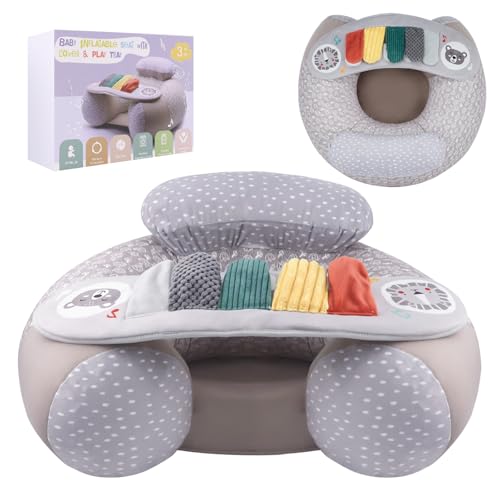
Some parents use a floor seat with a high back and tray for short, supervised sessions. At 3 months, this should be limited to brief periods and only if your baby has good head control. Never leave a baby unattended in a supported seat, and avoid using it as a substitute for floor play. The seat should not force the baby into a position they cannot hold themselves.
4. Soft, Textured Toys for Grasping
Lightweight fabric balls, crinkle toys, and soft rings help your baby practice reaching and grasping. These are perfect for floor play and can be dangled from a play gym. A sensory squeeze toy with different textures adds tactile variety.
5. Mirrors and High-Contrast Cards
A baby-safe mirror attached to a play gym or propped up during tummy time encourages self-recognition and visual focus. High-contrast black-and-white cards are also excellent for this age. These are simple, low-cost, and highly effective developmental tools.
What to Avoid at 3 Months
- Standing walkers or jumpers: These are unsafe and not recommended by pediatric organizations for infants.
- Toys with small detachable parts: Choking hazard risk is high at this mouthing stage.
- Heavy or rigid sitting devices: Avoid anything that forces the baby into a seated position without proper head control.
- Screen-based toys: The American Academy of Pediatrics recommends avoiding screen time for infants under 18 months (except video chatting).
- Toys with long strings or cords: Strangulation risk.
Tier-Based Comparison of Sitting Up Toy Categories
To help you prioritize, here's a relative comparison of toy categories by developmental impact and versatility. This uses a neutral tier system rather than any numeric or currency-based measure.
| Tier | Toy Category | Best For |
|---|---|---|
| Essential Tier | Play gym / activity mat | Back play, tummy time, visual tracking, reaching |
| Essential Tier | Tummy time pillow with mirror | Core strength, head control, self-recognition |
| Balanced Tier | Soft grasping toys (balls, rings, crinkle) | Fine motor practice, tactile exploration |
| Balanced Tier | High-contrast cards & baby mirror | Visual development, focus, curiosity |
| Top-Tier (Optional) | Supported floor seat (supervised only) | Brief supported sitting practice with head control |
Safety Guidelines for Sitting Up Toys
Always Supervise
Never leave your baby alone with any toy or support device. At 3 months, babies can roll unexpectedly and are vulnerable to suffocation and falls.
Follow Age Labels
Check the manufacturer's age recommendation on every toy. If a toy says "6 months+," it is not appropriate for a 3-month-old, even if it looks simple.
Check for Recalls
Regularly check recall databases for any toys you own. Register products with manufacturers to receive safety notices.
Limit Supported Sitting Time
If using a floor seat, keep sessions brief (10–15 minutes) and only when your baby can hold their head steadily. Floor play is always preferable.
How to Encourage Sitting Progression Naturally
The best "sitting up toy" is actually a combination of daily floor play and tummy time. Here's a simple daily routine that supports the sitting milestone:
- Morning tummy time (5–10 minutes): Place a mirror or high-contrast card in front of your baby to encourage head lifting.
- Back play on a gym (15–20 minutes): Dangle toys at different heights and sides to encourage reaching and head turning.
- Supported sitting practice (brief, supervised): Sit behind your baby with a pillow for support, or use a floor seat for short sessions once head control is solid.
- Sensory exploration: Offer textured toys and safe teethers to mouth and grasp.
As your baby grows, you'll naturally transition to more advanced toys. Many parents find it helpful to explore broader categories like sensory stress relief toys for older siblings, or plan ahead with top toys for 1-year-olds once sitting is mastered.
Frequently Asked Questions
Can a 3-month-old sit in a Bumbo-style seat?
Only if your baby has strong, steady head control and only for short, supervised periods. Many pediatric physical therapists recommend limiting seated device use and prioritizing floor play. Always follow the manufacturer's age and weight guidelines.
What toys help a 3-month-old learn to sit?
Toys that encourage tummy time, reaching, and head turning are the most helpful. A play gym, a tummy time mirror, and soft grasping toys are the top choices. There is no single toy that teaches sitting — it's a developmental milestone that emerges with practice and strength.
How long should tummy time be at 3 months?
Aim for 15–30 minutes total per day, broken into short sessions of 3–5 minutes each. Always supervise and stop if your baby becomes distressed.
Are activity centers safe for 3-month-olds?
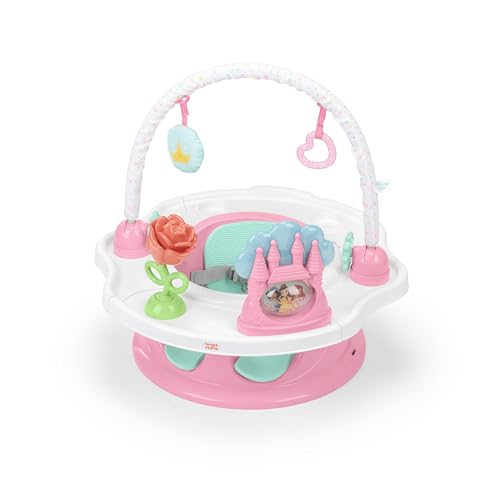
Stationary activity centers are generally recommended for babies who can hold their head up well, often around 4–6 months. At 3 months, floor play is safer and more developmentally appropriate.
When should I introduce a floor seat?
Most manufacturers recommend floor seats for babies who can hold their head up independently, typically around 4 months. Check the specific product guidelines and consult your pediatrician if unsure.