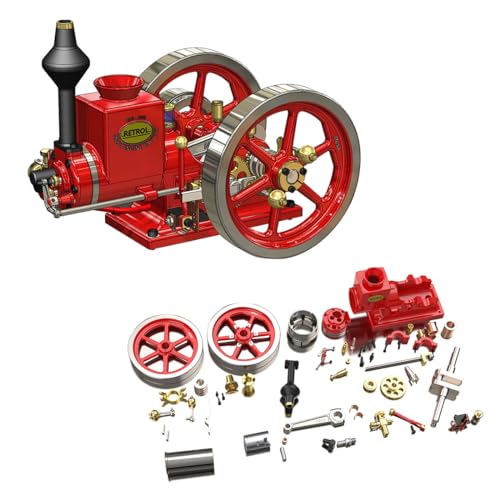
Scale Model Hit and Miss Engines for Sale
Step into the fascinating world of miniature engineering. These working scale models faithfully recreate the rhythmic, popping heartbeat of vintage stationary engines — a must-have for collectors, machinists, and anyone captivated by mechanical history.
Explore Available ModelsWhy collectors seek hit and miss engines: The distinctive "hit and miss" firing pattern — where the engine fires only when flywheel speed drops below a governed threshold — creates that unmistakable syncopated rhythm. Authentic scale models capture this behavior with working governors, igniters, and flywheels, transforming a shelf piece into a living demonstration of early industrial engineering.
What Makes a Great Scale Model Hit and Miss Engine?
A quality miniature hit and miss engine is far more than a decorative object. The best examples are precision-machined, fully functional machines that run on fuel just like their full-size counterparts. When evaluating models for sale, focus on these core characteristics:
- Working governor mechanism: The defining feature. A true hit and miss model must exhibit the latch-out behavior where the exhaust valve is held open and ignition is skipped until rpm drops.
- Material quality: Cast iron flywheels, bronze bushings, and high-grade steel crankshafts signal durable construction. Look for models with properly machined bearing surfaces.
- Ignition system: Either a precise electronic ignition or a faithful mechanical igniter. Both are valid, but the ignition must be reliable and adjustable.
- Fit and finish: Smooth operation without binding, clean paint or bare-metal finishes, and attention to detail in the small components like oilers, mufflers, and fuel tanks.
- Documentation: Assembly manuals, running instructions, and parts diagrams add long-term value and make maintenance far easier.
Understanding the Tiers of Scale Model Engines
The miniature engine market spans a wide spectrum of craftsmanship and complexity. To help you orient your search, here is a consistent tier framework used throughout this guide:
Starter Models
Simplified designs with fewer moving parts, often using aluminum castings and basic ignition. Ideal for first-time builders or casual display. These models reliably demonstrate the hit and miss principle without demanding extensive machining experience.
Balanced Models
The sweet spot for most hobbyists. Cast iron flywheels, refined governors, and smoother bearing surfaces deliver a more authentic running experience. These models typically run longer between adjustments and offer better long-term reliability.
Premium & Professional-Grade
Museum-quality replicas with fully machined components, faithful scale proportions, and exceptional fit and finish. Often built in small batches or by individual craftsmen. These are long-term investments for serious collectors.
Key Features to Compare Across Models
Use this comparison framework to evaluate any miniature hit and miss engine you encounter. Each feature directly affects both the running experience and long-term satisfaction.
| Feature | Why It Matters | What to Look For |
|---|---|---|
| Governor Type | Controls the hit and miss rhythm | Adjustable spring tension; smooth latch-out action |
| Flywheel Material | Influences momentum and running stability | Cast iron preferred for authentic feel and smooth operation |
| Ignition System | Reliability and ease of starting | Electronic ignition with timing adjustment; or well-made mechanical igniter |
| Cooling Method | Affects sustained running time | Working water hopper or air-cooled finning for longer sessions |
| Fuel Tank | Convenience and authenticity | Integrated tank with shut-off valve; leak-free fittings |
| Base & Mounting | Stability during operation | Heavy, vibration-dampening base; pre-drilled mounting holes |
| Documentation | Ease of assembly and maintenance | Illustrated manual, parts list, tuning guide |
Ideal for Collectors, Machinists, and Hobbyists
Who buys scale model hit and miss engines? The audience is broader than you might expect. Retired engineers relive the machines of their youth. Model-making enthusiasts enjoy the assembly and tuning process. Educational settings use working models to demonstrate thermodynamic cycles and governor principles. And a growing number of collectors appreciate these engines as functional art — pieces that invite conversation and reward careful observation.
If you enjoy mechanical pursuits, you may also appreciate other precision hobby categories. For hands-on builders, rubber band powered balsa wood airplane kits offer a similarly satisfying blend of craftsmanship and flight. Those drawn to robotics and programmable mechanisms might explore robot building kits as a complementary interest.
Display and Maintenance Considerations
These models deserve a proper setting. A stable, level surface away from drafts ensures consistent governor behavior. Keep fuel fresh and follow the manufacturer's break-in procedure if the engine is new. After running, drain residual fuel and apply a light oil film to bare metal surfaces to prevent corrosion. With proper care, a quality model will run reliably for decades and become a cherished heirloom.
For families introducing younger enthusiasts to mechanical hobbies, the discipline of maintaining a model engine builds patience and precision. Similar hands-on values appear in science kits for older kids, which nurture curiosity about how things work.
Frequently Asked Questions
The best scale models are fully functional. They run on model fuel, exhibit the true hit and miss firing pattern, and can be tuned for smooth operation. Entry-level kits may require more assembly and adjustment, while premium models arrive ready to run after basic setup.
Assembly difficulty varies by tier. Entry-level models often require only basic hand tools and careful reading of the manual. Mid-range and high-end models may demand familiarity with small fasteners, bearing fit, and ignition timing. Running any model requires patience and a willingness to follow tuning procedures.
Regular maintenance includes keeping the ignition contacts clean, lubricating moving parts per the manual, using fresh fuel, and storing the engine in a dry environment. After each running session, wipe down exposed metal surfaces with an oiled cloth. Periodically check fastener tightness, especially on the flywheel and governor linkages.
Only in a well-ventilated area. Like any combustion engine, they produce exhaust gases. A garage with the door open, a workshop with an exhaust fan, or an outdoor patio are suitable. Never run a fuel-powered model in a closed, unventilated room.
High-end models typically feature fully machined components (rather than cast or simplified parts), more faithful scale proportions, superior surface finishes, and tighter tolerances. They often include working accessories like functional oilers and water hoppers. Mid-range models deliver reliable operation and good build quality but may simplify certain cosmetic or secondary details.