
Metal Swing Set with Slide: The Complete Guide to Choosing the Perfect Backyard Playset
A metal swing set with slide is one of the most rewarding investments you can make for your family's outdoor space. It combines the timeless thrill of swinging with the joy of sliding, all built on a sturdy steel frame that stands up to years of active play. This guide walks you through everything you need to know — from safety and durability to assembly and long-term care — so you can choose with confidence.
Explore Top PicksWhy Choose a Metal Swing Set with Slide?
Parents researching backyard playsets quickly discover three main frame materials: wood, plastic, and metal. Each has its place, but metal — particularly powder-coated steel — has earned a loyal following for good reason. A metal swing set with slide delivers a combination of strength, low maintenance, and long-term reliability that few other materials can match.
Unmatched Structural Strength
Steel frames are engineered to handle the dynamic loads of swinging, climbing, and sliding. A well-constructed metal swing set with slide uses reinforced joints and thick-gauge tubing that resist bending and wobbling even when multiple children play at once. This rigidity translates directly into a safer play experience, because a stable frame means fewer tips and less sway during vigorous activity.
Low Maintenance, High Durability
Wood playsets require periodic sealing, staining, and inspection for rot or splintering. Metal frames, by contrast, arrive with a weather-resistant coating — typically a powder-coated finish — that shrugs off rain, sun, and temperature swings. A high-grade steel frame with a rust-proof finish can look and perform well for many seasons with nothing more than an occasional rinse and a visual check of the hardware.
Consistent Performance Over Time
Unlike wood, which can warp or crack, or plastic, which can become brittle under prolonged UV exposure, a quality metal frame maintains its structural integrity. The swing hangers stay aligned, the slide stays securely attached, and the overall playset remains as solid in year five as it was in year one. For families who view a swing set as a long-term investment, this consistency is a major advantage.
Key Features to Evaluate Before You Buy
Not all metal swing sets with slides are created equal. The features below separate a playset that will serve your family well from one that may disappoint within a season or two. Use this checklist as your evaluation framework.
Frame Gauge and Joint Construction
The thickness of the steel tubing — often expressed as gauge — directly affects rigidity and load capacity. Thicker tubing with welded or bolted reinforced joints provides a more solid build. Look for sets that specify their frame construction and use cross-bracing or A-frame designs for added stability. A heavy-duty frame will feel solid when you push on it; a flimsy one will flex noticeably.
Swing Seat Types and Chain Quality
Most metal swing sets with slides include two or more swing positions. Belt swings (the flexible strap style) are comfortable and safe for a wide age range. Full-bucket swings suit toddlers who need full-body support. The chains should be coated — either with plastic sleeves or a vinyl coating — to protect little hands and prevent rust. Check that the swing hangers use sealed bearings or durable bushings for smooth, quiet motion.
Slide Design and Material
The slide is often the most-used component. Plastic slides are standard and should be UV-stabilized to resist fading and cracking. Look for a slide with a gentle slope for younger children and molded side rails for safety. Some premium sets offer a longer slide or a wavy design for extra fun. Ensure the slide connects securely to the platform with no gaps that could trap fingers or clothing.
Platform and Ladder Safety
If the set includes a climbing platform or a slide tower, check the height and the ladder design. A step ladder with wide, textured steps and a handrail is easier and safer for young children than a vertical rung ladder. The platform should have a secure guardrail or protective barrier. Non-slip surfaces on the steps are a valuable detail.
Anchor System
Every metal swing set with slide should be anchored to the ground. Ground anchors — stakes or augers that secure the legs — prevent tipping and keep the set stable during energetic play. Some sets include anchors; others require them to be purchased separately. Never skip anchoring, even on flat ground.
| Feature | Why It Matters | What to Look For |
|---|---|---|
| Frame Gauge | Determines strength and stability | Thicker tubing, reinforced welded joints, A-frame or cross-braced design |
| Swing Chains | Comfort, safety, and rust resistance | Coated chains, sealed bearings, secure hangers |
| Slide Material | Durability and smooth ride | UV-stabilized plastic, secure attachment, molded side rails |
| Ladder & Platform | Safe access for young children | Wide textured steps, handrail, guardrail on platform |
| Ground Anchors | Prevents tipping and movement | Included stakes or augers, proper installation depth |
Safety Standards and Age Guidelines
Safety is the non-negotiable foundation of any playset decision. A metal swing set with slide should meet recognized safety standards and be matched to your child's developmental stage. Here's what to know before you commit.
Age Recommendations
Most metal swing sets with slides are designed for children aged 3 to 10 years, though specific limits vary by model. Toddler-friendly configurations — such as full-bucket swings and lower platforms — may suit children as young as 2 with close supervision. Always follow the manufacturer's age rating, which reflects the design's intended use and safety testing. Children under 3 should generally use equipment specifically designed for toddlers.
Weight Limits and Capacity
Each swing position and the slide have individual weight limits. Check the manufacturer's specifications and respect them. A sturdy frame may support more, but the swing seats, chains, and hangers are often the limiting factors. Never allow more than one child per swing seat, and discourage standing on swings.
Surface and Placement
Place the playset on a level surface, and consider the surrounding area. A fall zone of at least 6 feet around the perimeter — covered with a shock-absorbing surface such as wood chips, rubber mulch, or sand — reduces injury risk. Avoid placing the set on concrete, asphalt, or hard-packed dirt. Keep the set away from fences, tree branches, and overhead wires.
Regular Inspection
Even the best-built set needs periodic inspection. Check bolts and fasteners for tightness, look for wear on swing chains and hangers, inspect the slide for cracks, and confirm that anchors remain secure. A quick monthly walk-around and a more thorough seasonal check will keep the set safe for years. Address any loose hardware immediately.
Materials and Weather Resistance
The longevity of a metal swing set with slide hinges on how well its materials handle the elements. Understanding the construction helps you evaluate durability and plan for care.
Powder-Coated Steel
Powder coating is the gold standard for outdoor metal play equipment. Unlike paint, which can chip and peel, powder coating is applied electrostatically and baked on, creating a hard, uniform finish that resists scratches, fading, and corrosion. A high-grade steel frame with a powder-coated, rust-proof finish will maintain its appearance and integrity through rain, humidity, and sun exposure. This finish is also free of the volatile organic compounds found in some liquid paints.
Galvanized Components
Some hardware and internal components may be galvanized — coated with zinc to prevent rust. Galvanized steel is highly corrosion-resistant and is often used for bolts, brackets, and anchor stakes. When combined with a powder-coated frame, galvanized hardware provides comprehensive protection against the elements.
Plastic and UV Stabilization
The slide, swing seats, and any molded components are typically made from high-density polyethylene (HDPE) or similar plastics. UV stabilization is critical: without it, plastic becomes brittle and fades under prolonged sun exposure. Reputable manufacturers specify UV-stabilized plastic. Even so, plastic components may show some fading over many years — this is cosmetic and does not usually affect structural integrity.
Stainless Steel Hardware
Bolts, screws, and swing hangers made from stainless steel offer the best corrosion resistance. If a set uses standard steel hardware, it should be coated or plated. Over time, inspect hardware for rust and replace any compromised pieces. Stainless steel hardware is a hallmark of a premium or top-tier playset.
Metal vs. Wood vs. Plastic: A Fair Comparison
Understanding how metal compares to other frame materials helps you make an informed choice. Each material has distinct strengths and trade-offs.
| Factor | Metal (Steel) | Wood | Plastic |
|---|---|---|---|
| Structural Strength | Excellent — rigid, resists bending | Good — depends on wood type and construction | Moderate — best for younger children |
| Maintenance | Low — occasional inspection and rinse | Moderate to high — sealing, staining, rot checks | Low — wipe down as needed |
| Weather Resistance | Excellent with powder coating and galvanized hardware | Good with treatment; susceptible to rot over time | Good — UV-stabilized plastic resists fading |
| Lifespan | Long-term investment — many seasons | Variable — depends on climate and care | Shorter — often outgrown or replaced sooner |
| Assembly | Moderate — typically bolt-together with clear instructions | Moderate to complex — may require cutting and drilling | Easy — usually snap-together or minimal fastening |
| Best For | Families wanting a durable, low-maintenance long-term set | Families wanting a natural look and willing to maintain it | Younger children or smaller spaces with lighter use |
For families prioritizing durability and minimal upkeep, a metal swing set with slide stands out as the strongest option. Wood offers a classic aesthetic but demands ongoing care. Plastic is convenient for very young children but may not hold up to years of heavy use. If your goal is a playset that grows with your family and remains a backyard fixture, metal is the pragmatic choice.
Assembly and Installation Tips
Proper assembly is essential for safety and performance. Most metal swing sets with slides are designed for DIY assembly, but the process ranges from straightforward to moderately involved depending on the model.
Preparation
Before you begin, clear a flat area for assembly and organize the parts. Lay out the hardware and check the parts list against the manual. Having a second adult to help — especially for lifting the frame and attaching the slide — makes the process faster and safer. Set aside a few hours for a typical set; larger or more complex models may take longer.
Tools You'll Need
Most sets include the necessary tools, but having a socket wrench set, a rubber mallet, a screwdriver, and a level on hand is helpful. A cordless drill with the appropriate bits can speed up assembly if the manufacturer permits it. Always follow the manual's torque specifications — over-tightening can damage hardware or strip threads.
Anchoring the Set
Once assembled, anchor the set to the ground. Ground stakes or augers should be driven to the depth specified in the manual. If your soil is loose or sandy, consider concrete footings or a deeper anchor system for added stability. Recheck the anchors after the first few days of use and periodically thereafter.
Final Safety Check
After assembly and anchoring, perform a thorough safety check. Push and pull on the frame to confirm stability. Check that all bolts are tight, swing chains are secure, and the slide is firmly attached. Verify that the set is level. Test each swing and the slide yourself before allowing children to play. Keep the manual and any spare hardware in a safe place for future reference.
Long-Term Care and Maintenance
A metal swing set with slide is a long-term investment, and a modest maintenance routine keeps it safe and attractive for years. The good news: metal requires far less upkeep than wood.
Routine Checks
Do a quick visual inspection weekly during periods of frequent use. Look for loose bolts, worn swing chains, and any signs of wear on the slide or seats. Monthly, check the anchors and the overall frame for stability. Seasonally — especially before spring and after winter — perform a more thorough inspection, tightening hardware and cleaning the surfaces.
Cleaning
Wash the frame and plastic components with mild soap and water. Avoid abrasive cleaners that could damage the powder coating. Rinse thoroughly and dry with a soft cloth. For the slide, a clean surface ensures a smooth ride; dirt and debris can slow the slide and cause wear. A gentle rinse is usually sufficient.
Protecting the Finish
Inspect the powder coating periodically for chips or scratches. Touch up any damaged areas with a matching touch-up paint designed for metal play equipment. Prompt attention to small chips prevents rust from developing. In coastal areas or regions with high humidity, check more frequently for any signs of corrosion.
Winter Care
If you live in a region with harsh winters, consider removing the swings and slide for the coldest months to reduce stress on the frame and prevent snow and ice buildup. If the set remains outside, clear snow from the seats and slide to prevent cracking. Check the anchors after the ground thaws in spring.
Ready to Find Your Perfect Metal Swing Set with Slide?
Browse our curated selection of top-rated playsets. Compare features, read reviews, and choose the set that fits your family's needs.
View Recommended SetsRecommended Metal Swing Sets with Slide
⚠️ AFFILIATE DISCLOSURE: This website contains affiliate links. As an Amazon Associate, we earn from qualifying purchases. If you make a purchase through these links, we may receive a small commission at no additional cost to you. Read our full affiliate policy.

Sportspower Arcadia Metal Swing Set for Kids – Trapeze, 2-Person Glider, 5ft Slide, Anchor Kit, 6.1ft Durable Steel Frame – Outdoor Backyard Playset with 600 lbs Capacity
Check price on Amazon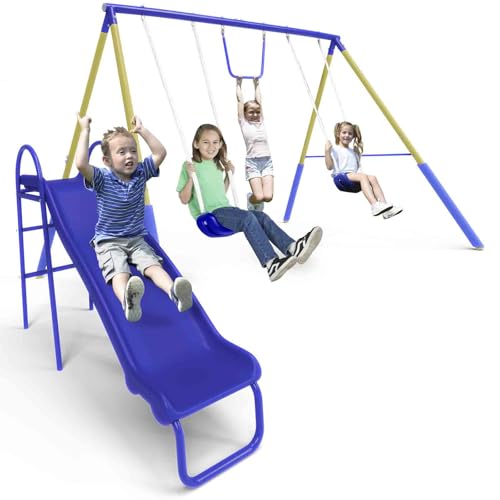
Sportspower My First Metal Swing Set with Slide, 4 Kids Max, Blue, Yellow
Check price on Amazon
SuperDisc Swing Set - 5 User, Playground Set for Kids with Frame Anchors | Easy Assembly, Backyard Play, 2ea Swings, 5' Slide, Padded Legs for Safety. 148" L x 93" W x 74" H, 500lb Max.
Check price on Amazon
Sportspower Park Ridge Metal Swing Set for Ages 3-8, 2 Swings, Standing Swing, Roman Glider, Teeter Totter, on 5ft Slide, 6.1ft Durable Steel Frame, Anchor Kit, 800lbs
Check price on Amazon
Sportspower Super Saucer Metal Swing Set for Kids Ages 3 to 8 with 2 Blow-Molded Swings, 2-Person Saucer Swing on 5ft Slide, Heavy Duty Outdoor Playset with Bonus Anchor Kit
Check price on Amazon
KDYMOD Swing Set for Backyard with Stand, Swing Heavy Duty 440lbs Metal Outdoor Swing Stand, Contain 1 Saucer 32" & 1 Belt seat 26.2" + 53in Blow Molded Slide for Playground - Backyard Playset, Blue
Check price on Amazon
SENCHO GINSYTALIOR 8-in-1 Kids Swing Sets for Backyard with Slide | Heavy-Duty Metal Swing Set with 39''Saucer,Hanging Seat,Baby Swing,Teeter Totter,Soccer Goals & Basketball Hoop,A-Frame
Check price on Amazon
Lunafun Swing Set for Backyard with Kids Slide 440lbs Heavy-Duty Metal A-Frame 1 Saucer Swing Seat 1 Swings Seat & 1 Slide
Check price on AmazonFrequently Asked Questions
How long does a metal swing set with slide typically last?
A well-constructed metal swing set with slide, featuring a powder-coated frame and galvanized or stainless steel hardware, can last many years — often a decade or more with routine care. The lifespan depends on build quality, climate, and maintenance. Sets in coastal or high-humidity areas may require more frequent inspection for corrosion, but a high-grade steel frame with a rust-proof finish is designed to endure.
Is assembly difficult?
Most metal swing sets with slides are designed for DIY assembly with clear instructions and included hardware. A typical set takes a few hours with two adults. The process involves bolting the frame together, attaching the swing hangers and slide, and anchoring the set. Having a socket wrench set and a level on hand helps. Some premium models offer simplified assembly with pre-assembled components.
Can the swing set stay outside year-round?
Yes — a metal swing set with slide is designed for outdoor use and can remain outside year-round in most climates. The powder-coated finish and weather-resistant hardware handle rain, sun, and temperature fluctuations. In regions with heavy snow, removing the swings and slide for winter reduces stress on the frame. Always check the manual for specific recommendations from the manufacturer.
What age range is suitable for a metal swing set with slide?
Most models are designed for children aged 3 to 10 years, though this varies by design. Toddler-friendly configurations with full-bucket swings and lower platforms may suit children as young as 2 under close supervision. Always follow the manufacturer's age rating. Children under 3 should use equipment specifically designed for their developmental stage.
How much space do I need?
A typical metal swing set with slide requires a flat area roughly 10 to 12 feet wide and 10 to 14 feet deep, depending on the model. Additionally, maintain a fall zone of at least 6 feet around the perimeter, covered with a shock-absorbing surface. Check the manufacturer's dimensions for your specific model before purchasing to ensure a proper fit.
Do I need to anchor the set?
Yes — always anchor a metal swing set with slide to the ground. Ground anchors prevent tipping and keep the set stable during active play. Some sets include anchors; others require them to be purchased separately. Never skip anchoring, even on flat ground. If your soil is loose, consider concrete footings or a deeper anchor system for added security.