Building Blocks for 2 Year Olds: The Complete Parent Guide
Everything you need to know about choosing safe, engaging, and developmentally appropriate building blocks for your toddler — plus expert tips to maximize playtime learning.
Explore Top PicksWhy Building Blocks Are Essential at Age 2
At two years old, children are in a critical window of brain development. Their hands are becoming more coordinated, their curiosity is boundless, and they are beginning to understand cause and effect. Building blocks are one of the most powerful tools you can give a toddler during this stage. Unlike passive toys that entertain, blocks invite active exploration — every stack, tumble, and rebuild teaches something new.
Pediatric occupational therapists and early childhood educators consistently recommend blocks as a cornerstone toy for toddlers. They bridge the gap between simple sensory play and more structured problem-solving. For a two-year-old, the act of picking up a block, carrying it, and placing it on another is a full-body workout for the developing brain. It combines gross motor planning, fine motor precision, and spatial reasoning in a way that few other toys can match.
🧠 Did you know? Research shows that block play in early childhood correlates with later mathematical thinking and language development. The simple act of stacking and knocking down builds foundational concepts of geometry, balance, and gravity.
Developmental Benefits You Can Expect
When you hand a two-year-old a set of age-appropriate blocks, you are not just giving them a toy — you are giving them a multi-sensory learning system. Here are the key areas where block play delivers measurable benefits:
1. Fine Motor & Gross Motor Skills
Grasping, lifting, and stacking blocks strengthens the small muscles in the hands and fingers. Larger blocks that require two hands or full-body movement also develop gross motor coordination and balance.
2. Spatial Awareness & Early Math
Stacking teaches concepts like "on top," "next to," "under," and "behind." Toddlers begin to intuitively understand size relationships, symmetry, and balance — the building blocks (literally) of later math skills.
3. Language Development
As you play together, you can narrate actions: "You're putting the red block on top!" This builds vocabulary and sentence structure. Blocks also encourage descriptive language like "big," "small," "tall," and "short."
4. Problem-Solving & Persistence
When a tower falls, a toddler learns to try again. This simple cycle builds resilience and teaches cause-and-effect reasoning. They experiment with different arrangements and discover what makes a stable structure.
5. Creativity & Imaginative Play
Blocks can become anything — a house, a car, a bridge, or a castle. This open-ended quality supports imaginative play, which is crucial for cognitive and social-emotional development.
For more ideas on how block play fits into broader developmental stages, explore our guide on building toys for preschoolers, which covers the next phase of construction play.
Safety Checklist: What to Look For
Safety is non-negotiable when buying toys for a two-year-old. Toddlers explore with their mouths, so choking hazards are a serious concern. Use this checklist before making a purchase:
- Size matters: Blocks should be at least 1.5 inches (about 4 cm) in all dimensions — ideally larger. Anything that fits inside a toilet paper roll is too small for a 2-year-old.
- Non-toxic materials: Look for blocks made from food-grade silicone, BPA-free plastic, or wood with water-based, non-toxic paints. Avoid unknown plastics with strong chemical odors.
- Rounded edges: Sharp corners can injure a toddler who is still learning coordination. Choose blocks with smooth, rounded edges.
- No small parts: Avoid blocks with detachable wheels, figures, or magnets that could break off. Magnets in particular are extremely dangerous if swallowed.
- Sturdy construction: Blocks should withstand being thrown, chewed, and stepped on without cracking or splintering.
- Age-appropriate labeling: Always check the manufacturer's age recommendation. Toys labeled for "3+" are not suitable for a two-year-old.
⚠️ Safety reminder: Even with the safest blocks, always supervise play. Toddlers can be surprisingly inventive when it comes to finding hazards. For more comprehensive guidance, read our toy safety guide.
Types of Building Blocks for 2 Year Olds
Not all blocks are created equal. For a two-year-old, the best options prioritize safety, ease of use, and open-ended play. Here are the main categories:
Oversized Plastic Blocks
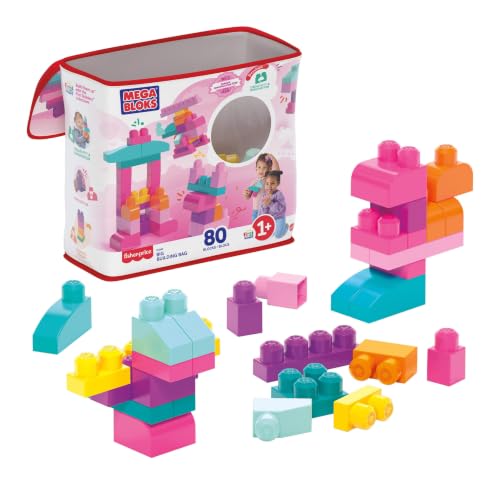
These are the classic toddler blocks — large, lightweight, and often brightly colored. They are easy for small hands to grasp and stack, and they are typically durable and easy to clean. Look for sets with rounded edges and non-toxic plastic. These are often the best starting point for a first block set.
Soft Foam Blocks
Foam blocks are ideal for toddlers who are still unsteady on their feet or prone to throwing. They are lightweight, quiet, and safe for indoor play. Many foam sets come with textured surfaces for sensory exploration. They are also great for very young toddlers who might fall onto their toys.
Jumbo Wooden Blocks
Wooden blocks offer a classic, timeless play experience. For two-year-olds, choose jumbo sizes with smooth, sanded edges and non-toxic finishes. Wooden blocks are heavier, which helps toddlers develop strength and control. They also provide a satisfying sensory experience with their natural texture and weight.
Interlocking Soft Blocks
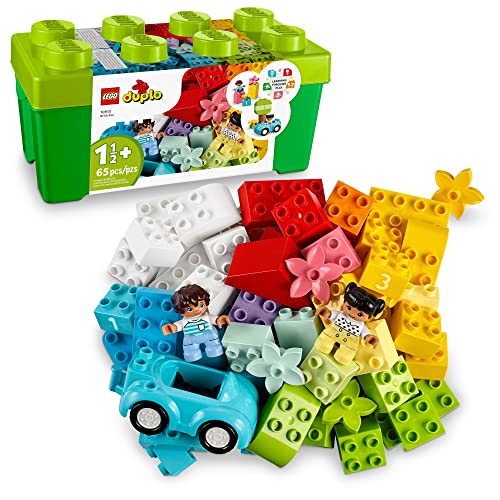
These are soft, flexible blocks that connect with simple snaps or slots. They are easier than traditional interlocking bricks (like LEGO) and are designed specifically for very young children. They help develop fine motor skills without the frustration of small pieces.
As your child grows and their skills develop, you can gradually introduce more complex systems. Our guide on building toys covers the full spectrum of construction play for different ages.
Top Picks by Tier
We have organized our recommendations by tier to help you find the right fit for your family's needs. Each tier represents a different level of material quality, durability, and design sophistication — not a judgment of value. All picks are selected for safety and developmental appropriateness for two-year-olds.
Classic Oversized Plastic Blocks
Lightweight, brightly colored, and easy to stack. These blocks are the perfect introduction to building for a two-year-old. Look for sets with rounded corners and BPA-free plastic. They are easy to wipe clean and withstand rough play.
Textured Foam Building Set
Soft, quiet, and safe for indoor play. Many foam sets include textured surfaces that add a sensory dimension. They are ideal for toddlers who are still learning to be gentle with toys, and they are safe to fall onto.
Jumbo Hardwood Blocks
Solid wood construction with smooth, sanded edges and non-toxic finishes. These blocks are heavier and more durable, offering a satisfying sensory experience. They will last for years and can be passed down to younger siblings.
Interlocking Soft Block System
Flexible, connectable blocks designed specifically for toddlers. They snap together easily and help develop fine motor skills without frustration. Often made from food-grade silicone or high-quality foam.
For more specific recommendations on construction sets that grow with your child, see our guide on building block sets and our article on building toys for 5 year olds when your child is ready for the next step.
Quick Comparison Table
Use this table to compare the key characteristics of each block type at a glance. Remember that the best choice depends on your child's temperament, your play environment, and your family's preferences.
| Block Type | Tier | Best For | Key Features |
|---|---|---|---|
| Oversized Plastic Blocks | Essential Tier | First block set, indoor/outdoor | Lightweight, easy to clean, bright colors |
| Soft Foam Blocks | Balanced Tier | Indoor play, quiet time | Safe to fall on, textured surfaces, lightweight |
| Jumbo Wooden Blocks | Premium Tier | Long-term investment, sensory play | Durable, natural texture, classic design |
| Interlocking Soft Blocks | High-End Tier | Fine motor development, creative building | Connectable, food-grade materials, easy to grip |
Play Tips to Boost Learning
How you play with your toddler matters as much as what you give them. Here are some practical tips to maximize the developmental benefits of block play:
- Get on the floor: Sit at your child's level and play alongside them. Narrate what you are doing and encourage them to describe their own creations.
- Follow their lead: Let your toddler decide what to build. Resist the urge to direct the play. If they want to stack all the red blocks in a line, that is a valid and valuable activity.
- Celebrate the process: Praise effort and experimentation, not just the final product. "You worked so hard on that tower!" is more valuable than "What a beautiful tower!"
- Introduce simple challenges: As your child gains confidence, suggest gentle challenges: "Can you build a tower as tall as your teddy bear?" or "Can you make a bridge for your toy car?"
- Create a dedicated play space: A low shelf or a small basket of blocks keeps them accessible without overwhelming your toddler. For storage ideas, see our guide on building block storage ideas.
For more creative play inspiration, explore our collection of play ideas and our calming toys guide for quiet-time activities.
Frequently Asked Questions
What type of building blocks are best for a 2 year old?
Large, lightweight blocks with rounded edges are ideal. Options include oversized plastic blocks, soft foam blocks, and jumbo wooden blocks. These are easy for small hands to grasp and stack safely.
Are building blocks safe for 2 year olds?
Yes, when chosen correctly. Look for blocks that are at least 1.5 inches in all dimensions to prevent choking, non-toxic paints and materials, and no sharp edges. Always supervise play.
How many blocks should a 2 year old have?
A set of 20-50 large blocks is usually sufficient for a 2 year old. This allows for simple stacking and building without overwhelming them. Quality and safety matter more than quantity.
What should I do if my toddler puts blocks in their mouth?
Mouthing is a normal part of toddler exploration. Choose blocks made from non-toxic, food-grade materials. If your child is a persistent chewer, foam or silicone blocks may be the safest choice. Always supervise closely.
When should I introduce smaller building bricks?
Most experts recommend waiting until age 3 or 4 before introducing standard small building bricks, as they pose a choking hazard for children under 3. For now, stick with large, age-appropriate blocks.
Ready to Find the Perfect Blocks?
Browse our curated selection of safe, developmentally appropriate building blocks for your two-year-old.
See Top Picks